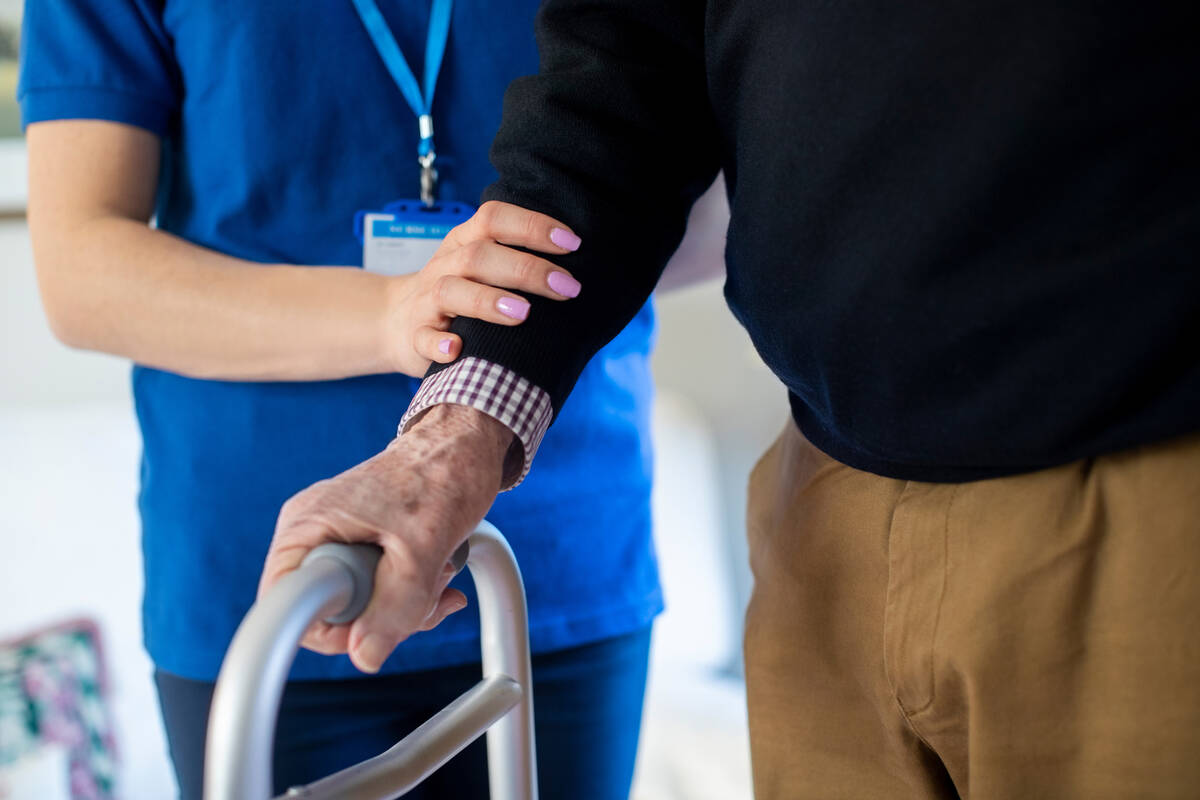
My father served in the U.S. Army during the Vietnam War, and he came back carrying more than memories. Exposure to Agent Orange left him with cancer, dementia, diabetes, hearing loss and neuropathy. I became his caregiver the day I welcomed him into our home in Las Vegas, where I now look after him around the clock and alongside my four children.
The men and women who served earned the right to age in place with grace and dignity. But dignity is not automatic. It depends on someone standing between an aging veteran and a health care system that grows more tangled every year. I learned this while on hold with schedulers and in Las Vegas waiting rooms.
While the VA often provides lifesaving health care, the system itself is so complex that many veterans and families, especially those with the most complex needs, either give up or pay out of pocket. It took me months to secure a single pair of therapeutic shoes for my dad. If someone with the time, patience and know-how still hits that many walls, imagine the veterans across Nevada navigating the system alone. Too many fall through the cracks, and a caregiver is often the only reason they do not.
I am far from alone. An estimated 14.3 million Americans care for a wounded, ill or injured veteran at home, and more than 200,000 veterans live in Nevada, many of them, like my dad, now aging. As a Dole caregiver fellow with the Elizabeth Dole Foundation, I see the needs of veterans, caregivers and survivors up close. We are waiting on Congress to act on the Take Care of America’s Veterans Act, which gathers more than 60 long-stalled bipartisan bills into one path forward.
Several of those bills would touch my family directly. Like many in my position, I set aside traditional employment to be present for my father, and this work, the most meaningful I have done, has come at a cost. Included in the package, the Veteran Caregiver Re-education, Re-employment, and Retirement Act, the “3Rs,” would help caregivers rebuild the careers and savings they set aside, through education, job training, employment assistance and stronger retirement security.
The same package speaks to the reality on the other side of the table, and it matters all the more in a state this large. It would lock in the standards for when a veteran can be treated close to home, so aging Nevadans are not sent hours away for care available in their community. It would also require the VA to modernize how it schedules appointments, so families are not left on hold in a system that should be built around the patient.
Other provisions may never touch my household, but they will change lives across Nevada. The Sharri Briley and Eric Edmundson Veterans Benefits Expansion Act would strengthen support for the most catastrophically injured veterans and, for surviving spouses and children, deliver the first meaningful increase in more than 30 years. My family does not need that bill. Plenty of our most vulnerable Nevada families do.
I would not trade this season of life. Having my father under our roof has strengthened us in ways I never expected. My children get more time with their grandfather, and they see that we take care of one another in our family, no matter the age or our living circumstances. That is the biggest win of all, but it would be helpful to know that veterans and families like mine will receive the support they have earned.
None of this is guaranteed. Lawmakers have stalled the vote more than once, and every delay is another day Nevada’s veterans, caregivers and survivors wait for help. I am asking every senator and representative Nevada sends to Washington to pass the Take Care of America’s Veterans Act so the veterans who gave so much to this state and nation can age at home, with dignity and never alone. Not because it is easy, but because it is owed.
Serena Guimarey lives in Las Vegas with her four children, serves as a peer support mentor for fellow military and veteran caregivers and is active with the VA Caregiver Support Program.