Making it easier to get into an institution of higher learning won’t be much benefit to those who can’t complete high-school-level assignments.
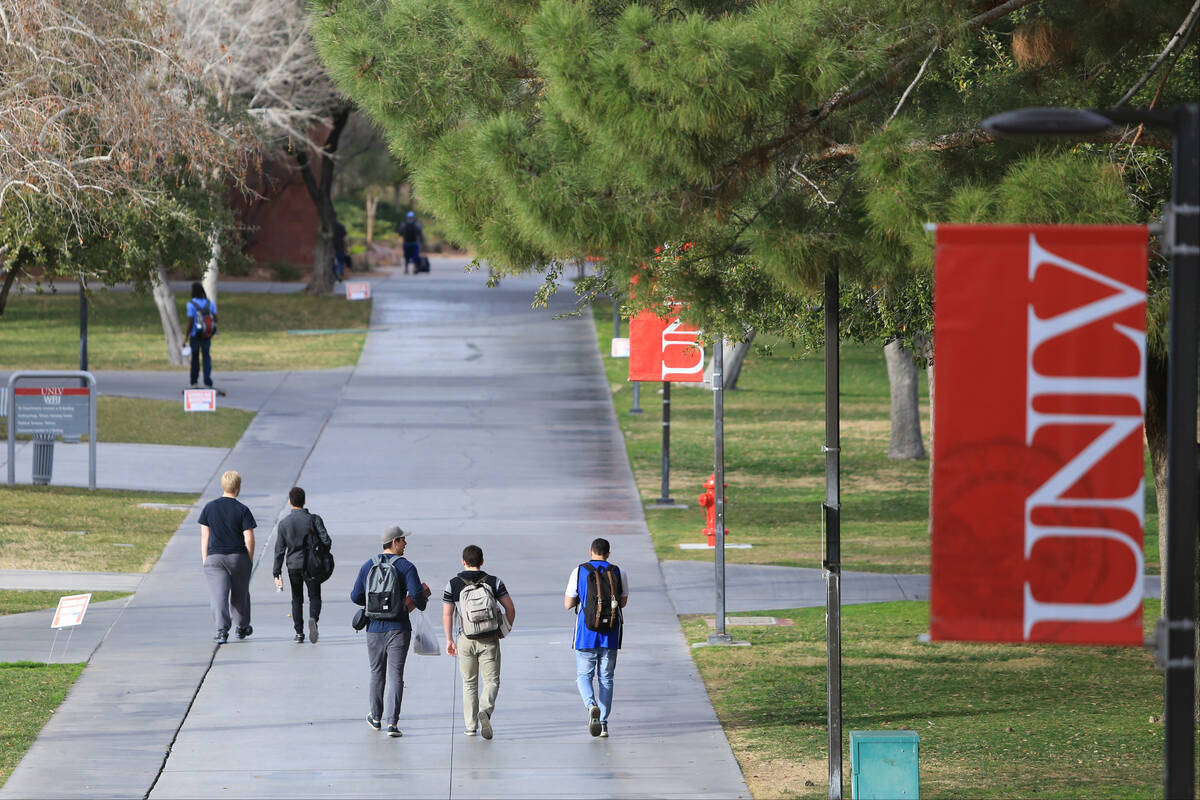
UNLV and the College of Southern Nevada recently announced they will automatically grant admission to Clark County School District graduates. They don’t even need to apply. Students who meet the minimum requirements can enter UNLV as full-time students. Those standards include an advanced or college and career ready diploma, 3.0 GPA or a 22 on the ACT.
Students who fail to meet those benchmarks will be admitted as a non-degree-seeking students and sent to CSN. If students successfully complete 24 credits at CSN with a minimum 2.5 GPA, they can join UNLV full time.
Barb Roberts, UNLV’s associate vice president for enrollment management, said this program creates “a really seamless pathway from high school to higher education.”
That will certainly be a benefit for some students, but dig a little deeper. All Nevada public high school graduates take the ACT. In 2024, Nevada’s average ACT score was 17.2 with just 15 percent meeting the math benchmark.
Against this reality, the universality of UNLV’s admission offer looks more like a marketing gimmick. Would-be students, here’s your first college lesson: Make sure you read the fine print.
Nevada State University has also launched a similar admissions offer. Eligible district seniors with a GPA of at least 2.5 can go to the school without paying an application fee.
“This program is about creating a clear pathway to college,” Gwen Sharp, the school’s vice president of academic affairs, said.
The problem is that what district seniors need most isn’t a pathway that’s seamless or clear. They need to be ready academically. That’s far from certain. Years ago, state politicians eliminated the Nevada high school proficiency exam. It was supposed to be replaced by a series of end-of-course exams. But before those went into effect, the Legislature removed that requirement.
Unsurprisingly, lower standards led to a noticeable jump in graduation rates. In 2016, the district’s four-year graduation rate was under 75 percent. In 2025, it was 86.6 percent. You can’t square those numbers with the district’s achievement levels. In 2024, fewer than 20 percent of the district’s juniors were proficient in math. English proficiency was under 47 percent.
This is more evidence that student achievement gains were not the main driver of the district’s higher graduation rates.
If they do decide to attend college, many district students are in for a rude awakening. The district may have smoothed their path into college, but — for many graduates — it has failed to prepare them for college-level material.