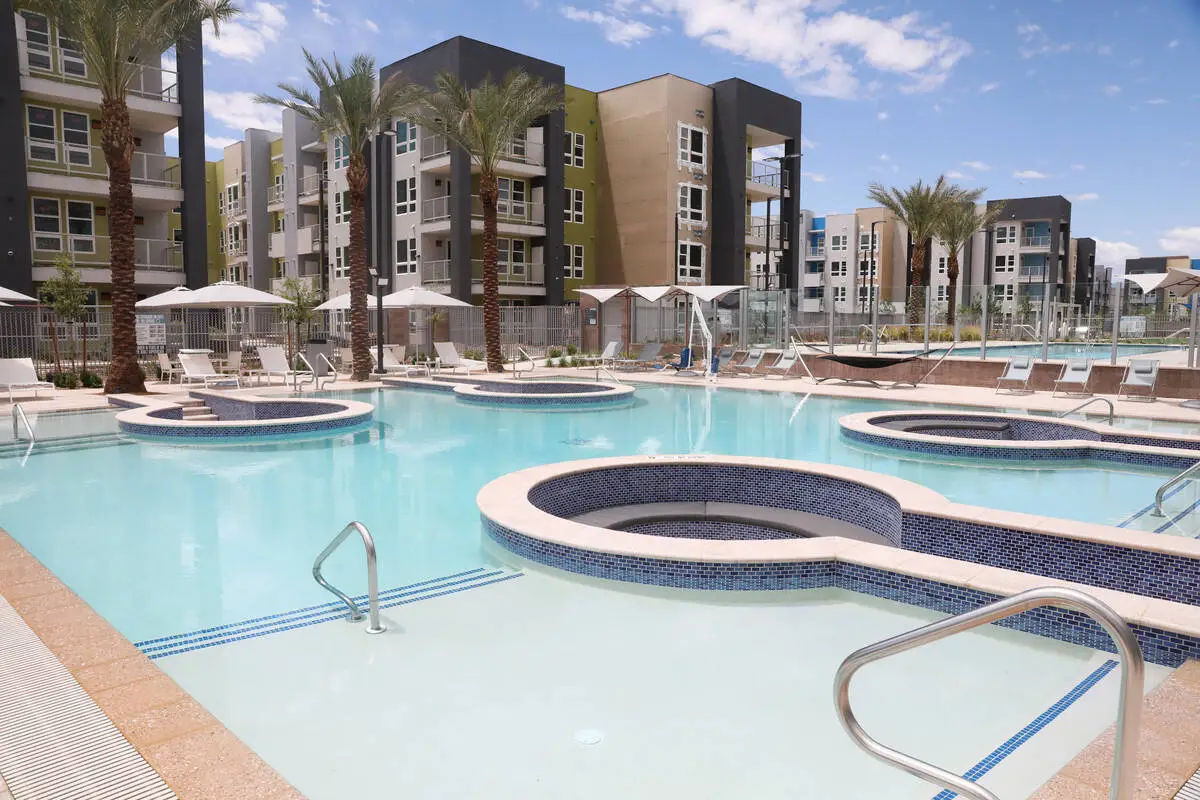
Rental rates in the Las Vegas Valley have been dropping for more than a year, a new analysis found.
According to data provided to the Las Vegas Review-Journal by online rental marketplace Zumper, Las Vegas-area rents have been declining since August 2025, or 13 months ago.
This means the price for a one bedroom is down 3.4 percent year over year through August, with every month negative. Two-bedroom rentals were also negative every month in between, or down 2 percent year over year.
Crystal Chen, a director of communications for Zumper, said, including the flat months shows that Vegas one-bedrooms have basically been flat or declining since June 2023. Two-bedrooms have had some 1 to 2 percent year-over-year growth rates since 2023, she said, but not much notable growth.
“Las Vegas’ softening has been building for a while,” she said in an email response to the Las Vegas Review-Journal. “One-bedroom rent hit as much as 27 percent annual growth back in early 2022, at the peak of the pandemic-era boom. Since then, it’s been one long deceleration: rent growth cooled through 2023, tipped negative that summer, and outside of two flat months, it hasn’t posted a single positive annual reading in over three years. This latest 13 month streak of falling rent is really just the most recent, uninterrupted leg of that longer slide.”
Las Vegas’ housing market has fluctuated since the onset of the pandemic when rates bottomed out due to COVID-19 related lockdowns, restrictions and supply chain disruptions. This kicked off a refinancing and buying frenzy, which ended abruptly in 2022 when inflation shot up and mortgage rates went above 6 percent. The swing has locked the residential housing market while also stifling the construction and building industry, which also affected rental rates in the valley and across the country.
Las Vegas rents used to be well below the national average before the pandemic, but a housing supply shortage and lack of new apartment construction has pushed them above multiple similar Sun Belt cities. Chen said other Sun Belt cities have seen even bigger drops since a peak back in 2022.
“Las Vegas isn’t the epicenter of the national correction, it’s not close to the deepest annual declines in the country right now,” she said. “Markets like Austin, Houston, and Dallas are seeing declines several times steeper than what Las Vegas is experiencing today. I’d put Las Vegas in the second tier of softening markets. It’s a city that’s been deflating for over three years, clearly under pressure, but it isn’t the market driving the national story.”
Contact Patrick Blennerhassett at pblennerhassett@reviewjournal.com.