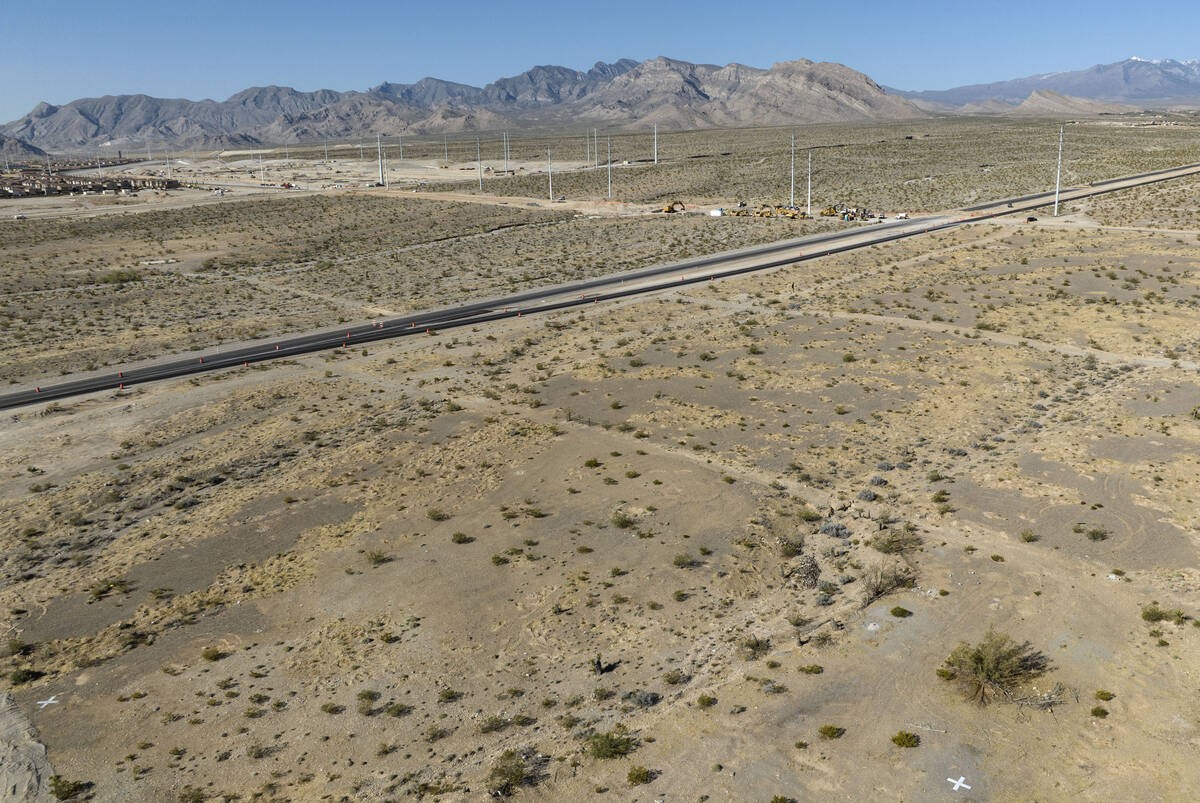
A widely reported estimate that Clark County has close to 80,000 acres of vacant or underutilized land available for development may significantly overstate how much land can actually be built on, according to a new analysis.
The analysis argues the Regional Transportation Commission of Southern Nevada and Southern Nevada Strong’s Underutilized Lands Inventory study, conducted by Portland, Oregon-based research firm ECOnorthwest, and released last year significantly overstates the amount of land that could realistically be developed.
The new analysis, prepared by Las Vegas research firm RCG Economics for the Southern Nevada chapter of the Commercial Real Estate Development Association (formerly NAIOP), uncovered that much of the land the RTC’s study deemed vacant or underutilized is actually private parking lots of churches, schools and even a Costco, or land with steep slopes and mountaintops that could not be feasibly developed.
The dispute comes as the Las Vegas Valley grapples with high housing prices, limited land for commercial development and calls for the Bureau of Land Management to release more federally controlled land. The federal government controls virtually all the land left for potential development in the valley, and has been slow to release it since 1998.
‘Further analysis is needed’
In an email response to the Las Vegas Review-Journal, RTC Deputy Chief Executive Officer Andrew Kjellman said the RTC understands the concern and agrees that the widely reported and publicized 78,285-acre figure should not be treated as an estimate of land that is currently available or feasible for development. In the RTC’s own study, of the 78,285 acres of “underutilized land” in Southern Nevada, approximately 68,132 or 87 percent was given a low ranking for potential development.
“The 78,285-acre figure represents the total acreage identified through the inventory’s initial screening process,” he said. “Further analysis is needed before any conclusion can be reached regarding their potential use or development.”
However, RTC’s website says it used county assessor data to identify more than 82,000 acres of vacant and underutilized land, while Southern Nevada Strong touts the findings with a headline stating, “Study finds 84,000 acres of vacant land in Clark County, paving way for new development.”
Steve Neiger, president of the Commercial Real Estate Development Association’s Southern Nevada chapter, who is a commercial broker, said it’s important for everyone to know how much land is actually left for development in the Las Vegas Valley so all parties involved can work together towards a sustainable solution.
“This is why we commissioned this RCG study, so people can draw their own conclusions and see an objective analysis rather than hearing from industry groups opinions’,” he said. “We’re all a part of this community and we all need to work together towards a solution.”
John Restrepo, principal of RCG Economics, said the private sector was a bit baffled by the 78,285-acre number when the RTC study came out.
“When they put this report out it got a lot of people upset, policy makers, politicians, people were saying where did this number come from? We’re losing companies that want to come here and be here but they can’t because they can’t find land, they can’t find bigger parcels or bigger spaces because of this land constraint situation,” he said. “This report is not designed for anyone trying to actually make a decision to invest in Southern Nevada in the next three to five to seven years.”
Developers aren’t trying to take parkland or conservation areas away for private development, said Azim Jessa, the vice president for trade association Nevada Realtors, but are trying to get the government to release infill land within the valley in a timely manner and at fair market value in part to help alleviate the housing crisis.
“Between Realtors, between commercial and residential developers, we all want the same thing, we want to continue growing in a responsible way and find land that makes sense for our community, we want product that makes sense for our community and more attainable housing, entry-level housing, and we need good usable commercial space for the people and jobs that are moving here,” he said. “So if we can continue to have balanced, responsible growth, our city will be better off for it.”
RTC study called into question
The RCG analysis of the RTC study pointed out numerous potential flaws in the Underutilized Lands report which includes designating parking lots of a Costco, a church and an elementary school as “underutilized land.” No government parking lots were deemed vacant or underutilized in the original study.
Kjellman said these parcels may have been identified because the screening methodology evaluated parcel-level data, including the proportion of land occupied by assessed improvements and the relationship between land and improvement values.
“Inclusion does not mean RTC concluded that the parking lot is unnecessary, that the existing use is inappropriate, or that the property should be redeveloped,” he said.
Kjellman added vacant or underutilized land was identified through a screening criteria “intended to be objective.” He reframed the land in question as “potentially” underutilized.
The report also includes land up to a 25 percent slope including mountaintops, which real estate experts who spoke to the Las Vegas Review-Journal said is completely unfeasible for any type of development. Industry standards say that building over a 10 percent slope is usually cost prohibitive as the land needs extensive engineered foundations, retaining walls and extra drainage work.
The RCG analysis of the RTC report also found numerous instances where entire lots of land, including a 223-acre parcel in the city of Henderson as being underutilized. However 200-plus acres of that specific plot is above a 12 percent slope.
Kjellman said the slope thresholds were used as regional screening assumptions rather than determination that every site below those thresholds is developable.
“Actual feasibility depends on engineering, grading, drainage, access, environmental conditions, local development standards, infrastructure costs, and market conditions,” he said.
Contact Patrick Blennerhassett at pblennerhassett@reviewjournal.com.