Although uncomfortable, triple-digit temperatures in the Las Vegas Valley are manageable for most residents under air-conditioned shelter.
Those same conditions can be perilous for people living on the streets, noted Sara Ramirez, president and CEO of Catholic Charities of Southern Nevada.
“Extreme heat does not create poverty, but it definitely magnifies it,” she told the Las Vegas Review-Journal on Thursday, when the temperature in the valley reached 111 degrees for the first time in 2026.
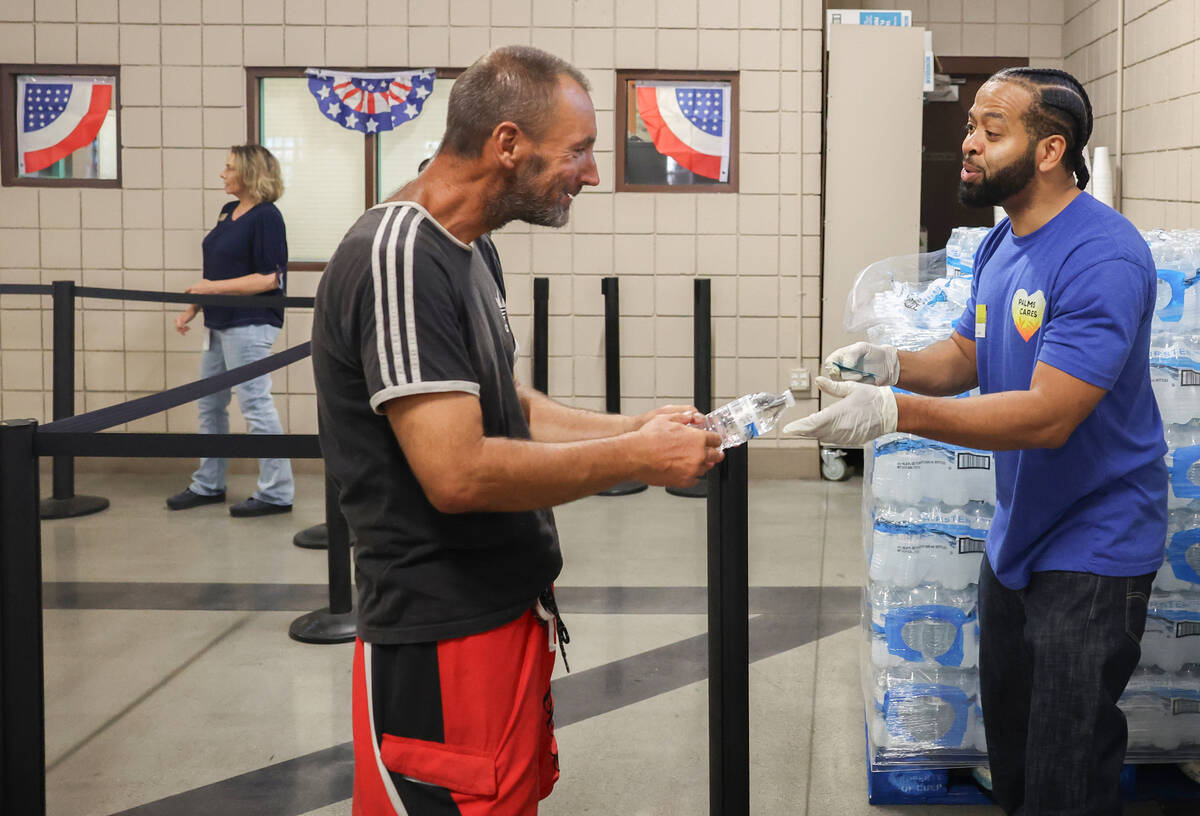
The nonprofit has relaunched an annual campaign to collect items that can help its unsheltered clients — and those who are teetering on the edge of homelessness — survive the summer.
Its goal is to collect 20,000 bottles of water and electrolyte packages, sunscreen, nonperishable food, lip balm, hats, and even shoes, which are critical to prevent asphalt burns, Ramirez said.
The nonprofit, 1501 Las Vegas Blvd. North, also accepts monetary donations for its summer campaign, at catholiccharities.com.
“Every summer in Southern Nevada, we prepare for the heat,” she said, “but at Catholic Charities, we prepare for what the heat does to people.”
Clark County reported at least 284 heat-related deaths in 2025 and 513 the previous year, according to the Southern Nevada Health District. Homelessness and advanced age are considered risk factors in such deaths.
The county activates cooling stations when summer temperatures rise to dangerous levels. The public facilities are open around the valley through at least Sunday after the National Weather Service issued an extreme heat warning this week.
Catholic Charities has been opening its shelter in the afternoons to keep people indoors during the hottest times of the day, Ramirez said.
At the same time, the valley continues experiencing an increase in its homeless population, according to its last two Southern Nevada Homelessness Continuum of Care counts.
About 5,000 out of 8,859 people counted in January were living outside, in vehicles or in other unsheltered areas, according to census data unveiled this week. That was nearly a 20 percent increase in unsheltered people counted during the last tally in 2024.
Anyone can pick up water at the shelter, Ramirez said, no questions asked.
Catholic Charities has reached its water collection goals every year and expects to do the same this summer, she said. “This community really knows how to take care of each other.”
Contact Ricardo Torres-Cortez at rtorres@reviewjournal.com.