Concerns about “affordability” dominate the news cycle these days. Progressives typically see this as a reason for more public-sector meddling in the economy. But that ignores the oft-overlooked nexus between government and higher prices.
Economist and professor Mark J. Perry of the American Enterprise Institute has for years tracked price increases in various economic sectors. His most recent chart, published in January, shows price changes for selected U.S. goods and services from 2000-2025. The graph is highly revealing.
The areas with the largest price increases included hospital services (281 percent), college costs (197 percent), child care (159 percent), medical care (147 percent) and housing (111 percent). These are sectors that suffer from heavy government involvement. Meanwhile, goods that saw much smaller price hikes or even declines included clothing (1.5 percent), computer software (down 73 percent), toys (down 74 percent) and TVs (down 98 percent). These are products produced in a market with minimal interference.
“The obvious conclusion,” Mr. Perry told Reason magazine in 2020, “is that the more government gets involved, or the more government regulation, the greater are the increases in prices over time. The less government intervention or regulation, the greater the decline.”
Mr. Perry’s observation was borne out this month when the National Association of Home Builders published a study finding that federal, state and local regulations add 26 percent to the price of a new single-family home — nearly $132,000, given the average U.S. sale price of $499,500 as of January. About $85,000 of that burden is the result of construction regulations. The remaining $47,000 can be attributed to land development edicts, the study found.
“Excessive regulation is deepening the nation’s housing affordability crisis and making it harder for builders to deliver the affordable, attainable housing that our nation sorely needs,” NAHB Chairman Bill Owens said.
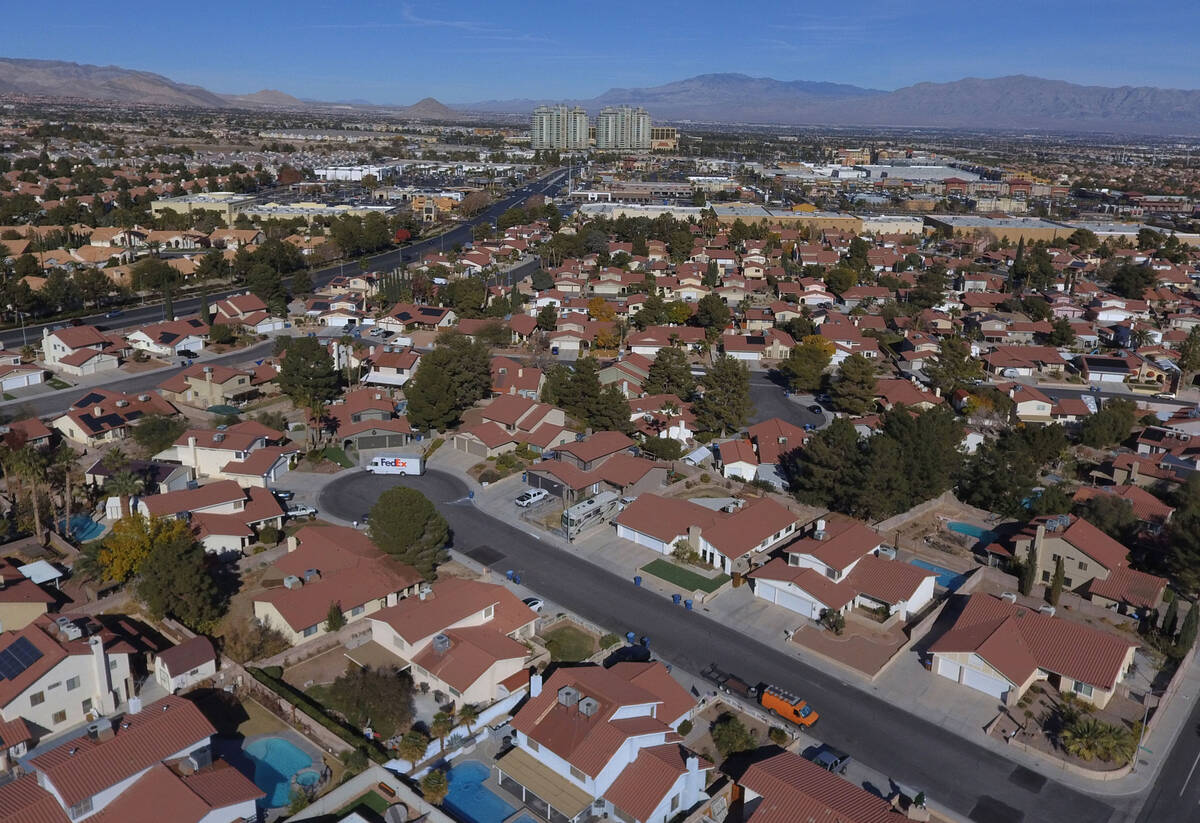
The analysis only tangentially takes into account the burdens created in places such as Las Vegas, where the federal government controls so much land that it inhibits private development. It also doesn’t capture the cost burdens of other policies, such as tariffs.
“Home building is subject to a wide array of regulatory costs,” the study’s authors noted, “including various fees, standards and other requirements imposed at different stages of the development and construction process that may be imposed by any combination of federal, state and local governments.”
Certain regulations are necessary for safety and quality reasons. But as the red tape grows — as it has considerably over the decades — higher prices inevitably follow. That’s a lesson that politicians, particularly Democrats, must heed if they’re truly concerned with “affordability.”