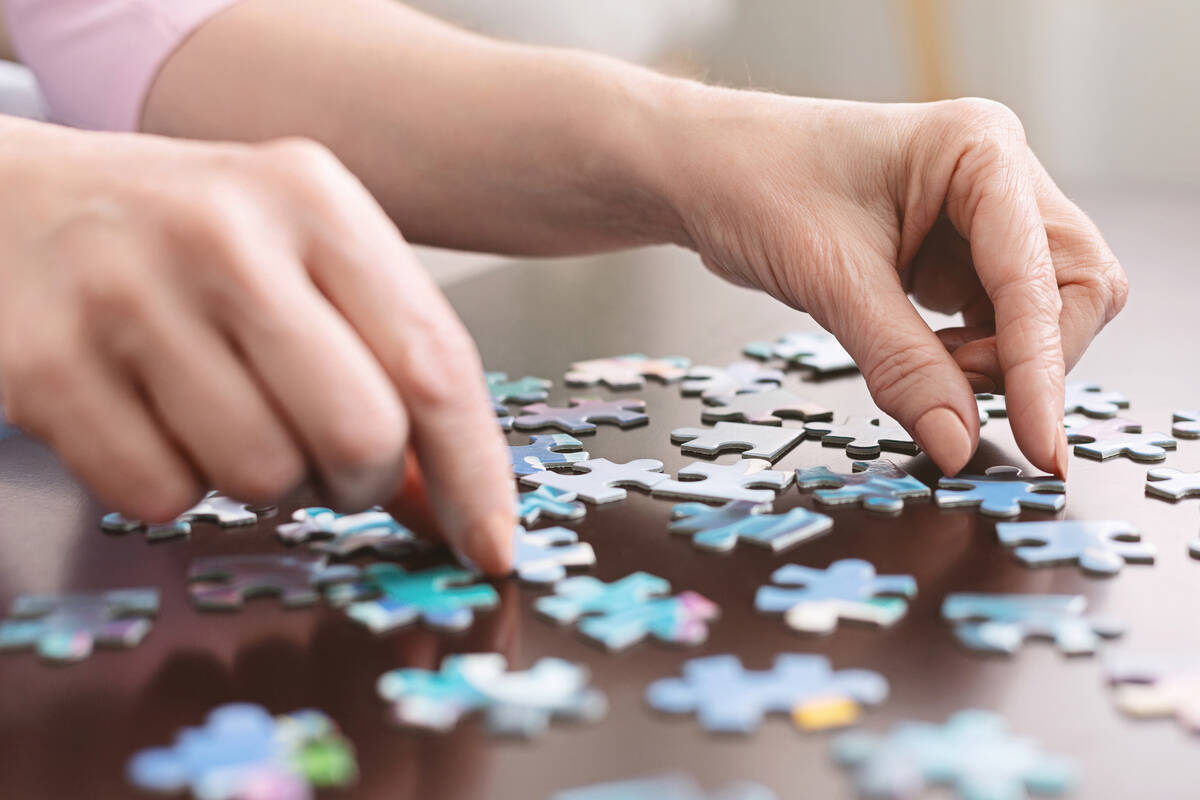
Puzzles — they’re often thought of as something for little kids and older adults. Brain games can keep a child occupied so their caretakers can shower with the door closed, and they can keep an older adult’s mind sharp. But people of all ages can reap the psychological benefits of doing puzzles, according to neuropsychologist Sanam Hafeez.
“Puzzles are one of those things that are quietly doing a lot more for you than you realize,” says Hafeez, director of Comprehend the Mind. “Your memory, focus and problem-solving are all getting a workout at the same time without it feeling like work.”
Research suggests that keeping the brain active can slow cognitive decline as you get older, Hafeez says.
“The best part about it is that it doesn’t feel like a chore,” she explains. “It’s just something you enjoy doing.”
Speaking more generally, she loves the enjoyment factor of hobbies.
“Hobbies give your brain something to look forward to, which matters more than people (think),” she says. “They pull you out of your own head when stress or worry starts to pile up. There’s also a quiet sense of accomplishment that comes from getting better at something you enjoy.”
And you can certainly get a sense of accomplishment from completing a jigsaw puzzle or a daily crossword. If they’re not currently a go-to hobby, you may be interested in making them one after reading Hafeez’s insights.
Key types of ‘mental health puzzles’
There are tons of puzzles that can benefit your mental health, and the best one for you is the one you enjoy the most. But Hafeez loves five types of puzzles for people who need a mental health reset.
Crossword puzzles: Hafeez says these word-based puzzles require you to fill a grid using clues, so they’re great for vocabulary, memory and building general knowledge (Next up: Trivia Night glory).
Sudoku: For the uninitiated, Sudoku is a logic puzzle. There’s a grid, and you’ll fill it in using numbers 1 to 9. Good news for some: “No math is needed — it’s all about pattern recognition and focus,” Hafeez says.
Memory card games: Memory-card games are childhood classics, and sports teams often use them to let fans watching the game in person compete for prizes during breaks in the action. But people of any age can enjoy them at home. “You’ll flip cards to find matching pairs while remembering where everything is,” Hafeez explains. “This game directly trains short-term memory and concentration.”
Word search: Scan a grid full of letters to pinpoint hidden words running across, diagonally, backward and more. It’s a fun riff on hide-and-seek. “Word searches are low-stress but great for attention and visual focus,” Hafeez says.
Logic grid puzzles: Hafeez says that, to do these puzzles, you’ll use clues to figure out how different elements connect. “They require methodical thinking and are excellent for reasoning skills,” she explains.
Mental benefits to puzzles
Hafeez says there are real mental benefits to doing puzzles: “They push your brain to think critically, recognize patterns and stay focused. all of which strengthen cognitive function over time.”
When you regularly engage with a mental activity, Hafeez says, you’re less likely to experience a rapid cognitive decline. You’re also more likely to have a better memory and improved mood.
“There’s also something to be said for the satisfaction of finishing one, which gives you a small but genuine confidence boost,” she notes.
That said, puzzles aren’t a magic cure, and Hafeez thinks it’s worth understanding their limits.
“The brain is good at getting efficient, meaning the more you do the same type of puzzle, the less of a workout it actually becomes,” she says. “If you’re doing the same crossword difficulty every day for years, you’re probably more in autopilot than you think. Switching up the type and difficulty level matters a lot if you actually want to keep challenging yourself.”
Who’s good at doing puzzles
Lots of people can be “good” at doing puzzles. But honestly? “Curiosity might matter more than anything else,” Hafeez notes. “People who actually enjoy not knowing the answer yet are the ones who stick with it. It’s not really about being smart. It’s about being someone who finds the process satisfying rather than annoying.”
That being said, she adds that specific types of people often have a natural leg up when solving puzzles.
“Patient people tend to do well with puzzles simply because they’re OK with things taking time,” she explains. “Logical thinkers have a natural edge too, since a lot of it comes down to eliminating what doesn’t work until something does.”
Do people with ADHD like jigsaws?
They certainly can. “It’s actually more common than you’d think — a lot of people with ADHD genuinely enjoy jigsaw puzzles, even if it seems like the kind of quiet, slow activity that wouldn’t suit them,” says Hafeez, who regularly sees people with ADHD in her practice.
Some reasons why people with ADHD may love puzzles include:
Puzzles let their hyperfocus kick in. Hafeez shares that people with ADHD have brains that are “wired for hyperfocus when something is visually stimulating enough, and jigsaws can trigger exactly that.” She credits the constant visual searching and sorting that keeps the brain busy enough to remain dialed in.
They’re hands-on. When people with ADHD use their hands, Hafeez notes, they often perform the task better. Jigsaws provide that opportunity because you have to physically sort, flip and place pieces.
Puzzles provide quick, visible progress. People with ADHD can struggle with delayed gratification, but puzzles can provide a quick reward — and added motivation. “Every piece placed is instant, visible proof that you’re getting somewhere,” she notes.
That said, some people with ADHD may not like jigsaw puzzles. For some, Hafeez says the middle stretch of the puzzle is “brutal.”
“Once the easy edges are done and you’re staring at 400 similar-looking pieces, the novelty wears off fast,” she notes. “That’s usually where ADHD impatience takes over, and the puzzle gets abandoned on the dining room table for two weeks.”
Benefits of doing puzzles
1. You might reduce stress
Daily living gives us plenty of reasons for stress — especially these days. Puzzles provide a reprieve.
“Puzzles pull your focus into one simple task, giving your brain a break from everything else,” Hafeez says. “That kind of quiet concentration actually lowers cortisol levels. It’s almost meditative without having to sit still and ‘do nothing.’ ”
2. You could notice an improvement in memory
Forget me not? You may have an easier time remembering names, faces and why the heck you walked into a room if you give puzzles the old college try.
“Puzzles constantly ask your brain to recall shapes, words, patterns and positions,” Hafeez explains. “That repetition strengthens the neural connections involved in memory. Over time, that translates to better recall in everyday life, too.”
3. You’ll enjoy a mood boost
Dopamine, delivered — without looking at your TikTok or Instagram follower count.
“Every time you place a piece or solve a clue, your brain releases a small hit of dopamine,” Hafeez says. “That feeling of progress, however small, genuinely lifts your mood. It adds up more than people realize.”
4. You’ll practice patience
It’s unlikely you’ll complete a 300-page crossword puzzle in one morning or a 1,000-piece puzzle in a sitting. There’s a psychological benefit to doing things that don’t reward rushing.
“With puzzles, you have to slow down, whether you like it or not,” Hafeez explains. “That teaches your brain to sit with frustration without immediately giving up. It’s a surprisingly transferable skill for real life.”
5. You’ll sharpen your focus
A sharper focus is perhaps the best-known benefit of doing puzzles.
“Puzzles require sustained attention, which is something most people are genuinely losing in the age of scrolling,” Hafeez explains. “Practicing that kind of deep focus regularly actually strengthens your attention span. Your brain gets better at the things you make it do consistently.”
For instance, focus can help you improve impulse control, offer mental clarity and home in on the people and things that matter most, giving you some massive psychological gains.
6. You’ll increase self-confidence
Each time you put together a puzzle piece or find a word in a word search, you’ll learn that you can do hard things. And when you complete the puzzle? “Finishing something hard gives you proof that you can work through a challenge,” Hafeez notes. “That sounds simple, but it genuinely builds a sense of competence over time. Small wins matter more to your self-esteem than people give them credit for.”
7. Encourages mindfulness
Yes, it’s a buzzword, but mindfulness matters when it comes to your psychological health, and puzzles are a gateway to it.
“When you’re deep in a puzzle, you’re not thinking about yesterday or tomorrow,” Hafeez says. “You’re just fully in the moment, trying to figure out where that one piece goes. That present-moment focus is basically mindfulness without calling it that.”