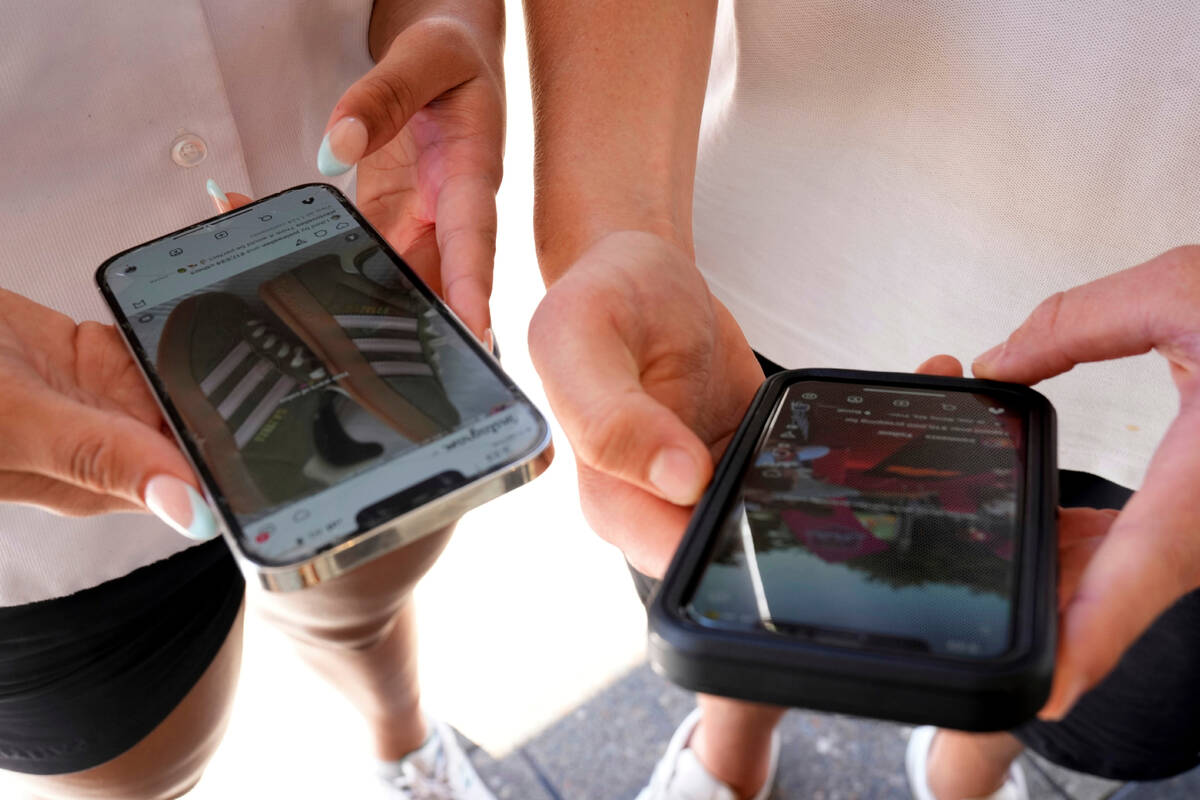
Health and wellness advice is abundant on social media — from trendy to informative to straight-up disinformation — and you’re far from alone in seeing it.
A new survey by the Pew Research Center finds that about 4 in 10 U.S. adults — and around half of those under 50 — get health information from social media or podcasts.
Researchers also looked at the social media profiles of 6,828 health and wellness influencers with at least 100,000 followers. Only about 4 in 10 list a background as a health professional. About one-third called themselves coaches, about 3 in 10 described themselves as entrepreneurs, and about 1 in 10 cited their own life experience, like being a parent.
Despite the wide range of expertise, about half of people who get health and wellness information from influencers said the influencers help them better understand their own health, while about one-third said it hasn’t made much difference. About 1 in 10 said it made them more confused.
Experts say a bit of skepticism is key to interacting with posts about fitness, mental health and personal health. Here are their tips on how to be a smarter consumer:
Vetting credentials
Experts said the biggest green flag is when an influencer’s credentials are easy to find on their profile. Beware the fill-in-the-blank “coach” who can’t prove their training.
Courtney Babilya, a certified medical exercise specialist and personal trainer who has more than 430,000 followers on Instagram, has seen this with maternity content: “Someone has a baby and suddenly they’re a pregnancy coach.”
“We have to be careful with people who have an experience in one thing and suddenly become a ‘coach’ on that,” she said.
Coach is a business model, not a sign of training. Babilya shares her own experience dealing with chronic illness online, but keeps it separate from her professional advice.
“You do have an obligation to make sure that you are not giving someone a false idea or spreading a message that isn’t going to be applicable to everyone,” she said.
Viral shock factor
If it brings up big emotions, pause. For people who can’t access care or feel unheard by their doctors, an offbeat opinion could feel like a long-sought answer. The Pew survey found 53 percent of uninsured people got health information from social media, compared with 38 percent of those who were insured.
But people who are trying to share good medical information online are not trying to incite fear or surprise, said Dr. Fatima Daoud Yilmaz, an OB-GYN at Stony Brook Medicine in New York, whose popular “Feminine Aisle” video series rates drug store products.
Even if the person has expertise, ask yourself: Are they speaking outside the scope of their knowledge? Is what they’re saying in line with scientific consensus?
“All opinions are not created equal when it comes to something such as health or medicine or science,” Daoud said.
Look out for exaggerated or definitive claims, especially in the first few seconds of the video when influencers are trying hard to grab your attention, Babilya added.
Ambivalent wording is a good sign, said Nedra Glover Tawwab, a practicing therapist and author. In her videos on boundaries and mental health, she couches with “maybe,” “sometimes,” “perhaps,” rather than diagnosing her 1.8 million followers on Instagram.
If you feel like you’ve found a diagnosis online, that is your sign to seek out a professional, Tawwab said.
Follow the money
People on social media are making money — for some, it is their livelihood.
“It doesn’t mean that all of the information that they put out is biased, but it should tell consumers of that information to take it with a grain of salt because they do have financial incentive to be pushing information like this,” Daoud said.
Babilya’s platform is now a full-time job, and the way she helps support her family. Taking partnerships and brand deals was not an easy decision, but one that makes her work sustainable.
Babilya said she prioritizes being upfront with her audience and making sure her ads are transparently labeled.
Stop being a passive scroller
Experts also recommend pausing to check the video’s sources. Look for gold-standard science. Some posts are not well fact-checked, Babilya warned, citing studies that have nothing to do with what the influencer says it does.
Use the same standard as when you’re vetting a purchase online. Look at the larger conversation around the advice as you would reading product reviews, Tawwab said.
Two-thirds of users said they just happen to come across the content rather than seeking it out, according to the Pew survey.
If you want to control your feed, it will take time and ongoing effort, said Ash Milton of the University of Minnesota, who studies how users navigate online mental health information.
“You have to work for it because the algorithm is designed to be passive consumption,” Milton said.
You can use “Hidden Words” on Instagram or “Not Interested” on TikTok to filter out certain content, though Milton notes TikTok might not know exactly what in the video you’re not interested in. Use your own reaction as a barometer to limit content by asking yourself: Is the health information actually applicable and helpful to your life, or just relatable?
Find a doctor you trust
Confirm with a trusted health professional before acting on anything you see online.
Influencers can say anything while medical professionals are ethically and legally liable for your care, and “may face professional and personal consequences for the advice that they give you,” Daoud said.
“Ultimately, talk to the medical provider who knows you,” she said.