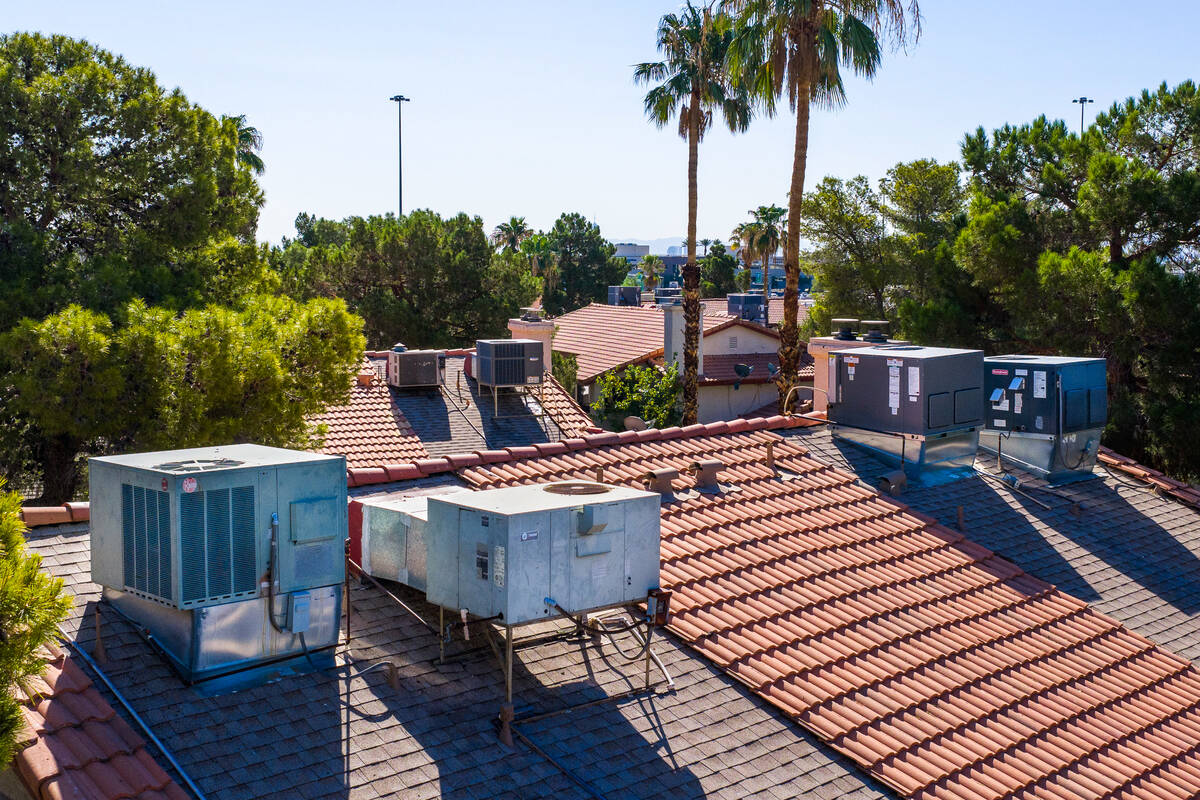
No Nevada law is on the books that requires landlords to provide tenants with air conditioning.
But the law does state that if a rental agreement includes air conditioning, then the landlord must make an effort to repair it within 48 hours of being notified in writing of the problem.
There are a network of local ordinances that require newly constructed homes to have central air conditioning, too.
Experts say the legal minefield surrounding air conditioning regulations can leave tenants suffering for longer than expected. Tenants who don’t know their legal rights also could be wary of facing eviction if they take steps like withholding rent.
“I think these types of cases happen all the time, and they happen due to fear,” said Ben Iness, the coalition coordinator for the Nevada Housing Justice Alliance advocacy organization.
The 48-hour window for repairs does not mean that the air conditioning needs to be completely fixed in that time frame. It just means that the landlord must make a “good faith” effort to start the process, said consumer rights attorney Nicholas Haley, who represents tenants with housing problems for the Legal Aid Center of Southern Nevada. That time frame does not include weekends or federal holidays.
In rare cases, Haley said, he’s seen leases in which a landlord does not provide air conditioning.
“I have seen it in Clark County, so we’re not talking about some rural county in Northern Nevada where it doesn’t get as hot,” the attorney said.
Iness said the Nevada Housing Justice Alliance has advocated for strengthening Nevada’s regulations around habitability laws. At present, there’s a lot of wiggle room for landlords to delay repairs on a piece of equipment that is increasingly becoming necessary for survival as temperatures get more extreme for longer periods of time because of climate change.
“Ultimately, the process just doesn’t have teeth,” he said.
John Brogden, an attorney with Nevada Legal Services, said there are some situations where tenants can withhold rent if their landlord delays fixing an air conditioning unit. But that process can be complicated legally, and he said tenants should consult an attorney before taking that step.
In the summer, Brogden estimates that about 40 percent of the legal questions fielded by Nevada Legal Services have to deal with air conditioning.
“Pretty much every single issue is going to be a case-by-case basis,” he said.
Tenants who need legal help with air conditioning problems can obtain a “complaint for expedited relief” form from the Legal Aid of Southern Nevada’s civil law self-help center online at civillawselfhelpcenter.org, or in person at the Regional Justice Center at 200 Lewis Ave. The organization also has an Ask-A-Lawyer program for free legal consultations.
Residents who are in subsidized housing programs can contact Nevada Legal Services’ Tenants’ Rights Center at 702-383-6095.
Contact Katelyn Newberg at knewberg@reviewjournal.com or 702-383-0240. Review-Journal staff writer Alan Halaly contributed to this report.