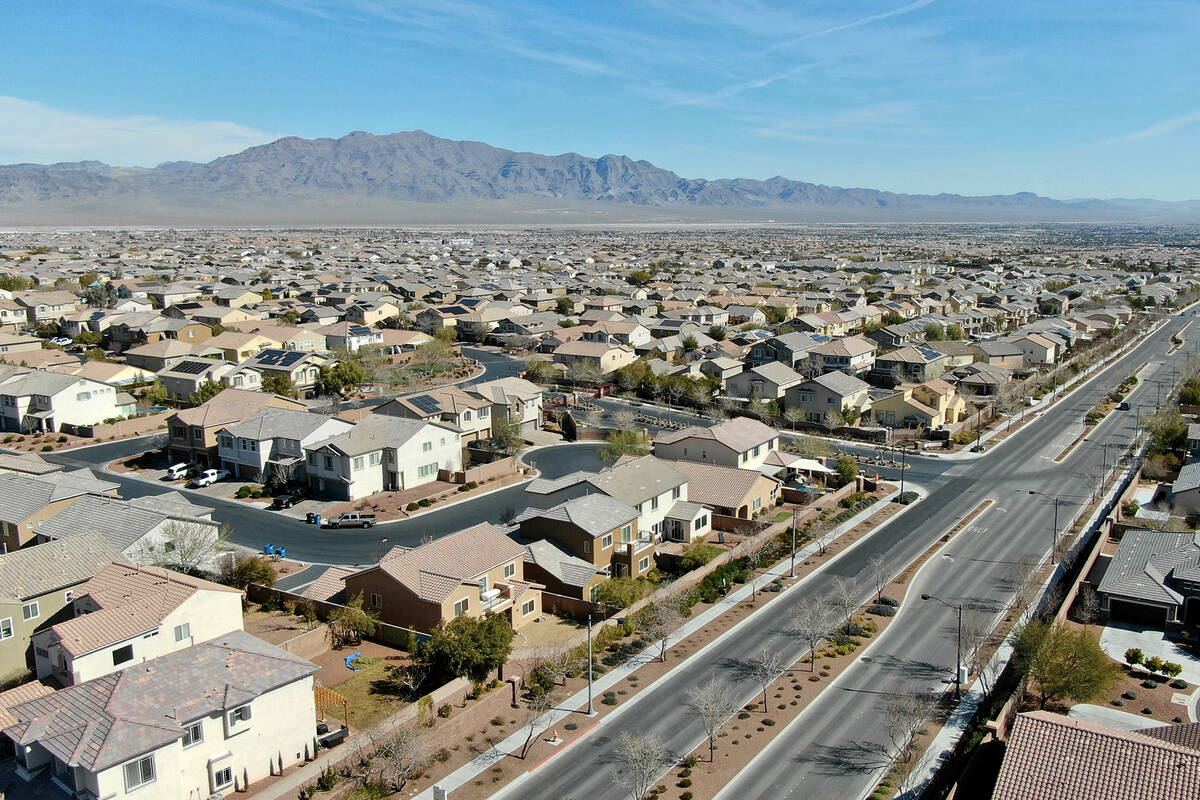
Las Vegas Valley residents who rent a house as opposed to an apartment pay a premium, according to a new study.
A new UNLV report from the Lied Center for Real Estate found that from 2014 until the second quarter of 2026, single-family home rentals carried an average 51.5 percent cost premium compared to average multifamily rents. Today, the median cost for a multifamily unit is $1,381, and it is $2,110 for a house.
Multifamily is generally used as a catch all for rental spaces that are not detached houses, which can include everything from apartments and condos to duplexes and single-story complex rentals.
Rental rates are down year-over-year until the second quarter for both categories as single-family rents are down 8.2 percent, and multifamily rents are down 4.6 percent since 2025’s second quarter. The report also found the biggest drop for homes came in the four-bedroom market, where prices have dropped 36.1 percent from a peak in the third quarter of 2024.
Nicholas Irwin, one of the authors of the UNLV study said the obvious is true, it’s more expensive to rent a house in Las Vegas as opposed to an apartment, but that needs of each individual renter are always different and have to be factored into the equation.
“Yes, renting a house is more expensive than an apartment, but what I think the report tries to establish is that rental affordability is more complex than the average months rent for an apartment,” he said. “Because not everyone rents an apartment and a households needs change over its life cycle.”
The report also looked at the long-term history of rental rates in the valley over the past 12 years, finding that rents for single-family homes peaked at $2,616 (price adjusted for inflation) in the first quarter of 2024 before falling to $2,110 by the second quarter of this year. On the flip side, multifamily rents peaked at $1,796 (adjusted for inflation) in the third quarter of 2021, and have since dropped to $1,381 in the second quarter of this year.
Congress recently passed the 21st Century ROAD to Housing Act, a bipartisan bill that looks to ease pressure on the housing and rental market through a number of changes to federal policy. One of the most talked about provisions is a ban on large institutional investors buying homes. The valley has one of the highest rates of investor-owned homes in the country, however Irwin said people will have to take a wait-and- see approach to if this actually helps the market and alleviates rental prices, or does the exact opposite.
“Since a renter can move between both markets, anything that potentially impacts the single-family rental market, such as an investor ban for example, will negatively impact multifamily rents due to the effects of supply and demand,” he said. “This means lower supply of single-family rentals pushes up prices, some potential single-family rentals rents move into the multifamily market where increased demand puts upward pressure on prices.”
Contact Patrick Blennerhassett at pblennerhassett@reviewjournal.com.