Iran has reorganized its military to be more aggressive abroad as talks on ending the war with the U.S. remain mired in stalemate, a sign that Tehran is preparing for a protracted era of regional conflict.
A raft of top military appointments by Supreme Leader Mojtaba Khamenei marks a shift to an “offensive doctrine,” Mohammad Reza Naqdi, a general in the Islamic Revolutionary Guard Corps who advises the force’s new commander, said in an interview on state TV late Tuesday.
“Whenever the conditions are favorable and the order is issued, we must be able to take the operation into enemy territory,” he said, contrasting the approach with a pre-war doctrine that was “primarily based on defense and the preservation of the country.”
His comments came amid little sign of a breakthrough between Iran and the U.S. over the Strait of Hormuz, with both sides claiming control of the critical waterway and demanding concessions that are unlikely to be met. While hostilities have eased in a war that’s into its sixth month, a durable peace sought by mediators Pakistan and Qatar looks increasingly elusive.
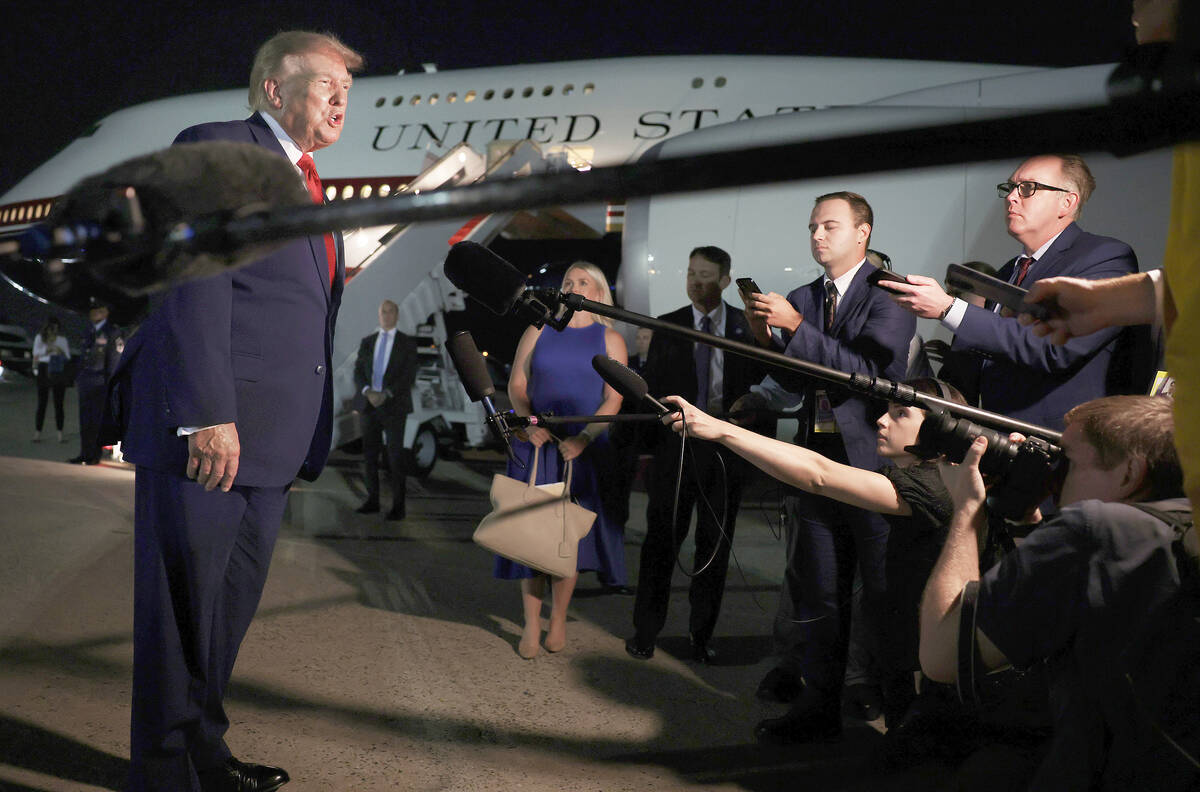
U.S. President Donald Trump has vacillated for months between threatening to resume attacks on Iran and expressing confidence that talks to end the war are progressing. He claimed “total control over the Strait of Hormuz” in comments posted on Truth Social on Wednesday, an assertion Iran has repeatedly dispelled by attacking ships transiting the passage.
Trump reiterated claims that Iran’s military has been destroyed, and that the country — faced with economic hardship — has no money. Naqdi said in his state TV interview that Iran’s production of ballistic missiles continues apace and is “much greater” than the rate of their use, without providing details.
About a fifth of the world’s oil and liquefied natural gas was transported through the strait before the U.S. and Israel started attacking Iran on Feb. 28. Traffic continues to flow, but at a much lower rate than before the war, with producers using a variety of workarounds to get energy supplies to the global market.
Still close to deal?
Pakistan Defense Minister Khawaja Asif told Bloomberg in Islamabad on Tuesday that the U.S. and Iran are “close to some sort of arrangement,” without giving details.
On Wednesday, Pakistani Interior Minister Mohsin Naqvi’s office said he had delivered a message from Prime Minister Shehbaz Sharif and army chief Field Marshal Asim Munir to the Iranian leadership. Naqvi is assisting Munir, who is leading the negotiations.
An interim peace deal was agreed between the sides in June but intermittent clashes and maritime traffic disruptions continue, rendering the accord effectively obsolete. One of the terms was for a 60-day negotiating period, now close to its expiry date. Pakistan Foreign Ministry spokesperson Tahir Andrabi said Wednesday it could be extended.
“We are definitely at a stalemate,” Wendy Sherman, former U.S. deputy secretary of state, told Bloomberg TV. “Unless the U.S. is ready to either allow Iran and perhaps Oman to have voluntary tolls or to give Iran so much relief from sanctions and frozen assets that it’s worth their while, I don’t think we’ll get it open for any sustainable period of time.”
“I think the reality is for the foreseeable future, if not forever, Iran will control the Strait of Hormuz,” she added.
Al Jazeera previously reported that talks between Iran and Oman about reopening Hormuz to some maritime shipping had reached an advanced stage, citing a Qatari Foreign Ministry spokesperson. The U.S. isn’t directly party to those discussions, though it has resumed a naval blockade of Iranian ports.
Mohsen Rezaee, the newly appointed secretary of Iran’s Supreme National Security Council, said any agreement with Oman would remain separate from discussions on a full reopening, according to a report by state-run IRIB. What conditions Iran may seek for that remains unclear.
Iran has conveyed demands to Washington through intermediaries, including that the U.S. end the war and unfreeze blocked Iranian assets, IRIB cited Rezaee as saying on Tuesday. The comments followed a meeting with China’s ambassador to Iran, Cong Peiwu, in Tehran.
Oil prices steady
Oil prices were little changed as traders remain uncertain of the prospects for a Middle East deal. Global benchmark Brent crude traded at about $89 per barrel in London on Wednesday.
U.S. Energy Secretary Chris Wright said in a social media post Tuesday that the seven-day average for oil leaving Hormuz is almost 9 million barrels a day, a figure higher than many trader estimates. The pre-war figure was about 20 million barrels.
A U.S. Navy helicopter fired two missiles at a Panama-flagged cargo vessel attempting to transit the Gulf of Oman on Tuesday, Central Command said in a post on X, adding that the vessel was sailing toward an Iranian port in violation of an American blockade.
Despite such attacks, so-called shuttle transits through the strait continue, keeping a key oil supply valve open. Satellite images showed vessels conducting cargo transfers outside of Hormuz, indicating that some tankers continue to cross the waterway with their transponders turned off.
Volatility in Middle East extends beyond the U.S.-Iran conflict. Israel continues to clash with Hezbollah in southern Lebanon and stage strikes against Hamas operatives in Gaza, while the Iran-backed Houthis have staged attacks on ships in the Red Sea from Yemen, with the latest occurring on Tuesday.
Pakistan Foreign Minister Ishaq Dar said on X that three Pakistani nationals were among the six people who died in the attack on a commercial vessel.
With assistance from Golnar Motevalli, Carla Canivete, Murat Oztaskin, Joe Mathieu, Kailey Leinz, Alex Longley and Magan Crane.