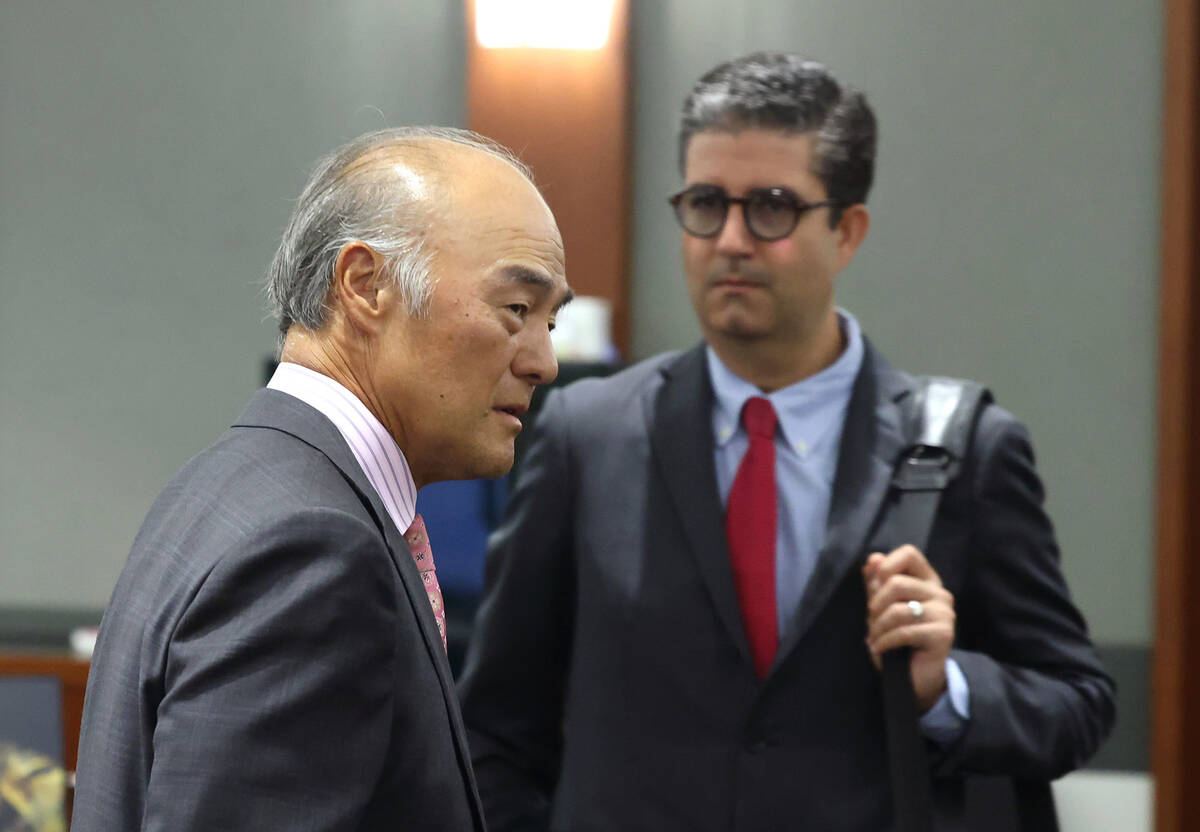
A Las Vegas defense attorney who prosecutors believe used artificial intelligence to write a brief said in a Friday filing that the document at issue simply included an incorrect citation.
Prosecutors have requested sanctions against Dean Kajioka and to strike his brief, which they asserted had citations to a nonexistent case, an apparent “hallucination” by AI.
“It was just a typo,” Kajioka, a lawyer in Nevada since 1993, told a reporter. “The case exists.”
He has previously denied using AI and is asking for District Judge Monica Trujillo to consider imposing sanctions against prosecutors instead of him.
Chief Deputy District Attorney Eckley Keach declined to comment Monday.
The dispute comes in a case stemming from a November explosion at Piero’s Italian Cuisine, an iconic restaurant near the Strip that was featured in Martin Scorsese’s 1995 film “Casino.”
Kajioka’s client, Robert Schwieger, 53, was arrested in April and faces a count each of conspiracy to commit first-degree arson, first-degree arson and using explosives to damage, destroy, attempt or conspire to damage or destroy property.
He is one of several defendants accused of playing a role in the pipe bombing of the restaurant, which caused damage only to the entrance.
Keach previously said in court papers that a July 10 filing from Kajioka raised red flags.
“Immediately, the State’s attorneys observed that the style, tone and formatting of the reply differed significantly from Defendant’s original petition, including, notably, a shift from inline citations, and simple page references to the ‘Grand Jury Tr.’, to footnote citations and page and line citations to the Grand Jury Transcript abbreviated as (GJT),” he wrote.
There was also “hallucinated citation to a non-existent case: ‘Evans v. State, 123 Nev. 117, 159 P.3d 438 (2007),’” Keach said, while noting that there were real Evans v. State opinions from years other than 2007.
“Contrary to the State’s assertion, Evans v. State is a valid case,” wrote Kajioka. “The reference to said case in Defendant’s reply brief inadvertently contained a typographical error of the case citation, the correct citation being 944 P.2d 253 (1997).”
He added: “Considering the State’s aggressive approach to this issue (which could have easily been addressed and resolved), and, more importantly, the State being clearly wrong in their assertions, this Court should consider sanctions against the State for the filing of its inappropriate, unnecessary and misguided motion.”
Contact Noble Brigham at nbrigham@reviewjournal.com.