It takes about 14 years to get a new drug approved by the Food and Drug Administration.
That leaves drug companies about six years of exclusive sales until their 20-year patent expires, and they typically lose almost 90 percent of their market share to generics.
A Las Vegas-based tech startup can cut the time-consuming approval process in half, which, for a drug like Ozempic, would be worth more than $100 billion in sales.
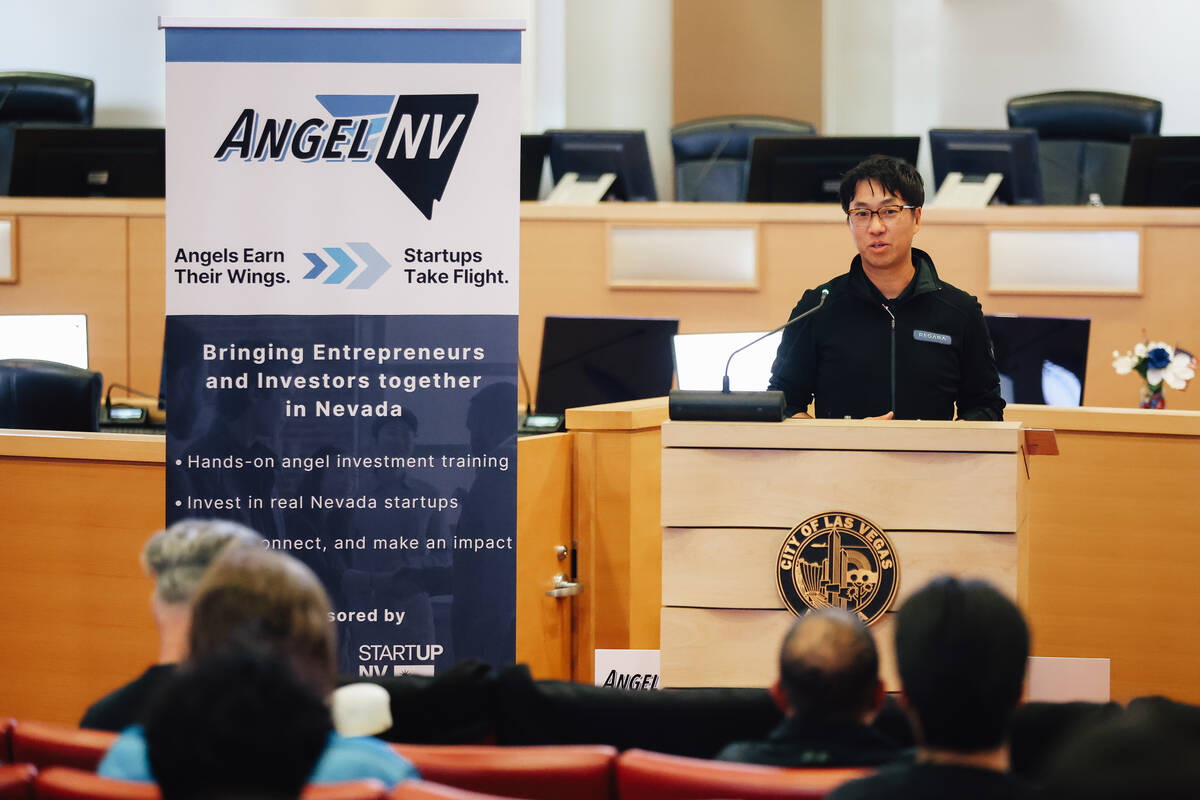
Regara, which recently won AngelNV’s “Shark Tank”-style competition over 160 other companies and received a total of almost $1 million in investments, created an artificial intelligence-native operating system for medical regulatory execution that reduces approval timelines, lowers regulatory spend and increases speed to market.
“We autogenerate, with AI, all of the documents that are needed to help these companies with the whole gamut of getting through the FDA worldwide,” Regara founder and CEO Aaron Kim said.
For example, Kim said that a submission document required by the FDA can contain 10,000 pages and take companies up to four years to create manually. Regara can autogenerate the same document in two hours.
“There’s about 10 other models that are required by the FDA that we do that same thing for, so in the whole process we can save two years here, six months there. It adds up,” Kim said. “Legally speaking, they still have to review what we give them. But rather than writing it from scratch and spending three to four years, they can spend a month to read it, proof it and make any changes they want.
“What we tell the investors is ‘It’s easier to proofread Shakespeare than to write it from scratch.’ We’re not really selling the industry AI, we’re selling them time. We will help them save so much time.”
Jeff Saling, co-founder of StartUpNV, a nonprofit incubator and accelerator which launched the AngelNV program in 2021, said Regara has changed his outlook on investing in medical companies.
“Our group generally will not invest in pharmaceutical projects because they just take too long and it’s such a crapshoot if the thing is going to get approved or not,” Saling said. “You have to have an ocean of money and a lot of time to invest in something like that. But if Regara works the way it looks like it will, it’s going to make investing in the projects more approachable, and that’s why we’re pretty excited about it.”
Kim, who was born in South Korea, raised in the Midwest and moved to Las Vegas from Los Angeles four years ago, said his company will use most of the investment funds for payroll for engineers and regulatory employees.
“That gives us two years runway, but hopefully we don’t need the entire runway,” he said. “We’re actually going to be launching in about six weeks and then we’re break-even in three quarters.”
‘Huge pent-up demand’
Besides drug companies, Regara also handles medical regulatory for biotech companies and medical device companies. It landed its first two pilot customers during the AngelNV program.
“They’re both $2-billion-a-year companies, but in the medical space they’re considered small or medium,” Kim said. “Once we get through the pilot with them, which is only four to eight weeks, then we’ll open up the floodgates.
“We actually have a list of 180 now on the wait list. This speaks to the need of what we’re doing. Every customer I’ve talked to, they’ve wanted to use it. There’s a huge pent-up demand for what we’re offering as a service.”
Regara makes money using Software as a Service (SaaS) and Artifical Intelligence as a Service (AIaaS) pricing models. The company offers monthly subscriptions and multiyear contracts.
Kim believes that one of the reasons Regara won the AngelNV competition is that the company is early stage.
“Which means we were a lower price point than some of the other companies,” he said. “We’re just getting started. No revenue. So it’s a bigger risk but hopefully a bigger reward. So it’s very much a Vegas sort of thing in my mind, which is take a bigger swing.
“Hopefully we all win big together.”
While speeding up the approval process is enticing for both Regara clients and investors, Kim said there is also a humanitarian side to his product.
“I think there’s somebody somewhere ailing from something, and the treatments are out there, they’re just not to market because they have to go through all this clearance. And it’s a shame,” he said. “I really think this company will make an impact one way or another and hopefully bring products to market faster and help people in the long term.”
Contact reporter
Todd Dewey at tdewey@reviewjournal.com.
Follow @tdewey33 on X.