An antiquated 105-year-old American law threatens to exacerbate the energy shocks triggered by the Iran war. President Donald Trump should urge Congress to reform or get rid of it.
Energy markets remained volatile Wednesday, but the price of oil now sits well below the $120 a barrel it briefly hit Monday. Gasoline prices continue to be elevated, as Iran disrupts shipping through the Strait of Hormuz. These are inevitable results of the U.S. attacks on Iran.
The United States produces enough energy to meet domestic demand. But the market is a global one, and any cuts in production will result in upward pressure on prices.
The disruptions present political issues for the White House as the midterms approach. Higher gasoline prices will increase the costs of transporting goods, potentially driving up the cost of goods. Price spikes should be temporary — unlike the higher energy costs driven by the Democrats’ war on fossil fuels — but that will be of little solace to working-class Americans worried about affordability.
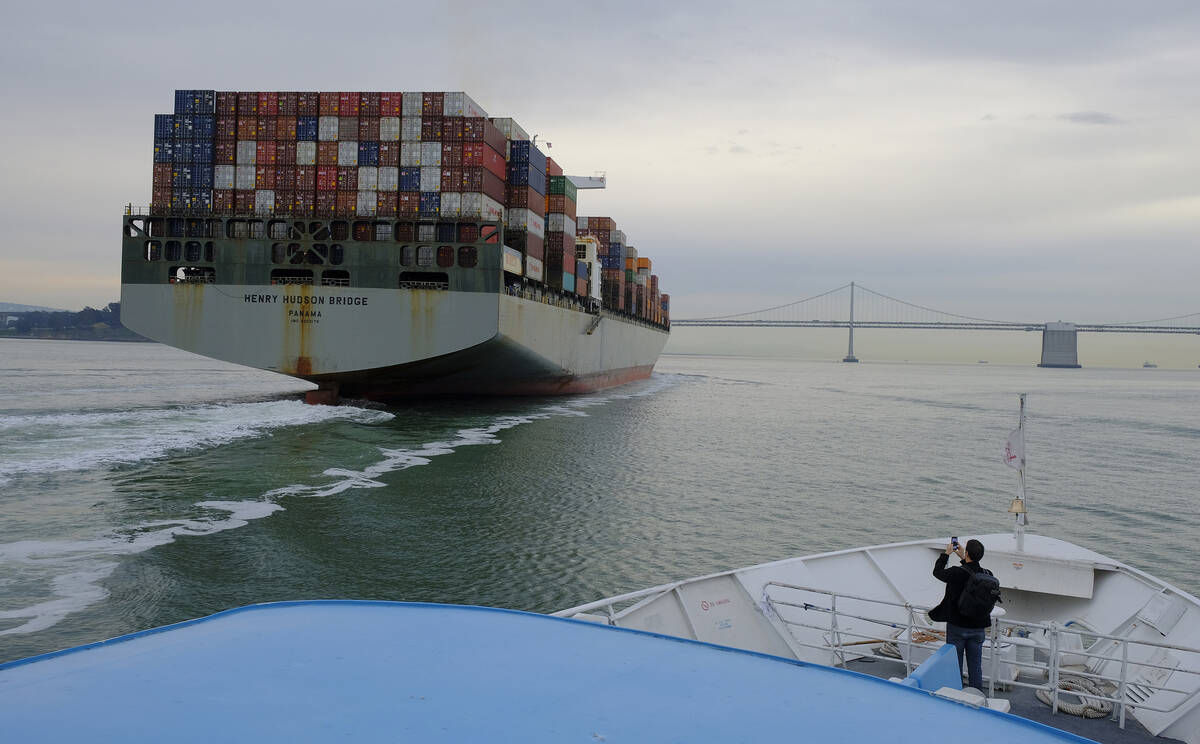
President Trump has a limited set of options when it comes to controlling gasoline prices. Perhaps his most promising avenue would be to suspend — or, better yet, push Congress to repeal — the 1920 Jones Act, which demands that all shipping between U.S. ports be conducted by American-owned vessels built and flagged in the United States and staffed with American crews. This reduces the number of vessels that can transport goods between American ports, limiting shipping options and boosting costs.
Because of the Jones Act, “oil pumped in Alaska can only be transported to the U.S. mainland by a small subset of available vessels, making it much more difficult — and expensive — to do so,” Joe Lancaster of Reason magazine noted this week. “Americans pay more for certain energy products like natural gas, even when it’s produced here.” For instance, Hawaii gets virtually all of its oil from foreign sources because the cost of importing it from the U.S. mainland is prohibitive.
The purpose of the law was “to ensure adequate domestic shipbuilding capacity and a ready supply of merchant mariners to be available in times of war or other national emergencies,” the Cato Institute reports. Yet in recent decades, the think tank notes, the number of ocean-going ships that meet the Jones Act requirements has declined from 193 to 92. Clearly the hidebound legislation is a failure as it pertains to ensuring a robust U.S. shipbuilding industry.
Mr. Trump in recent days has floated a temporary suspension of the Jones Act. Legislation pending in Congress would reform the law to make it far less restrictive. Either option would be step forward.