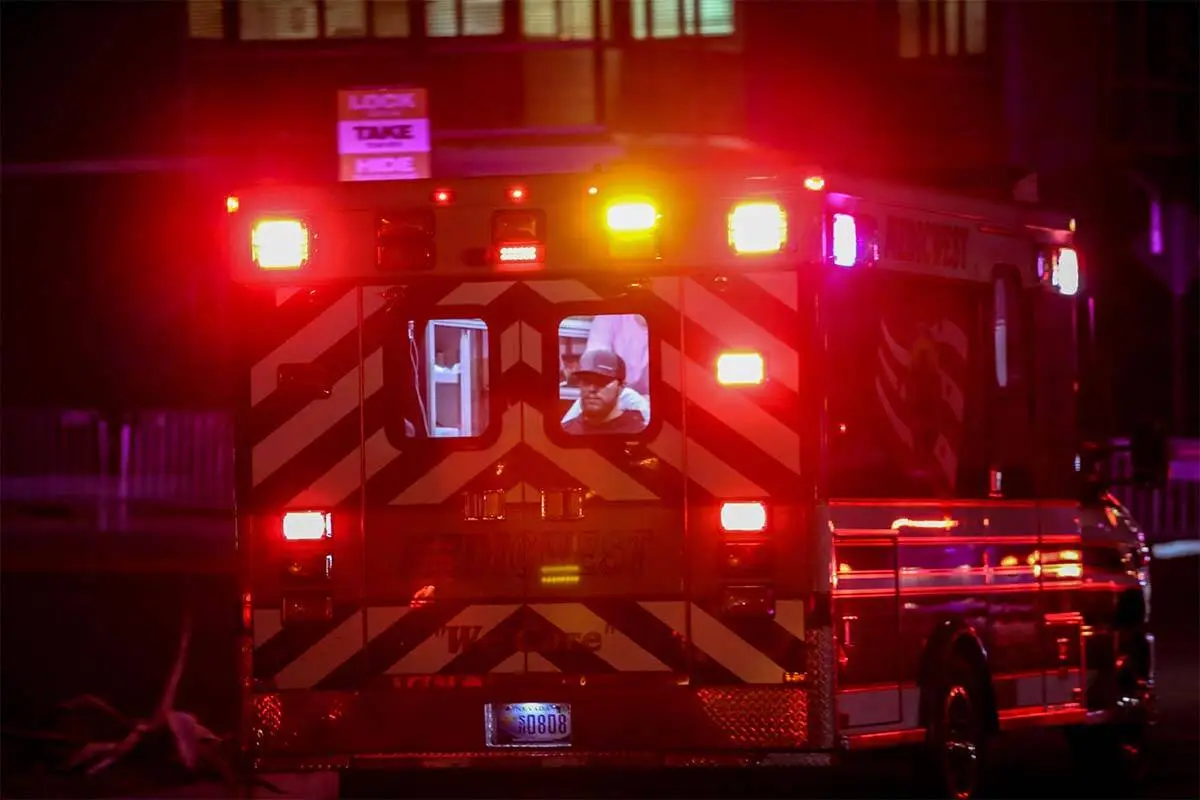
There are nights in emergency medicine you never forget. For me, Oct. 1, 2017, is one of them.
I was medical director of the emergency department at Sunrise Hospital and Medical Center when my phone began lighting up with calls and messages about an active shooter on the Las Vegas Strip. I put on my scrubs and raced to the hospital.
Nothing could have prepared me for what I saw.
Patients were arriving by ambulance, private vehicles, taxis and rideshares. They were on gurneys, in wheelchairs and on the floor. Many were bleeding from devastating gunshot wounds. Our emergency department, which had approximately 45 beds, suddenly faced an influx of more than 250 patients.
But something extraordinary happened, too.
More than 100 physicians and 200 nurses, along with countless other medical professionals and staff, responded to help. We expanded treatment areas throughout the hospital. We moved patients wherever we could safely care for them. At one point, we exhausted supplies including chest tubes, laryngoscopes and ventilators and quickly obtained additional resources from other hospitals in our system.
I worked for roughly 20 hours straight. What stays with me most is the number of people who survived because emergency medical care was available when they desperately needed it.
Oct. 1 was an extreme and horrific event. But it taught us an important lesson that remains relevant today: Emergency medical capacity matters.
Southern Nevada cannot assume our existing hospital emergency departments alone will always be enough.
That is true during an extraordinary mass-casualty event, but it is also true on an ordinary Tuesday.
Our hospital emergency departments routinely care for large numbers of patients while our community continues to grow. Every additional point of access to legitimate emergency care strengthens southern Nevada’s healthcare safety net.
That is why freestanding emergency rooms are important. They are additive to our community’s healthcare options.
Urgent care also plays an important role in our healthcare system. It is appropriate for many non-life-threatening illnesses and injuries. But an emergency room is built, equipped and staffed for something fundamentally different: the patient experiencing chest pain that could signal a heart attack; the child struggling to breathe; the person with symptoms of a stroke; or the driver seriously injured in a crash.
Freestanding ERs provide emergency care 24 hours a day, seven days a week, with emergency-trained physicians and nurses and diagnostic capabilities including advanced imaging and laboratory services. In Southern Nevada, these facilities extend that level of care into neighborhoods closer to where people live. Today, I help oversee freestanding emergency departments within the Sunrise Health System and see firsthand the role they play in expanding access to emergency care.
Yet that access could be threatened.
As Nevada approaches the 2027 Legislative Session, there is concern that proposals could emerge to require freestanding ERs to be reimbursed at rates comparable to urgent care centers.
We should have a thoughtful discussion about healthcare costs, transparency and ensuring patients understand where they are receiving care. Nevada already requires off-campus emergency facilities to clearly tell patients that they are entering an emergency medical facility and will be charged for emergency — not urgent — care.
But reimbursement policy also must recognize what it takes to operate an emergency department.
You cannot require a facility to maintain the physicians, nurses, equipment, diagnostic capabilities and around-the-clock readiness of an ER while reimbursing it as though it were an urgent care center. The economics simply do not match the medical responsibility.
And if reimbursement falls below what is necessary to sustain emergency operations, some facilities could ultimately become financially unsustainable, forcing them to close and cease operations altogether. Who would lose the most? Nearby residents, patients and all who depend on having emergency care close to home.
I understand concerns about healthcare affordability. We should address them. But reducing access to emergency medicine is not the answer.
Oct. 1 taught me that we can never know when our healthcare system will be tested beyond anything we imagined. It also taught me that capacity isn’t an abstraction. It is doctors, nurses,
equipment, treatment rooms and lifesaving resources available at the moment someone needs them.
Southern Nevada deserves more emergency capacity, not less.
We should protect the healthcare infrastructure we have worked to build and ensure that when the unthinkable happens — whether to one family or an entire community — emergency care is there.
Because when someone’s life is on the line, the most important question shouldn’t be how far away help is. It should be how quickly we can provide it.
If that matters to you, please contact your legislative representatives – your state assemblymembers and senators – to let them know you do not want to lose access to emergency care in your community.
Dr. Scott Scherr is an emergency medicine physician. He writes from Las Vegas.