On the morning of Sept. 11, 2001, Ernest Jackson was unknowingly preparing for the disaster about to befall his hometown.
The Brooklyn-born Port Authority of New York and New Jersey worker was in Morristown, New Jersey, getting ready to watch a training video involving the 1993 World Trade Center bombing that killed six when he turned to a television and saw one of the twin towers billowing dark smoke.
“We came in on a break, and I go, ‘Wait a minute, I don’t remember seeing that in the video,’” Jackson said.
Airplanes had hit both the north and south tower, and Jackson, alongside roughly 50 of his co-workers, knew they needed to be there to help.
They rushed to their cars and made the roughly 30-mile drive to New York City. The south tower had collapsed by the time Jackson arrived at the Holland Tunnel, which connects the Garden State to lower Manhattan.
Jackson was told to stay and man the tunnel’s New Jersey side while his co-workers traveled under the Hudson River to dig New Yorkers out of the rubble just before the north tower fell.
“They never came back,” Jackson said, his voice choking up as he recalled the tragedy that killed co-workers he saw as family.
Those who weren’t killed at ground zero died in the following months and years from tumors, cancer and other health complications, Jackson said. Coughing co-workers would clock in and share their grim diagnoses: Six months to live. Two months to live. One month to live.
“They wasn’t prepared for that type of situation,” Jackson said. “You ran in digging in the pile … no protection gear, and most of my guys like that got really sick.”
Back at the Holland Tunnel, Jackson remembered the entrance into New York being closed off except for emergency vehicles from nearby communities. The tunnel typically serviced around 100,000 cars a day, but Jackson recalled seeing less than 100 vehicles enter New York City in the hours following the attacks.
Leaving New York, however, were long lines of cars, Jackson said. Among those escaping the city was Ernesto Butcher, who led Port Authority in the aftermath of 9/11 after the agency’s executive director died at the authority’s World Trade Center headquarters.
“He was so much full of dust, coughing,” Jackson said. “We was like, ‘Alright boss, take everything off. We’re gonna take care of you, clean you up and get you back.’”
With so many of his co-workers killed, Jackson said he and the survivors were left to work 16-hour shifts, seven days a week for the next three years.
A new normal
In the weeks and months after 9/11, Jackson recalled a changed city: “No sun. Just smoke.”
The smell of smoke and the sounds of sirens from police cars and ambulances filled the city’s air. In the days after the attacks, Jackson said thick dust made it impossible to see his fellow New Yorkers on outdoor walks, even if they were only a few feet apart. When he would return home, his clothes were shrouded in aerial debris.
“(For) three years it snowed,” Jackson said. “It was unbelievable.”
He added that, in lower Manhattan in the days after 9/11, “You don’t hear nobody, you don’t see nobody. It’s dark, smoky. All you hear is emergency vehicles moving 24/7. It was unbelievable. It was so scary.”
Living in New York City after 9/11 also brought a newfound paranoia, Jackson said.
“You’re just looking over your shoulder. Hopefully this doesn’t go wrong today,” Jackson said. “You just lost that feeling of being free. You don’t have that freedom no more.”
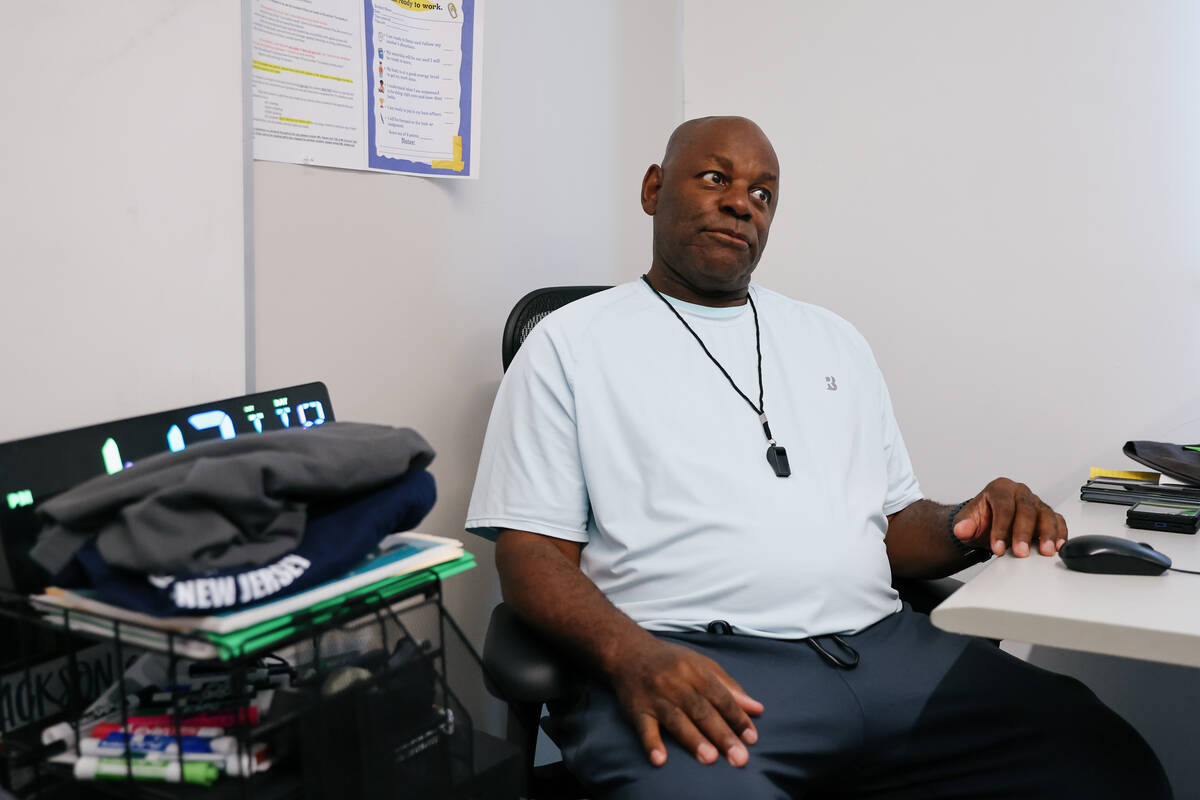
Jackson retired from the Port Authority in 2019 after 34 years with the agency and moved to Las Vegas in 2021 for a change of scenery. He now works as a campus security monitor at Coral Academy of Science’s PK-8 campus on Nellis Air Force Base and also coaches several kids’ sports teams.
Jackson said he shares his recollection of 9/11 with students and tries to instill in them the positive life outlook he has held for the last 25 years.
“I try to appreciate every single moment, every person,” Jackson said. “Everything I do, I really try to appreciate it.”
Contact Spencer Levering at slevering@reviewjournal.com or 702-383-0253.