He pauses and takes a deep breath before getting a little emotional — Roger Thomas knows it’s coming.
“I get choked up every time,” the renowned interior designer acknowledges.
This moment has been more than 50 years in the making for the man whose keen eye for sophisticated opulence helped actualize Steve Wynn’s lavish vision for watershed properties such as Bellagio and Wynn Las Vegas.
But it goes back even further than that for Thomas, back to when was 8 years old and his parents took him to his very first art museum, then known as the California Palace of the Legion of Honor.
“It changed my life,” he remembers. “If I had not gone to that museum at 8 and decided to dedicate my life to art and design, what I was able to accomplish with Steven and Elaine Wynn might never have happened.
“My parents had the wherewithal, the ability to take their children to a museum in San Francisco,” he continues. “Most Las Vegas children never have that opportunity, have never had that opportunity.”
All that’s about to change: In the fall of 2029, the long-gestating Las Vegas Museum of Art is finally scheduled to open, thanks in no small part to Thomas’ efforts, which date to the mid-’70s.
First comes another first: the construction of the Grand Central Galleries, an innovative, multipurpose media lab and more intended to serve as a communal entry point to the LVMA.
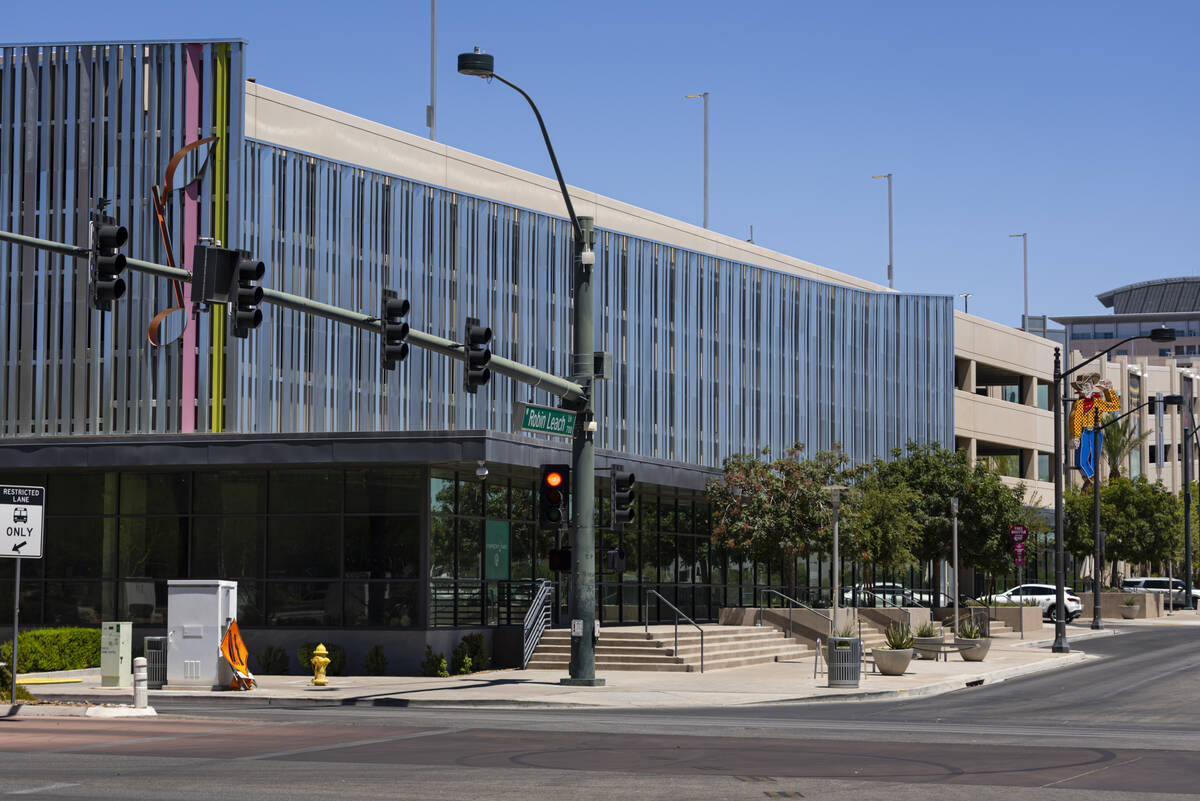
Located in Symphony Park on the bottom level of a parking garage near the site of the future museum, the galleries will offer space for exhibitions and public programs as well as a retail storefront and offices for museum staff.
The novel venue will host educational programs, including instructor-led art classes. A bookstore also is planned for author meet-and-greets, creative workshops and pop-up experiences.
Visitors will also be able to view a display of architectural renderings, models and multimedia content about the museum’s future home.
“On one side of Grand Central Galleries, you’ll have a very modern black box space where you can do a number of programs,” LVMA Executive Director Heather Harmon explains. “You can have a lecture, you can have a video program, you can have a sculptural installation.
“And on the other side, you can show paintings and drawing and works on paper and archival materials,” she continues. “We’re really excited to bring the depth and the range of programming to our community, but we also notice our community is hungry for it.”
The Grand Central Galleries also present the initial naming opportunities for the LVMA, as fundraising proceeds toward the museum’s $200 million campaign goal, with more than half secured to date. The first in the main museum: The Peggy Thomas Gallery, named after Roger’s mother.
With ground to be broken on the project in late September with a targeted opening date of spring 2027, decades of dreaming and planning are coming to tangible fruition.
This is the tip of the LVMA spear.
“What is coming is the very proof that this museum that we’re creating is very special,” says Pritzker Prize-winning architect and LVMA designer Francis Kéré, speaking about the Grand Central Galleries. “You don’t wait to have this fancy building to display art, you started already, and that is really showing that there is a need.
“The community is hungering to have a place where they can educate kids, where the community can access art,” he continues, “and that I feel is like, ‘Wow.’”
A ‘Grand’ vision
“Have you seen the plan of the space?” Roger Thomas asks, posing a question he’s been waiting forever to answer.
Seated at a conference table in the LVMA offices tucked in a nondescript business park in the shadow of a freeway overpass not far from the Strip, Thomas has myriad diagrams, renderings and color swathes laid out before him.
The venue will feature two primary public spaces: a 2,616-square-foot, climate-controlled gallery for art in all media, and a specially designed space of more than 3,800-square-feet to facilitate experimental new art and real-time video production.
“We want a gallery that specifically can host some of the extraordinary multimedia presentations that artists in the 21st century are really excelling at, that combine video and audio and sensory and all kinds of things,” Thomas says. “So we needed a space for that, but we also wanted a space that could be Art 101, where we could show exquisite drawings and paintings, a smaller-scaled space.”
The idea is for the galleries to serve two initial purposes.
“One is to create this home base for the museum admin team,” notes Alexia H. Chen, one of the principals at LGA Architecture, which designed the space. “And also, the gallery and media lab space allow the museum to start activating their presence right away before waiting for the big building to get there.
“That happens to all of us that are in the construction/design, people keep asking, ‘When is it going to open?’” she continues. “This will be a place for you to find out, and keep you connected with the museum.”
And to think, this can all be traced back to a dinner party in 1975.
The long road here
The very first fundraiser for a Las Vegas museum of art took place five decades ago in the home of banking magnate Jerry Mack and his wife, Joyce.
Jerry was partners with fellow influential financier E. Parry Thomas, Roger’s father, in Valley Bank of Nevada.
Having returned home after earning his BFA at the School of the Museum of Fine Arts Boston two years earlier, Roger urged the Macks to host the event.
“Steve and Elaine were there,” Thomas recalls, foreshadowing the latter’s pivotal role in bringing the museum to life years later. “They made the largest pledge of the evening.”
And so began in earnest the long, winding, occasionally pothole-strewn road to the LVMA as Thomas’ career blossomed: He designed signature Vegas properties such as the Stardust, the Golden Nugget, The Mirage and Treasure Island, has been named to Architectural Digest’s AD100 list of the world’s greatest architects and designers five times and was inducted into the Interior Design magazine Hall of Fame in 2015.
Over the years, there were promising moments and progress made; the Las Vegas Museum of Art is not entirely without precedence.
Thomas cites precursors like the Nevada Institute for Contemporary Art, founded by pioneering Green Valley/Summerlin developer Mark Fine, and the Las Vegas Art Museum at the Sahara West Library, headed by art historian and writer Libby Lumpkin, widow of distinguished art critic Dave Hickey.
“We’ve had several efforts along the way that have been meaningful and have taught us a lot,” he says. “There were many valiant efforts, but fundraisers for those efforts would be asked by the possible donors, ‘Well, what kind of art is going to be in the museum?’ And the answer was always, ‘We don’t know.’ That gives no security at all.”
That changed when Elaine Wynn, the driving force behind the LVMA, brokered a partnership with the Los Angeles County Museum of Art (LACMA), where she was also a board member until her death in April 2025.
“We have access to 150,000 objects in the LACMA collection for our own curation, or to take shows that LACMA has curated,” Thomas says of the 50-year agreement. “We will have one floor that will always show, in the main gallery, selections from the permanent collection.”
When Wynn began assembling the LVMA board, Thomas was the first person she invited. The board also includes her daughters Kevyn Wynn and Gillian Wynn, LACMA CEO and Director Michael Govan, philanthropist Dana Lee, and Harmon.
“My charge, when Elaine asked me to be on the board, was, ‘I need you to oversee the entire design and construction of the buildings to be sure that they’re done the way I would want them,’” Thomas recalls. “Elaine knew that her time was limited when she asked me to perform that function — I did not. But I had a 40-year history before that of making sure that things were done the way Elaine wanted them. So I’m fairly comfortable with that charge, even though she’s not here.”
When conceptualizing the Grand Central Galleries, Thomas worked closely with interior designer Alex Woogmaster, one of his protégés and the head of the Vegas-based Woogmaster Studio.
Their emphasis was on inclusivity.
“The way that a gallery typically is, there’s a front desk and there’s a very clear sort of barrier to entry,” Woogmaster says. “This building is a lot more open about its functions, about sharing functions between guests and the team.
“We’re all very proud that we’re getting this museum,” he continues. “It sounds so silly, but it’s for the people, it’s for the city, it’s for all of us, and so to develop this office and this media lab gallery space as an initiation, to bring people in and say, ‘You also are a part of everything about it,’ I think is a really important aspect of the design of this building.”
‘A really good place to start’
Right now, it’s little more than a dirt floor encased in barren concrete.
“This was a tabula rasa,” Thomas explains of the inauspicious origins of the Grand Central Galleries. “This is an empty space.”
In a nod to its name, he has grand ambitions for filling it.
The Grand Central Galleries board room will double as the museum’s library, starting with the installation of Elaine Wynn’s collection of art books, followed by Thomas’ own.
“I have a home here with three library stacks crammed with books,” he says. “It’ll be 200 book boxes completely filled when it goes.”
Thomas has also hand-selected furnishings for the galleries’ offices and public spaces.
“For the past year and a half, I have been collecting notable examples of really good American design of the mid-20th century,” he says, citing works from Charles and Ray Eames among others. “We’ll have museum quality furniture in museum offices.”
The galleries will also enable the day-to-day machinations of the museum to begin, to see what works — and what might need work — with planning under way for the first official exhibit there.
“Our first trials will be at the Grand Central Galleries,” Thomas says. “We’ll be able to figure out how to get buses in, and how to communicate with teachers, who our educators are within our galleries, and it will also allow us the ability to start selecting exhibitions with the idea that we want to see what resonates in Las Vegas.
“Does what resonates in Los Angeles resonate in Las Vegas?” he wonders. “My answer is probably, but the rest of the answer is, ‘I don’t know.’ ‘I don’t know’ is a really good place to start when you’ve got this initial gallery that’s trial size.”
About those buses, Thomas can already see them rolling in, practically.
It’s one of the things he’s most looking forward to, the thing that gets him speaking a bit haltingly as he collects his emotions.
This is where it all started for him, as a young boy going to an art museum for the first time.
And this is where he hopes it never ends.
“I’m looking forward to serving as a docent when those 8-year-olds are there, getting them excited about what art means in life and how it happened, why it happened,” Thomas says. “We need those 8-year-olds designing the future of Las Vegas.
“When I was growing up, there was no native talent that was creating Las Vegas; there was no example to follow — probably a good thing for me, because I didn’t know what I couldn’t do,” he continues. “But it’s important to me that native Las Vegans see that they, too, can create the future.”
Contact Jason Bracelin at jbracelin@reviewjournal.com or 702-383-0476. Follow @jasonbracelin76 on Instagram.