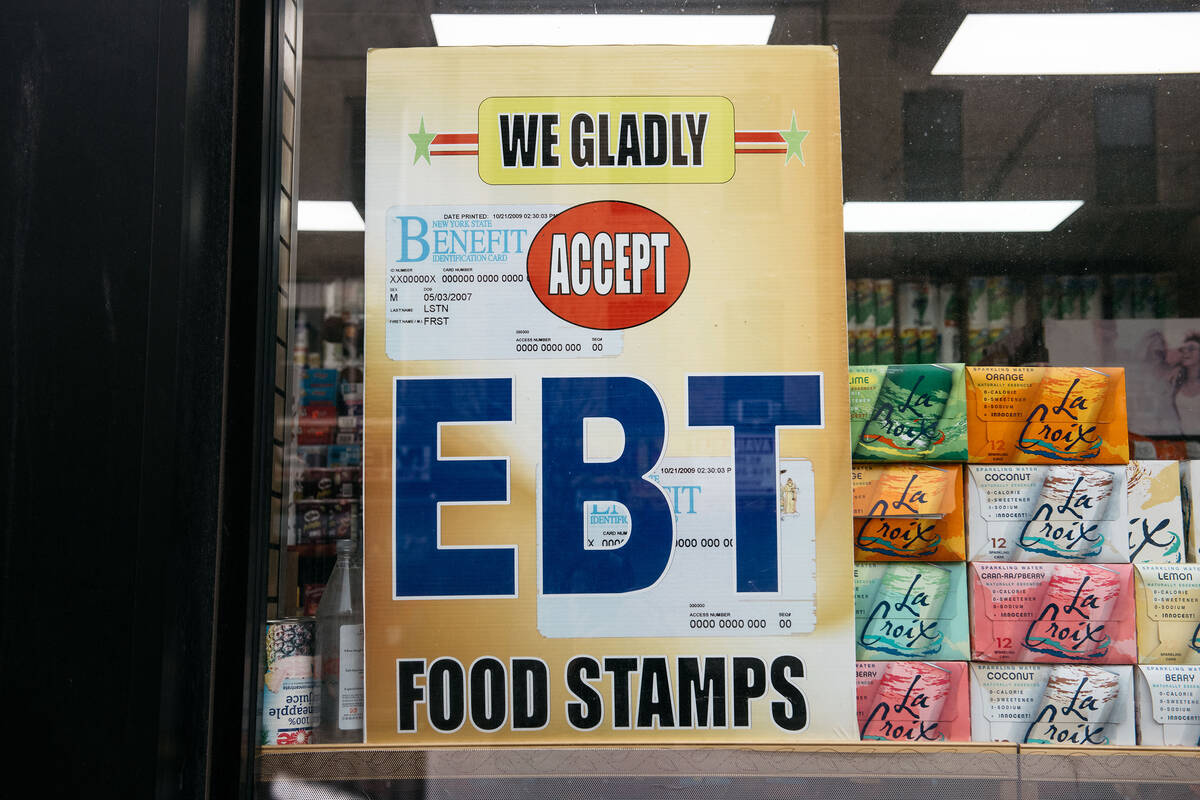
Congress enacted some of the biggest reforms to two of America’s welfare programs in decades — the Supplemental Nutrition Assistance Program (SNAP), commonly referred to as food stamps, and Medicaid, which provides health care for one in four low-income Americans.
Critics may argue the paring-back reforms in the One Big Beautiful Bill are cruel and unnecessary, but in reality, the reforms will resize these programs back toward pre-pandemic levels.
During the pandemic, many government programs blasted past their historic norms and were set on a higher-cost orbit. Afterward, several programs never returned to Earth. The reforms are an attempt to re-ground those costs, if only partially.
While many politicians refer to the funding reset as “cuts,” that’s not quite right. These programs will continue to grow and exceed pre-pandemic levels, after accounting for inflation and population growth.
In July 2025, when the bill was passed, the cost per enrollee was 54 percent higher than it was when the pandemic started five years earlier — or 20 percent higher, accounting for inflation and population growth. In other words, SNAP benefits expanded so much during the pandemic that not only were beneficiaries able to afford the same groceries as before, they were able to purchase more.
Beyond payments themselves, eligibility also expanded. There were more than 5 million more SNAP beneficiaries in July 2025 than in February 2020. Only 1 million of those can be explained by population growth. The rest are from expanding eligibility to more people who wouldn’t have qualified before the pandemic.
The program expanded well beyond its original design, and some paring back was overdue. The reforms are sensible — a scalpel, not a chain saw. For example, the bill allows the government to re-evaluate an administrative change that was made in 2022 that increased payments well beyond inflation.
There has been substantial criticism of this administrative change, as it was never required by statute. Rather, the Department of Agriculture used its administrative discretion to expand benefits well beyond the inflation adjustment Congress had authorized. The bill will allow the USDA to limit this kind of expansion in the future and put the program back on track.
It also extends the existing three-month limit for receiving SNAP benefits to beneficiaries up to age 64 (instead of 54) and to parents whose children are older than 14 (instead of 18). Furthermore, it tightens the test for unemployment exemptions, ends the internet subsidy and passes more costs and accountability onto states. States with high error rates will have to foot more of the bill and cover more of their own administrative costs. In 2025, $10 billion in taxpayer money was mistakenly spent by state SNAP programs due to errors.
The underlying problem is SNAP and Medicaid are financed in a way that encourages states to expand programs beyond what the states would pay for themselves. SNAP is paid for entirely by the federal government yet administered by the states. And the federal government covers more than half of Medicaid costs, yet it gives states discretion to set eligibility. Both programs incentivize states to expand coverage because the cost is spread out among all states’ taxpayers.
The big change to Medicaid in the bill is the implementation of “community engagement” — meaning work requirements. Like with SNAP, going forward, to qualify for Medicaid, a person must not only be low-income but be working (if able). There are exceptions to this requirement for people with disabilities, the elderly, parents of young children, and pregnant mothers. Beneficiaries can also qualify by attending school or doing community work.
Detractors often argue that the community engagement requirements will disqualify people for failing to complete paperwork properly, citing two states’ experiences as evidence. States have had several years to prepare for implementation, and most states have private companies that, paid based on the number of Medicaid enrollees, have every incentive to ensure eligible people fill out the paperwork. Predictions of paperwork disqualification are overblown.
Programs such as SNAP and Medicaid were designed specifically to help people in most need. Both programs, though, expanded beyond that basic remit and would continue to balloon beyond their scope if legislators didn’t act. To provide for those truly in need, the reforms deserve a careful look beyond the headlines about billions being cut. Better-targeted programs help beneficiaries and taxpayers alike.
Jeremy Nighohossian is a senior fellow and economist with the Competitive Enterprise Institute. He wrote this for InsideSources.com.