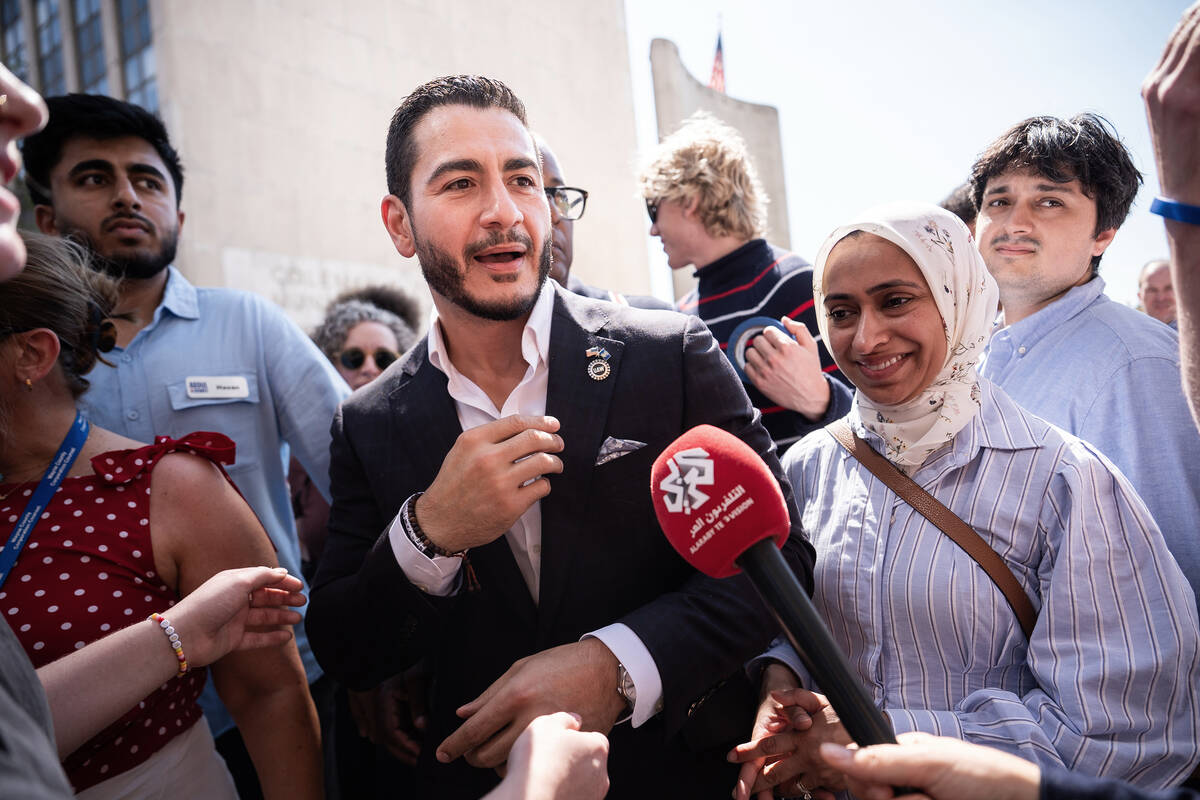
When left-wing insurgent Abdul El-Sayed won the Democratic nomination for an open Senate seat in Michigan, Donald Trump cheered that it was “great news for the Republican Party.”
In an important way, he’s right. Many of El-Sayed’s policy views are far outside the mainstream. Even many Democrats agree with Trump that he will be a weaker candidate in November than the more pragmatic rival he narrowly defeated, Rep. Haley Stevens. And if Democrats lose Michigan, they have virtually no hope of reclaiming the Senate majority.
“It is deeply troubling to see radical, far-left candidates winning in places that are potentially presidential swing states,” Jonathan Cowan, the president of Third Way, a leading centrist Democratic group, warned in The New York Times.
But there is another way to look at this year’s primary results, where a number of liberal outsiders have ousted entrenched favorites. Voters often see these newcomers as “fighters” — as change agents who reflect a profound discontent that goes beyond ideology, injecting a jolt of energy into a party that has been flailing since the Biden-Harris debacle two years ago.
“What voters have been screaming from the rooftops is they’re sick of the status quo. They’re sick of the establishment. They want something different,” Lis Smith, a Democratic consultant who worked in Michigan, told Karen Tumulty of The Washington Post.
So, here’s the crucial problem facing Democrats this fall: How do they harness this yearning for something different, represented by candidates like El-Sayed, while downplaying their more outlandish ideas, like opening borders, abolishing prisons and ending private health insurance?
That won’t be easy, because insurgents have long expounded far-fetched ideas that are already being exploited by Republican strategists. The National Republican Senatorial Committee has released an ad branding El-Sayed “the most radical Senate candidate in America,” calling him “too dangerous” to trust in office.
These sorts of attacks have worked before, when Democrats have given their rivals an opening by veering too far to the left on issues like crime, immigration and gender identity. Remember that in 2024, Trump’s campaign ran a simple, stunning ad that stated, “Kamala is for they/them; President Trump is for you.”
This playbook exploits the longstanding and deeply held liberal fantasy that this is a left-leaning country, ready to elect radical leaders, when that is just not true. In 2024 exit polls, only 23 percent of voters identified as liberal, with 42 percent calling themselves moderates and 35 percent conservatives.
“The left has the passion, but the middle still has the votes Democrats need to win in general elections,” writes Fareed Zakaria in the Post.
All true, but passion is also an enormously valuable commodity in politics. It moves people to recruit, donate, organize and above all, vote. And outsiders like El-Sayed give Democrats a chance to tap into a deeply despondent American mood that long preceded Trump but now weighs heavily against him and his Republican acolytes.
Four of the past five presidential elections have been won by the “out” party (Obama in 2012 being the exception). In the latest Gallup poll, only 1 in 4 Americans said they were “satisfied with the way things are going in the United States,” while 72 percent expressed dissatisfaction.
“On the Country’s 250th Anniversary, the American People Are in a Sour Mood,” reports the Pew Research Center, with 3 out of 5 saying the nation’s best days are in the past, not the future.
That general sourness — much more than any ideological shift — explains why El-Sayed and other outsiders have been able to win. Take Colorado, where insurgents won the nomination for governor and defeated a longtime House member.
Kyle Clark, a veteran political analyst in Denver, told Puck’s Peter Hamby that Colorado voters “want proven fighters they know will go hard without being prodded to do it. It’s not about ideology for many voters I talk to. It’s about demanding action and results.”
Democratic pollster Fred Yang discerned similar emotions in races he handled in New York and Maryland. “The focus wasn’t on left or right — it was about going forward. It was about bread-and-butter issues: affordability and costs,” he told Puck.
El-Sayed and his comrades pose a big risk for the Democrats, but also present a great opportunity. Can they recognize, and reflect, what really angers people? Can they focus bread and butter, not pie in the sky? Can they generate excitement while avoiding excess?
Can they stand for change — and not chaos?
Steven Roberts teaches politics and journalism at George Washington University. Contactl at stevecokie@gmail.com.