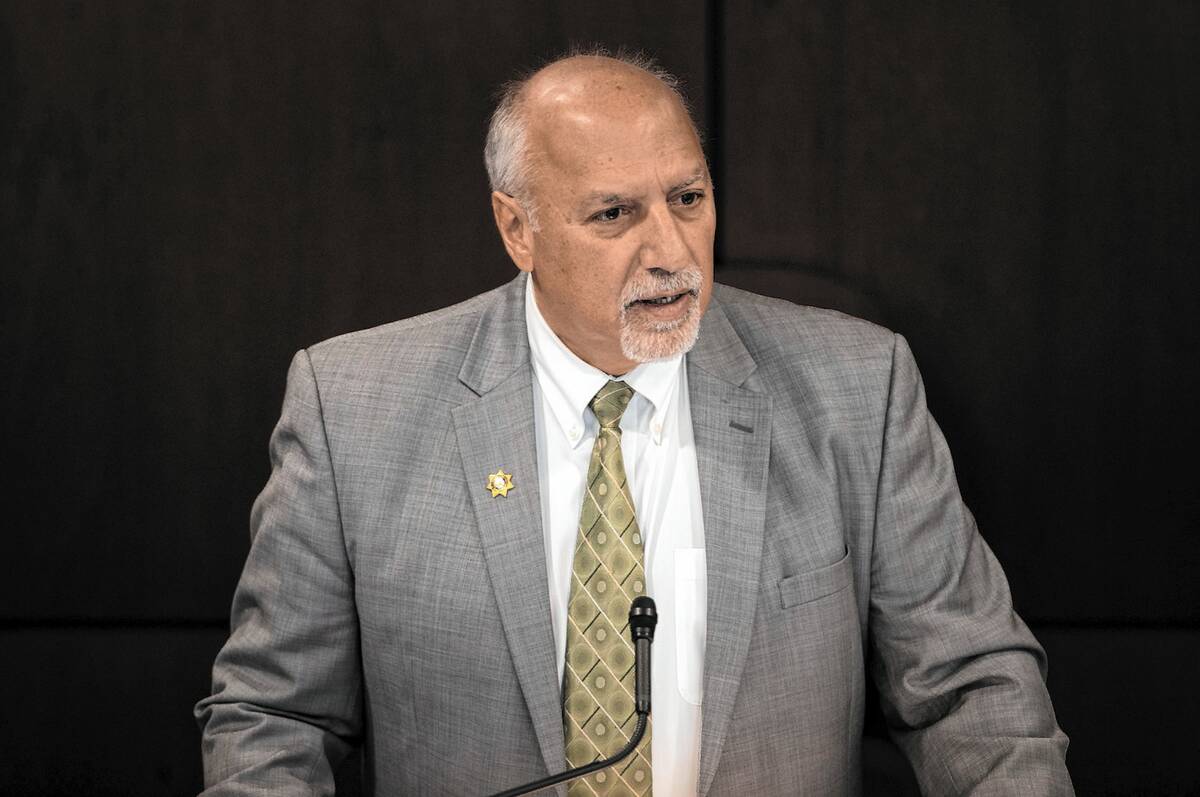
Lt. Gov. Stavros Anthony’s seven-year crusade to end carpool lanes in Las Vegas has been moving along like the traffic on Interstate 15 during rush hour.
Anthony, who also serves as vice chair of the Nevada Department of Transportation’s board of directors, has been working toward eliminating high occupancy vehicle (HOV) lanes since 2019, dating back to his time as Las Vegas city councilman.
Last year, Anthony helped get a two-year study with the federal government going to see if would be possible to get rid of HOV lanes on portions of I-15 and Interstate 11 in Las Vegas.
“I committed to take a look at eliminating the HOV lanes; that’s really my final objective,” Anthony told the Review-Journal. “We have to look at environmental issues. We have to look at federal law. We have to look at executive action. We have to look at all the grants that were given to build the roads 30 years ago. So, we have to go through all that paperwork to find out if we can.”
He said will take another year before a definitive answer is found on the future of carpool lanes in Las Vegas.
“Nobody in the country has ever gone through this process to try to eliminate HOV lanes,” Anthony said. “We’re the first ones to actually go through it. So it’ll be interesting to find out what the outcome is.”
Removing the carpool lanes could shutter left-hand exit/entry points on freeways, such as the HOV drop lanes on I-15 at Harmon Avenue and at the Neon Gateway, farther north on I-15, near Charleston Boulevard, that were added as part of Project Neon in 2019. As Anthony noted, the study will determine if there would be any financial implications with the federal government if the HOV lanes were removed. A portion of Project Neon’s federal funding was tied to including HOV lanes.
While everyone plays the waiting game as the study moves along, Anthony found a way in 2023 to limit when HOV lanes are active. The lanes are limited to HOV use only between 6 a.m. and 8 a.m. and 4 p.m. and 6 p.m. Monday to Friday.
“The rest of the time, people should be using them,” Anthony said. “People should be getting on those lanes to get quicker to work, to get quicker to school, to go quicker to wherever they’re going. So they’re virtually gone from when they were started, but I’m still going through the process to get rid of them, and we’ll find out in about a year or so.”
The carpool lanes were added to I-15 in 2019 as part of Project Neon — joining the existing HOV lanes on I-11. When the I-15 HOV lanes launched, new regulations went into effect limiting the use of the lanes to vehicles with two or more people, 24 hours a day, seven days a week. That was eventually reduced in 2020 to between 5 a.m. and 10 p.m. seven days a week and then to the current two hours during the morning and evening rush hours.
Anthony says he still receives positive responses for the shorter carpool lane hours.
“Everybody comes up to me and says, thank you for opening up the HOV lanes, where traffic is flowing better,” he said. “People are very thankful that they got rid of these HOV lanes, because they know that it wasn’t changing anybody’s driving habits. Nobody was calling up their neighbor and saying, ‘Hey, let’s go to work together so we can use the HOV lane.’ Nobody was doing that, and people understood that. So they’re just thankful that their tax dollars paid for that lane. Now they can use it.”
Contact Mick Akers at makers@reviewjournal.com or 702-387-2920. Follow @mickakers on X.