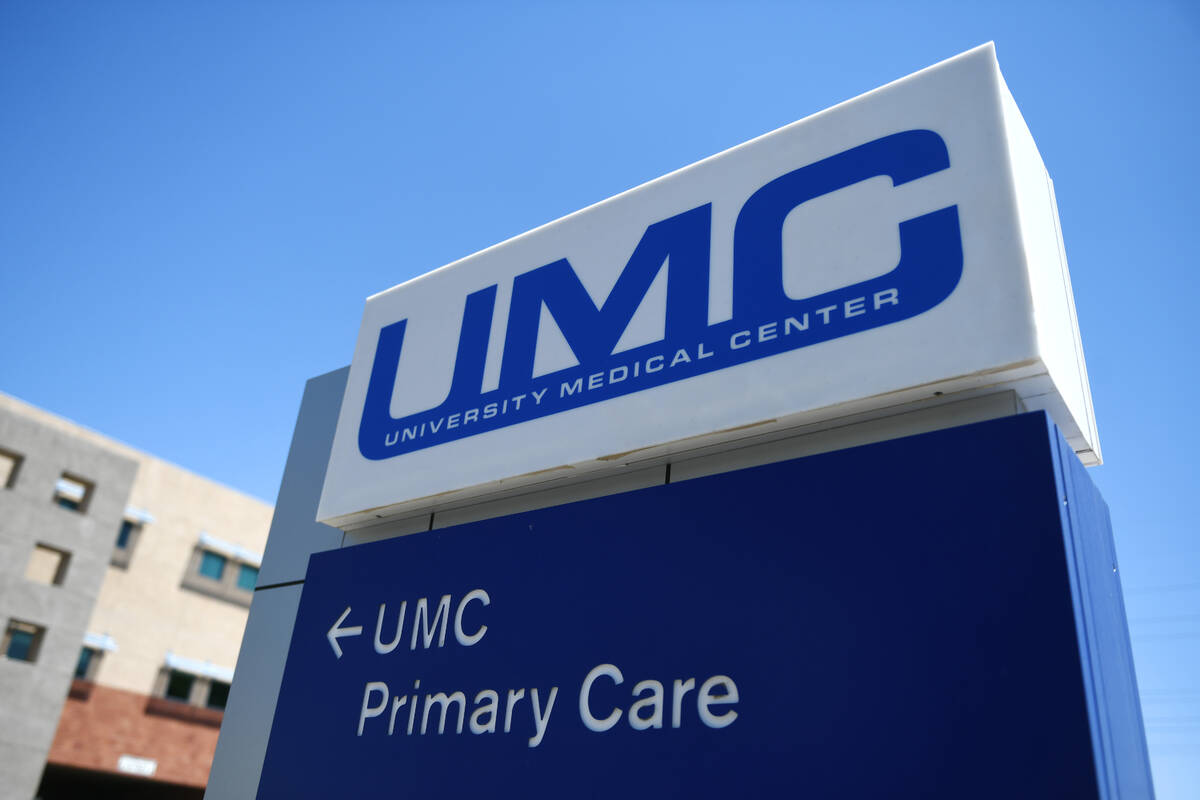
Since February, University Medical Center has advertised online for a forensic or child abuse pediatrician.
As of Thursday, no one had applied.
Multiple experts said in recent interviews that Nevada has no board-certified child abuse pediatrician, a doctor whose extensive training ideally enables them to tell whether or not an injury is inflicted by abuse.
There are only an estimated 330 to 400 child abuse pediatricians nationwide, according to experts, and the work they do can be crucial: diagnosing child abuse correctly could protect a child’s life, but getting it wrong could lead to a child being separated from parents or caregivers, who could then face jail time.
The absence of a child abuse pediatrician has made things “very, very difficult,” said Chief Deputy District Attorney Dena Rinetti, who prosecutes cases in which child abuse has led to death or substantial bodily harm.
“I have been screaming from the rooftops that we need a child abuse pediatrician,” she said in a recent interview.
She added: “I just feel like I can’t do my job and sometimes kids aren’t getting justice because I don’t have the right tools. And I think children are being hurt and being misdiagnosed without this subspecialty.”
Dr. Antoinette Laskey, a board-certified child abuse pediatrician and professor of pediatrics at the University of Utah, works with Clark County.
She said she has seen Nevada cases with missed opportunities, where a child suffered significant life-threatening or life-altering injuries because the suspected abuse “wasn’t diagnosed appropriately the first time — and it wasn’t subtle.”
In recent years, investigative journalists for news organizations like The New York Times and ProPublica have taken a critical look at child abuse pediatricians whose diagnoses have later come into question.
But the doctors also work to rule out child abuse and try hard to get it right, said Laskey.
“The lay media suggests that we are single-minded in our diagnoses, and I would tell you that we spend considerable time working very hard to get the best possible answer based on the information that’s available, and sometimes the system responds to that in a way that we can’t control, and may not be what we agree with, either over or under-reacting to a case,” she said.
People may become upset when they cannot make a definitive finding or determine that an injury is consistent with inflicted trauma, said Laskey.
She thinks child abuse pediatricians often have a heightened awareness of biases and cognitive errors and are able to strip away extraneous information to make a decision.
“I want to know: what are the defenses? Is this child abuse?” said Rinetti. “Because I’ve got enough child abuse cases. I don’t need cases where we can’t prove it or we can rule out child abuse.”
There have been child abuse pediatricians in Las Vegas in the past.
The prosecutor recalled a case years ago in which people were concerned that a child had been burned by a foster parent.
Rinetti recalled that the pediatrician said, “Guys, this isn’t a burn. It’s a spider bite.”
“When you make a diagnosis of child abuse, you’re the enemy,” said Dr. Terence McAllister, president of the Nevada chapter of the American Academy of Pediatrics and a pediatrician in Las Vegas.
“Psychologically, it’s a very difficult field to go into,” he said.
McAllister is a general pediatrician, but said he has received training in child abuse pediatrics from Laskey.
In order to become a child abuse pediatrician, Laskey said a doctor must complete a three-year fellowship after doing their pediatric training, then sit for boards to gain certification.
Then, to maintain certification, Laskey said, she must keep up with medical literature and undergo regular testing.
“It’s very hard to catch one of us because there’s not many of us and there’s a lot of jobs out there,” she said.
Laskey is not licensed in Nevada, so cannot see patients locally.
Sometimes, patients are sent to Utah, not specifically to see Laskey as a child abuse pediatrician, but often because their injuries are so severe they need the help of specialists not available in Nevada, she said.
In some cases, Laskey reviews medical records post-treatment and provides testimony.
Asked about the challenges of filling the open position, UMC Chief Nursing Officer Debra Fox cited child abuse pediatrics’ status as a niche specialty with few qualified individuals.
But prospective candidates also want things Las Vegas does not have, like a fellowship program where they can train others interested in the field of child abuse, she said.
She and other experts described child abuse services in Las Vegas as scattered.
“There isn’t an infrastructure where all of those resources and expertise comes under a single entity or program where we can actually recruit a pediatrician who can then champion and lead the charge,” said Fox. “It’s not a case of ‘build it and they will come.’ It’s a case of you have to have it built already, and then they may consider coming.”
Still, Rinetti said she is hopeful and sees the job as an opportunity for someone to build a program from the ground up.
“They could effectuate so much change, not only in Las Vegas, but in Nevada,” she said.
Contact Noble Brigham at nbrigham@reviewjournal.com.