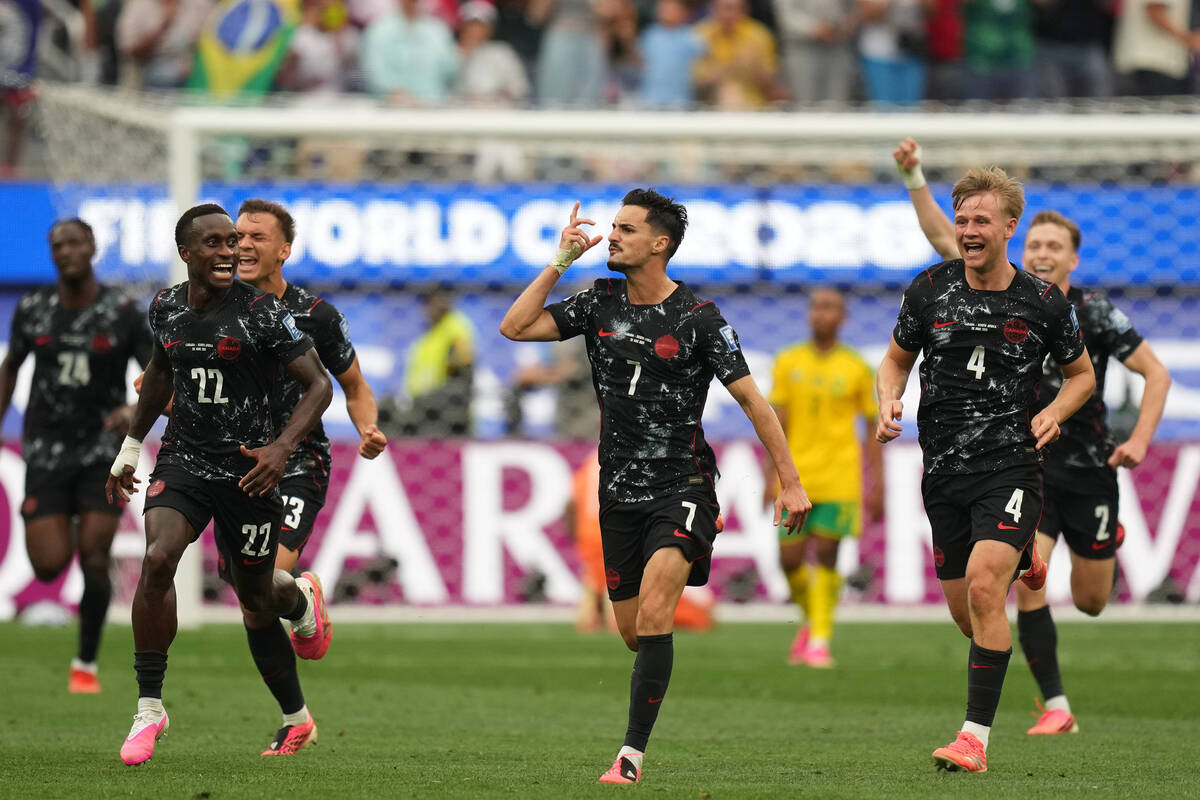
In the months leading up to the 2026 FIFA World Cup, issues such as visas for players, staff and fans, and the rising fuel and travel costs led many in the international soccer world to question the United States and its ability to host the games.
In this climate, now that the games have begun, the 2026 FIFA World Cup offers an opportunity to the United States, and particularly the 11 U.S. host communities, to counter that view and demonstrate a welcoming spirit that goes beyond mere hospitality. Each of these communities has taken the opportunity to recognize and celebrate the international teams, athletes and fans, who are the heart of the World Cup.
In 1930, the International Federation of Association Football (FIFA) established the World Cup, as distinct from the Olympics, so that every four years the world’s best male soccer players, including professionals, could compete on behalf of their home countries. Sixty-one years later, the FIFA Women’s World Cup was introduced. The 2026 FIFA World Cup is the 23rd tournament in the series bringing together more than 1,200 male athletes representing 66 counties, spanning nearly every region of the world.
The 2026 FIFA World Cup is notable not only for featuring four first-time national teams — Cape Verde Islands, Curaçao, Jordan and Uzbekistan — but for being jointly hosted by the United States, Canada and Mexico, highlighting the importance of migration, cultural exchange and the global nature of the sport.
This year, nearly one-fourth (23 percent) of the 2026 FIFA World Cup athletes are playing for a national team other than the country in which they were born. Only eight national teams — Austria, Brazil, Czechia, Germany, Panama, Saudi Arabia, South Africa and Sweden — did not feature players who were born in other countries.
By contrast, from half to as high as 96 percent of the rosters for the national teams of Curaçao, Democratic Republic of the Congo, Morocco, Algeria, Bosnia and Herzegovina, Haiti, Tunisia, Qatar and Cape Verde Islands consist of athletes who were born outside those countries. On the U.S. national team, six of the 26 athletes were born abroad or are immigrant athletes. Meanwhile, nine U.S.-born players are representing other national teams during the 2026 FIFA World Cup.
The migration of athletes and this global flow of talent where U.S.-born as well as other athletes represent other countries, usually their parents’ home countries, occurs in the FIFA World Cup but also in the Olympics and the World Baseball Classic.
These three global events showcase how countries are competing for talent, and immigration policy and the migration of athletes is part of that strategy. These global sport events also highlight that migration extends beyond athletes but to supporters and fans who travel across borders bringing their culture, fandom and sometimes bagpipes to cheer on athletes or teams, underscoring how migration shapes not only who competes on the field but also who fills the stadiums and host cities.
This year’s FIFA World Cup has drawn hundreds of thousands, if not millions of international visitors to the 11 U.S. World Cup cities. For example, international flight data for Dallas-Fort Worth shows a 78 percent increase in passengers’ bookings compared with last year. Although they will be cheering on their national team, many may be in the United States for the first time, experiencing U.S. culture through food, music or stores such as Costco.
At the same time, there is a degree of cultural exchange with international fans and immigrants serving as ambassadors and sharing their culture with the rest of the United States. Nearly half of the 47 million foreign-born residents of the United States — more than 20 million immigrants — were born in countries competing in the 2026 FIFA World Cup. In a time of rapidly changing U.S. immigration policy and immigration restrictions, it is time for the country to embrace and demonstrate the international spirit within which the World Cup is grounded.
When the 2026 FIFA World Cup comes to an end, many will celebrate a national champion — perhaps fans of one of the tournament’s favorites, France or Spain, or fans of an underdog team such as Cape Verde. We should all celebrate the international world of sports, where players compete against but also with athletes from other countries. Americans, in particular, ought to join this celebration as an opportunity to demonstrate to the world that while we may chant USA-USA-USA, we also appreciate and cheer for the assembly of international athletes that the World Cup brings to the pitch.
Marissa Kiss is the assistant director at the Institute for Immigration Research at George Mason University. James Witte is a professor emeritus of sociology, a founding director at the Institute for Immigration Research, and an affiliated scholar with the Mercatus Center at George Mason University. They wrote this for InsideSources.com.