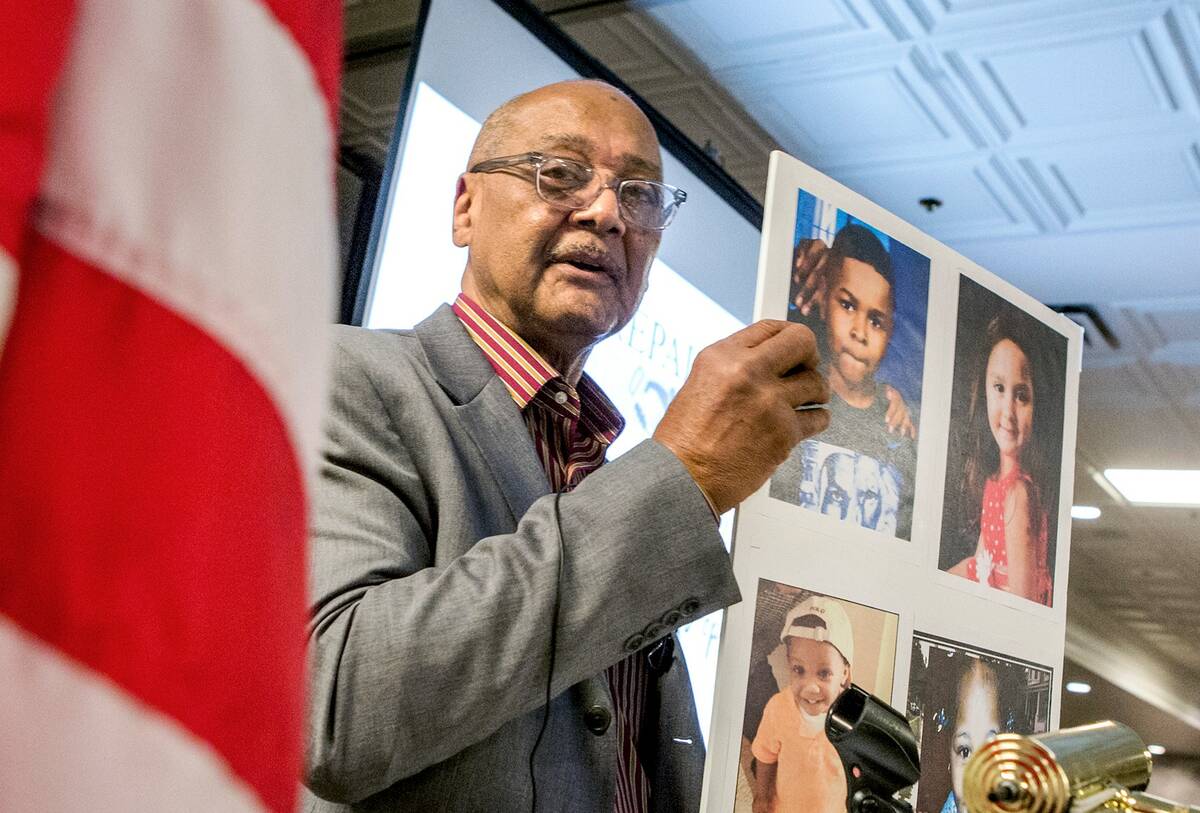
Conservative civil rights leader Robert L. Woodson Sr. died in his sleep at 89 on May 19. He wrote “The Triumphs of Joseph: How Today’s Community Healers Are Reviving Our Streets and Neighborhoods,” published in 2007, a book whose message remains timely and necessary.
Woodson knew what ailed American inner cities. But it was his hope, rooted in both religious belief and practical experience, that set him apart among leaders in politics and civil society.
If “we are to tap the possibilities for moral and spiritual revitalization, we must move the focus of the policy debate beyond racial and economic considerations,” Woodson wrote. “For an answer to the crisis we now face we must go beyond the level of education, jobs, housing or racial reconciliation. These strategies will never be able to address the root of a crisis that is essentially spiritual and moral.’
Compassionately dealing with reality and not what we think should be was one of Woodson’s insights. Of Black men returning to society from prison, he wrote: “They have experienced what it is to live in drug-infested, crime-ridden neighborhoods. Many have themselves fallen but have been able to recover through their faith in God. Their authority is attested to, not by their position and prestige in society, but by the thousands of lives they have been able to reach and change.”
The people he sets up as inspirational examples tend to be “working with individuals that all the conventional service deliverers have given up on. They embrace the worst cases, and they work with meager resources, yet their effectiveness eclipses that of conventional professional remedies.” He wrote about a faith-based substance-abuse program, “able to effect its cures at a cost of only $50 per person, per day, yet has a 70 percent success rate, in stark contrast with conventional therapeutic programs … that charge up to $600 a day per client and yet have only single-digit success rates.”
Woodson had street cred in the civil rights movement but had critiques for how some of its leaders moved into the mainstream. Earlier this spring, Woodson quoted an infamous Jesse Jackson piece in a 1978 issue of Ebony. “Morally weak people not only inhibit their own personal growth, but finally contribute to the politics of decadence … A generation of people lacking the moral and physical stamina necessary to fight a protracted civilizational crisis is dangerous to itself, its neighbors and to future generations.”
Remembering Jackson, whom Woodson first met in the ’60s, Woodson wrote in The Wall Street Journal: “At his best, Jackson confronted not only injustice from without, but the moral failures within our own communities. He spoke of responsibility and self-determination and challenged wounded people not to surrender to victimhood. Many of us respected him for that. I certainly did.”
If you see other remembrances of Woodson, you may see him described as a leader of the Black conservative movement. You may see him painted as an alternative to the civil rights movement. In truth, he was taking the early civil rights movement at its word and getting practical, until the end of his days among us.
Thanks be to God for Robert Woodson. He seemed like a man who would never die because the eternal spark of the divine was clear from the glimmer in his eye, with which he could see the heart of men, and encourage them in the truth and beauty of their lives. Whatever, wherever. That’s the real hope to keep alive. It didn’t die with Bob Woodson. Consider that both an act of faith and a challenge.
Kathryn Jean Lopez is senior fellow at the National Review Institute and is editor-at-large of National Review magazine. Contact at klopez@nationalreview.com.