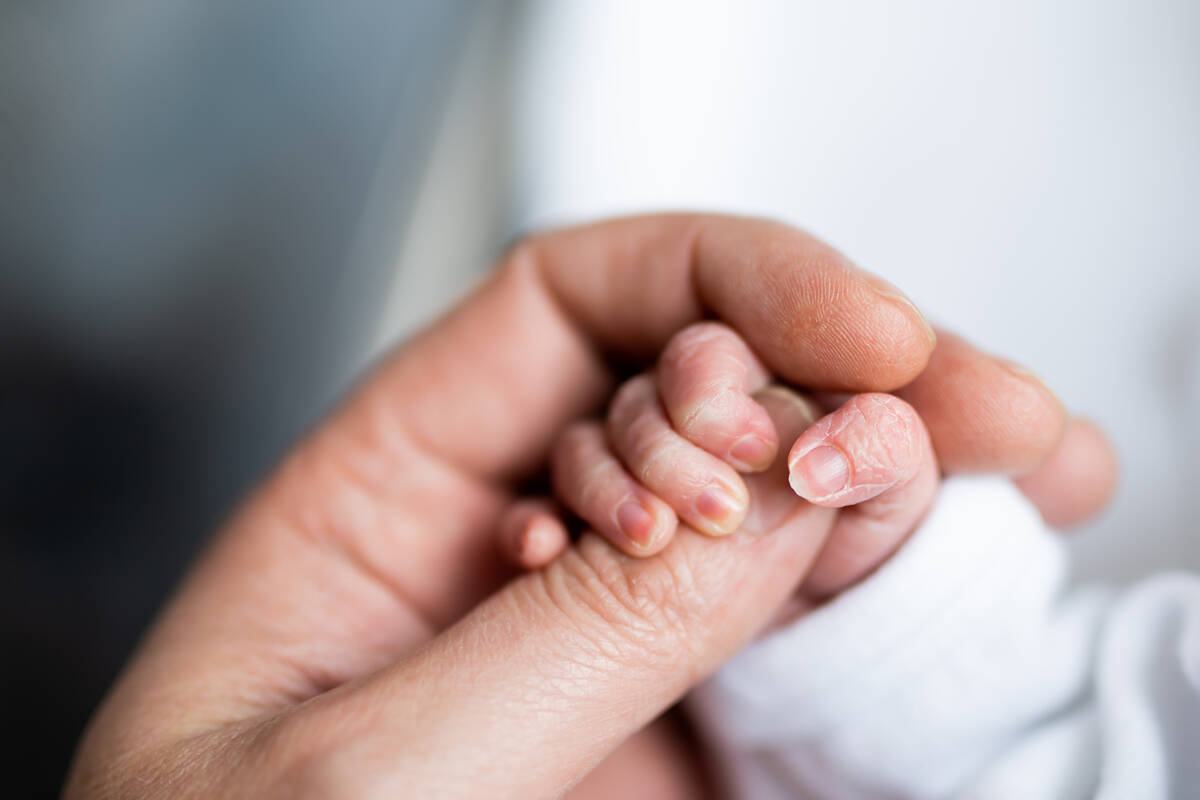
“Why so few babies?” asked a New York Times essay that sounded oddly familiar to me.
In my college days, it seemed that everybody was talking about “The Population Bomb,” the 1968 bestseller in which Stanford biologist Paul R. Ehrlich predicted worldwide famines and other dire consequences allegedly facing our baby boom generation.
The Times essay, by contributing opinion writer Anna Louie Sussman, is drawn from her forthcoming book “Inconceivable: The Impossibility of Family in an Age of Uncertainty.”
In contrast to Ehrlich, whose predictions fortunately did not play out quite as catastrophically as he predicted, Sussman explores a different troubling situation, the declining birth rate among today’s rising generation of young couples.
In April, the Centers for Disease Control and Prevention reported the nation’s general fertility rate had fallen to its lowest on record — down 1 percent from 2024 and down 23 percent from 2007. The fall in teenage fertility is even more stunning. Births per 1,000 females ages 15-19 fell by 7 percent from 2024 to 2025.
Should we be relieved or alarmed? It’s hard for many of us to remain neutral about these startling statistics. After decades of hand-wringing over “children having children,” perhaps now it’s time to start fretting over the millions of would-be Americans who are absent because falling fertility in all age groups. After all, we’ll need their taxes and labor to sustain us in our old age.
When asked why they’re delaying having kids, many young couples cite economic and job uncertainties, and some cite concerns about politics or general dread about the state of the world.
American conservatives, a group long associated with “family values,” have tried to inspire a “pronatalist” movement, calling for government inducements to get Americans to have more babies. Even the extreme reaches of the online right has taken up pronatalism, albeit as a thinly veiled appeal to produce more white children.
Yet the fertility drop can be seen across racial lines, and according to the latest U.N. study in 2024, it’s a global phenomenon. General fertility worldwide has reached the lowest point ever recorded. In 1960, five children were born to the average woman. In 2024, the figure was 2.2.
A lot of this is transparently economic. Historically, birth rates have tended to decline as incomes rise, regardless of race. But Sussman asks why recent data suggest that even poor women are growing more reluctant to procreate.
In her telling, job insecurity and affordability are certainly a large part of the downward pressure on fertility, but something more seems to be at work: young people’s inescapable and crushing sense that the future is too uncertain for the lifelong commitment of parenthood.
“Call it the vibes theory of demographic decline,” she writes.
I understand. Those of us who have observed political and social trends since the Great Recession — immigration clashes, global trade upheaval, the rise of new forms of addiction, growing political extremism and the like — have searched, largely in vain, for forces or movements that promise to unify Americans again. Add in the headlong rush of the tech and business worlds to adopt artificial intelligence, whose potential effects on jobs, income and general well-being are not wholly cheering, and it’s easy to see why the vibes aren’t good among prospective parents.
Considering just the affordability aspect, targeted government policy could help lift the mood of Americans generally, but would it be enough to move the needle on fertility? Do tax credits and similar policy ideas miss the forest for the trees?
Not surprisingly, at least to me, Sussman finds that certain social groups seem much less troubled by the general pessimism about bringing children into the world: traditional religious communities.
Faith and hope, apparently, tend to sustain parents enough, even in the face of a hostile world, that they continue to be fruitful and multiply.
I don’t think we’ll find answers to this problem in old religious, tribal and political models. Yet faith and hope — of a sort — are key to conquering our current pessimism.
A large and growing number of Americans have lost faith in the central institutions of our nation: They don’t trust that our government is honest, impartial and operating within its means. They are losing faith in our charitable and educational institutions, doubting that they remain true to their missions to advance the common good. And many no longer trust our business corporations to serve the public honestly and without harm.
And perhaps most concerning is the declining hope that this age of rapid and disruptive technological change will make our children’s lives more secure and free.
This pessimism is far from universal. Indeed, one of our nation’s greatest assets is its ample strategic reserve of optimism. But we need to listen to what declining birthrates may be telling us and trim our sails accordingly.
Contact Clarence Page at clarence47page@gmail.com.