By 2031, every Clark County School District student will be graduating with skills and experiences to set them up for success in their careers.
That’s one of the goals listed in the district’s new five-year strategic plan, unanimously approved by the Clark County School Board on Thursday. Dubbed the Destination District plan, the 36-page document sets new targets for the school district to reach over the next five years in the areas of academics, career readiness and student support.
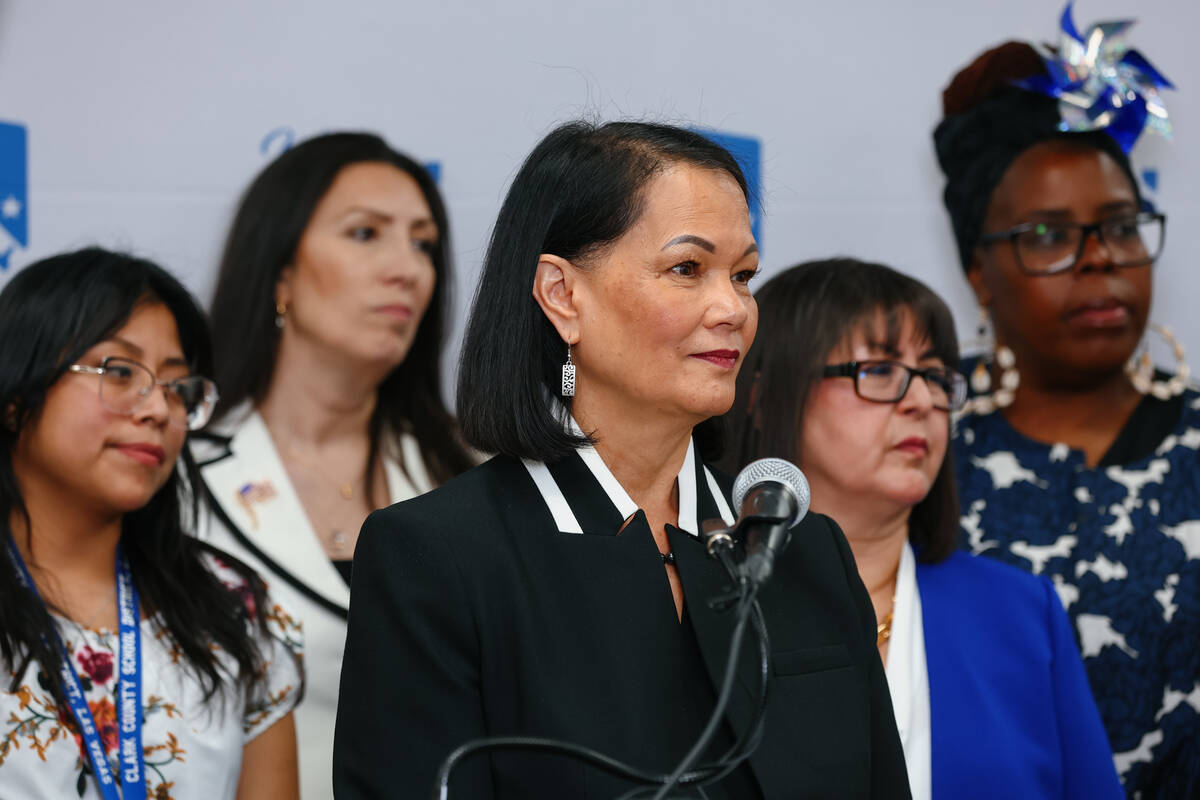
“It’s an ambitious plan, it absolutely is, but I know the team here in CCSD can move forward,” Superintendent Jhone Ebert said. “Our call to action for everyone is through collaboration, accountability and a collective belief that every student in the Clark County School District deserves the opportunity to thrive.”
Academically, the plan aims for K-3 literacy rates to increase by 60 percent, and grades 3-8 math and literacy rates to increase by 50 percent by 2031. In the 2024-25 school year, math and literacy rates in grades 3-8 were 33 percent and 43.9 percent, respectively, according to Nevada Department of Education data.
The district will achieve these gains in the classroom by increasing project-based learning exercises, updating middle and high school grading policies to reflect student mastery of concepts and using emerging technologies like artificial intelligence, the plan said.
At Fremont Middle School, AI has already been integrated into the lives of students and teachers, according to Principal Abigail Johnson. She said teachers use Google’s Gemini to plan lessons while kids prompt AI to help them solve problems in their classwork.
“She and her team use AI not to replace work, but to enhance, to save time and integrate it into the instructional practice and the standards that they teach,” Ebert said. “The students are safely piloting AI to deepen their understanding of content and ask critical questions.”
Another aim the district has is to better prepare students for life after graduation. This includes goals to have every student graduate with “marketable assets” such as college credit or on-the-job training and raise the number of graduates who earn the College and Career Ready diploma — considered to be Nevada’s most rigorous high school degree — to 60 percent from its current 30 percent.
Achieving these goals will involve an expansion of dual enrollment opportunities, Advanced Placement courses, magnet programs and career and technical education programs, according to the plan.
Supporting students is also a primary focus of this plan, with it setting a goal to have 95 percent of students report feeling “known, valued, and connected” and safe at school. Both figures currently sit at around 84 percent, according to the district.
Last plan didn’t meet goals
The school district failed to meet many of the flagship targets set in its previous five-year strategic plan.
Approved in 2019, the Focus: 2024 plan set clear goals to raise English proficiency to 63 percent, math proficiency to 52 percent, reach a 90 percent four-year high school graduation rate and have all district schools be rated at least three of five stars in the state’s education accountability system.
The district did not meet any of those targets, according to Nevada Department of Education data.
At all grade levels, math proficiency has decreased and English proficiency has remained in the 40 percent range since the 2017-18 school year, the year which set the district’s starting point in the Focus: 2024 plan.
Graduation rates have risen to only 86.6 percent in 2025, up from 83.2 percent in 2017, and more than half of district schools earned a one- or two-star rating last school year.
The COVID-19 pandemic played a role in the lack of academic proficiency growth during the last strategic plan, according to Megan Griffard, assistant professor of educational policy and leadership at UNLV.
Griffard said students began to suffer from more mental health crises and lost school routines that were crucial to keeping them focused on schoolwork when classes moved online. Lower-income students’ achievement tended to struggle the most during the pandemic, she added.
“Even just having the motivation or the desire to log on and attend your online classes was not there for a lot of kids,” Griffard said. “There are a lot of kids who just fell behind because, if you’re not going to make someone do something … a lot of kids are like, why would I bother?”
Ebert said meeting the plan’s goals will require district leaders, staff and community partners to buy into it.
“This plan is absolutely achievable by all of us working together and being transparent on where we’re at,” Ebert said.
Contact Spencer Levering at slevering@reviewjournal.com or 702-383-0253.