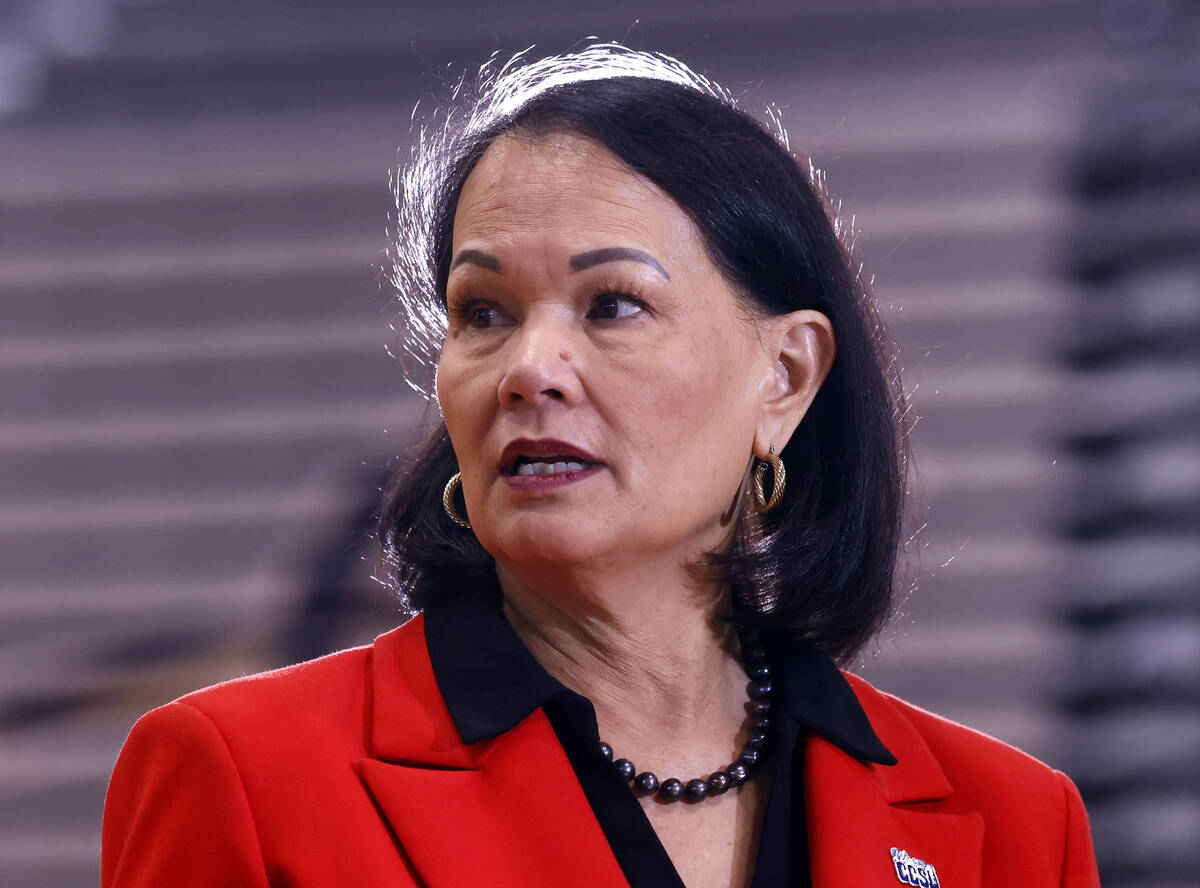
Superintendent Jhone Ebert wants to make the Clark County School District a desirable destination, not a dismal default. Doing so will require improving student achievement.
Ms. Ebert recently completed one year as superintendent of the nation’s fifth-largest school district. There have been some positives over the past 12 monts. The district improved its graduation rate by more than 5 percentage points. It went from 81.5 percent for the class of 2024 to 86.6 percent for the class of 2025. Last October, data from the Nevada Department of Education showed that 70 percent of district schools made gains on the Nevada School Performance Framework. Among the highlights was a nearly
5 percentage point increase in middle school English proficiency.
These accomplishments reflect the work done under former superintendent Jesus Jara, but they do suggest Ms. Ebert is leading an organization that may have found its footing. She will have a chance to put her stamp on things when she releases her strategically delayed strategic plan. It’s supposed to come out this month.
Here are some of the things Ms. Ebert should prioritize to boost student achievement. For one, she should insist that students put cell phones away during class. In 2024, Mr. Jara took an important step in this regard, by requiring students to put their phones in signal-blocking pouches. She needs to ensure that every teacher at every school feels supported in punishing students who violate that policy. Students don’t learn when they’re playing on their phones.
Next, she needs to restore accurate grading standards. Inflated grades may soothe parents and the public in the moment, but lax standards undermine student learning. The same is true for graduation rates. Earning a district diploma should mean more than showing up for credit retrieval classes.
Finally, she needs to ensure students are safe. She should end the district’s obsession with racial disparities in discipline. The district should punish students who break the rules.
One thing Ms. Ebert should avoid is pushing to expand pre-K. It has a decades-long record of failure. She has said that changing school start times was based on research. Next year, the community will get a chance to see how that works.
The challenge for Ms. Ebert is that each of these moves to improve student achievement would annoy or inconvenience some vested interest inside the district. If helping students learn made adults comfortable in the moment, it would already be happening.
Ms. Ebert has generally kept the peace during her first year. If she wants to help students, she’s going to need to start rocking the boat.