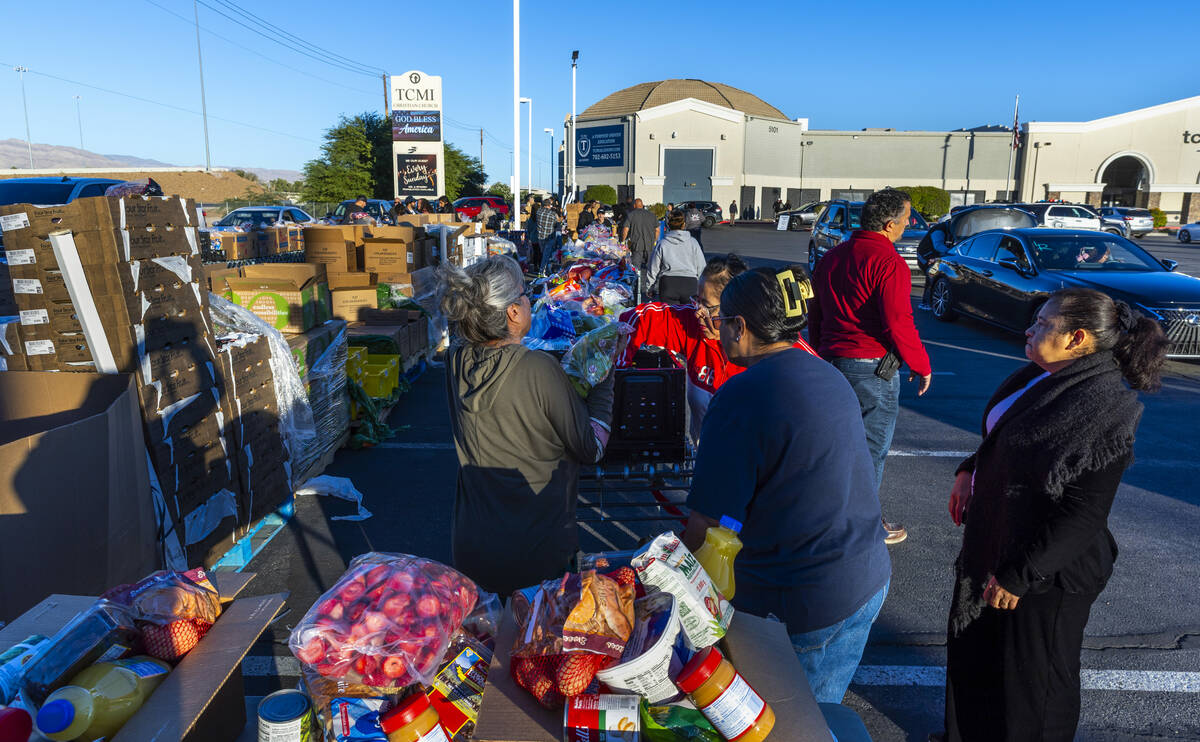
The left’s compassion has inflicted a terrible price on America’s poor.
In 1964, President Lyndon B. Johnson declared an “unconditional war on poverty.” He said that it “will not be a short or easy struggle” but that “the richest nation on Earth can afford to win it.”
He was right. It wouldn’t be a short or easy struggle. Johnson and Congress created a host of federal programs including the Job Corps, Head Start and the Office of Economic Opportunity. The “Great Society” also included Medicare and Medicaid. In 1965, Johnson signed a housing bill that featured rent subsidies.
The effort has grown from there. In 2022, the Cato Institute reported, “the federal government funds more than 100 separate anti-poverty programs.”
But Johnson was wrong about two things. First, the United States couldn’t afford it. Government, at the federal, state and local levels, has spent more than $30 trillion fighting poverty. For context, the national debt is more than $39 trillion.
Second, the United States didn’t defeat poverty, which was already falling when Johnson announced this effort. In 1960, the poverty rate was 22.2 percent. In 1964, it had dropped to 19 percent. By 1968, it was at 12.8 percent. For the next few decades, the rate was always within 3 percentage points, up or down, of 13 percent. In 2024, the poverty rate was 10.6 percent.
It is possible to defeat poverty. The key isn’t government money but better individual choices.
As a new Institute for Family Studies report details, there are three key milestones that keep young people out of poverty. First, they must graduate from high school. Second, they need to obtain a full-time job. Third, they need to marry before having children. Among those who took these steps — in that order — 97 percent “are not in poverty in their mid-30s, and 86 percent reach at least the middle class,” the report noted.
Notice something about those steps. The government can’t purchase them. They are choices each individual must make.
But promoting this requires rejecting America’s decades-long approach to fighting poverty. In Johnson’s vision, poverty is the fault — and therefore the responsibility — of society. The poor are victims who must be helped. Critical race theory and intersectionality extend this idea. These theories claim the powerful victimize certain groups of people, leaving those individuals unable to improve themselves.
Think about how virtuous this narrative made Johnson and subsequent generations of do-gooders feel. The poor were a helpless lot. They were doomed to wallow in misery and poverty — unless liberals generously gave them other people’s money.
But feeling good about your actions doesn’t mean your actions are doing good. There are 50-plus years of evidence that the left’s approach to ending poverty doesn’t work.
Consider winners of large lottery prizes. What could be a better cure for poverty than unexpectedly becoming a millionaire? Yet, around one-third of such winners eventually declare bankruptcy. It doesn’t matter if your income is $10,000 or $10 million, spending more than you make will cause financial problems.
Escaping poverty may require money, but attaining that money requires a different set of values. The starting point is rejecting victimhood and making better choices, as the Success Sequence lays out.
Yet, working full-time and getting married can cause a significant reduction in government benefits. The government’s war on poverty has made it financially costly to take two of the steps that lead people out of poverty. If you want to see these absurdities painted in vivid detail, read Theodore Dalrymple’s book “Life at the Bottom: The Worldview that Makes the Underclass.”
The victims of victimhood are the very people the left claims to be trying to help.
Contact Victor Joecks at vjoecks@reviewjournal.com or 702-383-4698. Follow @victorjoecks on X.