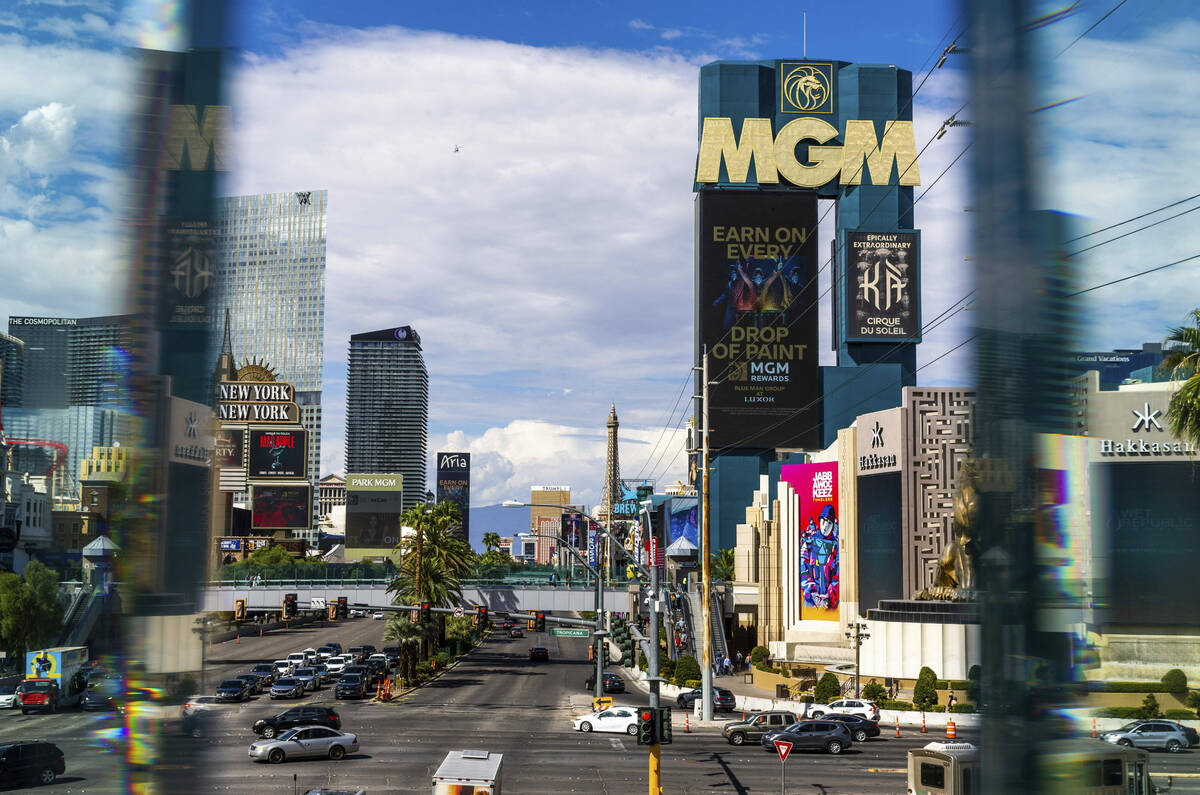
Net revenues were essentially flat and adjusted earnings were down to start the year for the Strip’s largest casino operator, which said strong weekends and luxury demand continued to help offset persistent midweek softness across parts of its Las Vegas portfolio.
MGM Resorts International reported $2.2 billion in net revenue during the first three months of 2026 from its nine casinos and four non-gaming hotels in Las Vegas, according to financial filings with the U.S. Securities and Exchange Commission. Quarterly adjusted earnings from the Las Vegas market decreased 8 percent from $811 million to $749 million.
Gaming revenue from Las Vegas Strip resorts totaled $513 million in the quarter, down 5 percent year over year, driven by declines in table games volume and slightly lower win rates, according to company filings. Table games drop fell 3 percent to $1.46 billion, while slot handle was essentially flat at $5.69 billion.
On the hotel side, room revenue was flat at $751 million as occupancy slipped to 92 percent from 94 percent a year earlier. The average daily room rate was unchanged at $257, while revenue per available room declined 2 percent to $238.
During an earnings call Wednesday, MGM executives said overall Las Vegas demand remains resilient, with strong weekend performance and stable luxury-tier results helping balance weakness in more price-sensitive segments of the market, while stressing that the company’s overall fundamentals remain solid.
Chief Executive Officer Bill Hornbuckle said the company saw momentum build through the quarter despite a weaker January comparison.
“As the quarter progressed, each month got successively better,” he said during Wednesday’s call with analysts and investors, later noting that April was “fine.”
Looking ahead, Hornbuckle responded, “We do see growth through the balance of the year.”
Executives pointed to continued softness in lower-tier demand that has persisted since mid-2025, though they said there are early signs of stabilization heading into the summer booking period.
Chief Operating Officer Ayesha Molino said the company has responded with pricing and packaging strategies aimed at value-sensitive customers.
“We had seen some softness really starting toward the second quarter of last year. And that’s been pretty consistent,” Molino said. “We have been deploying strategies against it… the all-inclusive (package), as well as overall cost control. And that’s been productive.”
What started in downtown Las Vegas two summers ago at the Plaza hotel-casino was spread to other parts of the valley as visitation has declined and concerns over pricing have grown. Strip operators, such as MGM and Caesars Entertainment, are now leaning into bundled offerings that include hotel, dining, entertainment and resort fees in an effort to broaden appeal among cost-conscious travelers.
“We’re continuing to watch closely as the summer unfolds in terms of what happens with that customer,” Molino said.
Despite uneven performance in some segments, executives emphasized that weekends remain strong across the Strip, driven in part by major events and entertainment programming, while convention demand continues to support midweek occupancy.
Hornbuckle pointed to the role of Las Vegas sports and entertainment in driving demand, noting continued momentum from Allegiant Stadium events and other large-scale programming across the market.
“We’ve all seen the success and what it means to Las Vegas with these sports teams coming,” he said.
Contact David Danzis at ddanzis@reviewjournal.com or 702-383-0378. Follow @AC2Vegas_Danzis on X.