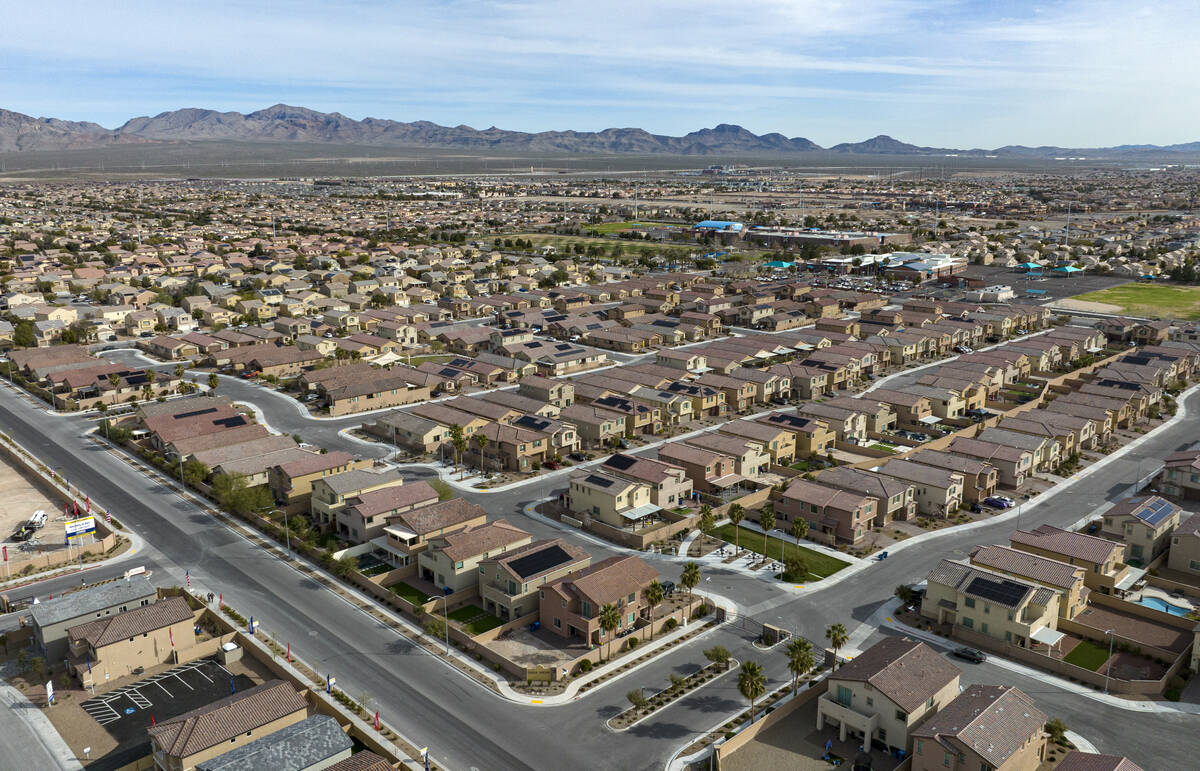
Homeowners in Las Vegas typically hold onto their house for about 8.8 years — one of the shortest rates in the country, according to a new Redfin study.
Las Vegas ranked second-shortest in the country, behind Louisville at 8.3 years, followed by Charlotte (9.2 years), Orlando (9.2 years) and Raleigh (9.3 years). Homeowners stay on average the longest in homes in Los Angeles (20 years), and the southern California city is also the metro with the biggest annual uptick in tenure, up from 19.4 years in 2024.
The second-longest average tenure went to San Jose (18.7 years), followed by San Francisco (16.5 years), San Diego (14.5 years) and Riverside (12.4 years), which are all in California.
Daryl Fairweather, the chief economist for Redfin, said Las Vegas has one of the shortest homeowner tenures for very specific reasons.
“(Las Vegas) is a very transient housing market,” she said. “Many buyers move to Vegas from expensive coastal metros to take advantage of relatively affordable homes and lower taxes, but that same mobility means people are more likely to move again after a few years. Redfin’s migration data shows Las Vegas consistently ranks among the top destinations for relocating homebuyers, with many newcomers coming from pricier markets like Los Angeles.”
According to the report from Redfin, homeowner tenure peaked at 13.4 years in 2020 and has gradually declined each year until 2024.
“The declines were driven by the pandemic-driven homebuying and selling frenzy, when record-low mortgage rates and remote work motivated many Americans to move,” reads the report. “Tenure inched up from 11.8 years in 2024 to 12 years in 2025 as home sales slowed due to high housing costs.”
However, homeowners are staying put much longer than they were in the early 2000s. In 2005, the typical homeowner stayed put for 6.5 years before selling their house. Over the next decade and beyond, people stayed in their homes longer as the American population got older.
Baby boomers and Gen Xers have become increasingly likely to age in place because they are financially incentivized to stay put. Many older people now own their homes outright, and those who have a mortgage likely have a much smaller payment than a homebuyer would today. Older people usually have less reason than younger people to relocate as well — they’re not as likely to leave for a new job or have children.
Empty-nest baby boomers own 28 percent of the country’s three-bedroom-plus homes, or twice as many as millennials with kids, according to a 2024 Redfin report. This has depleted inventory of starter homes and pushed home prices higher over the years.
“High mortgage rates and home prices perpetuate a cycle that locks up housing inventory,” said Chen Zhao, Redfin’s head of economics research. “It can keep existing homeowners in place and financially discourage them from moving to a different home or a different neighborhood, which drives prices up even higher for first-timers trying to break into the market.”
Zhao said there is good news for homebuying affordability as mortgage rates come down. The average U.S. long-term mortgage rate fell below 6 percent at the end of February, but has since ticked back up as markets react to the U.S.-Israel war with Iran.
“And home-price growth has lost steam, and we expect it to improve more,” Zhao said. “That should push more Americans to move.”
Contact Patrick Blennerhassett at pblennerhassett@reviewjournal.com.