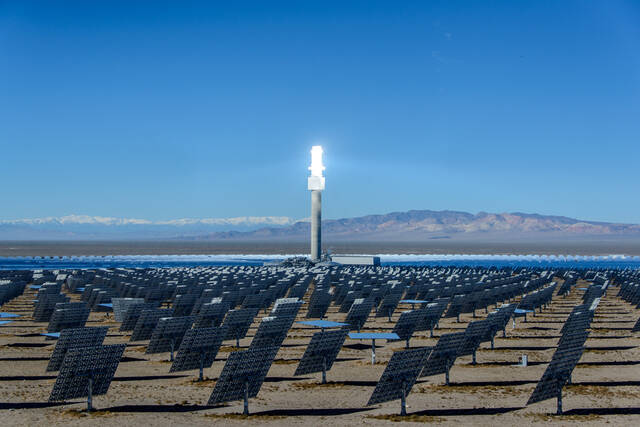
“Coal is China’s foundational energy source,” according to Beijing’s latest Five-Year Plan for Coal Industry Development — a reality that’s not changing anytime soon. Last year, China added near-record coal capacity, with an additional 533 GW in the pipeline. Despite leading the world (by far) in deploying solar, wind and batteries, China views these not as replacements but as complements to its backbone of cheap and reliable coal.
American policymakers — particularly in blue states — should take note.
The U.S. electric grid is as fragile as ever, and electricity prices have skyrocketed nationwide since 2020, reflecting scarcity driven by misguided climate policies. As Always On Energy Research highlights in its recent report, Blue States High Rates, electricity prices are far higher and accelerating faster in blue states, where renewable portfolio standards drive scarcity and force not only coal but also gas power off the grid. A fragile U.S. electric grid is a gift to China — especially as we compete for artificial intelligence supremacy and work to reshore key industries.
Renewable portfolio standards (RPS) require utilities or other load-serving entities to generate a minimum percentage of their electricity from renewable energy sources. The design and ambition of these mandates vary by state — and some are supplemented by climate policies such as cap-and-trade — but they all impose direct and indirect costs on ratepayers.
Direct costs come in the form of RPS compliance charges that show up on utility bills. Many RPS states (particularly in the Northeast and Mid-Atlantic) don’t generate enough renewable power to meet their ambitious requirements, so load-serving entities buy renewable energy credits, which represent a megawatt-hour of electricity generated by renewables elsewhere — to make up the difference. Renewable energy credits essentially function as an extra subsidy for renewable generators and an implicit tax on fossil fuel generators, with ratepayers footing the bill. As RPS requirements ramp up, utilities must purchase more RECs, driving up rates. RPS compliance costs now make up about 15 percent of the retail bill in the District of Columbia and more than 10 percent in New Jersey and Massachusetts.
The indirect costs stem from how RPS mandates — including in Nevada — rig the market against dispatchable generation. In states with the most stringent RPS requirements, these market distortions have hastened the retirement of dispatchable fossil fuel power plants far faster than renewable deployment. Even with federal tax credits and state incentives such as RECs, Potomac Economics found that bottlenecks like siting and transmission “have caused actual investment in utility-scale renewables to fall far short of state goals” in New York and New England. And those federal credits expire next year, which will “significantly challenge project economics absent a major increase in REC prices.”
In contrast, renewables have grown fastest in areas with low or no RPS requirements, such as Texas or North Dakota, demonstrating that geography and markets — not mandates — determine where renewables make sense. Yet some policymakers refuse to accept this reality, doubling down on coercing renewables into their jurisdictions.
Take the D.C. Council, which is attempting to force a city with no land for utility-scale solar to meet solar RPS targets with generation in the District. Solar RECs with border restrictions are the policy incentive it chose, with predictable results. A dense city cannot host the solar the mandate demands, so the law manufactures scarcity in the REC market. RPS costs for the typical D.C. household more than doubled from $104 per year in 2022 to $248 in 2025 and are on track to double again to more than $500 by 2035. This has prompted Mayor Muriel Bowser to plead for the council to reconsider.
Bowser has been the exception, unfortunately. More often, Democratic leaders in RPS states have made data centers a convenient scapegoat. This is the wrong target. For one, data centers don’t inherently increase electricity prices. A recent Lawrence Berkeley National Laboratory study found that prices declined in states with the highest load growth from 2019 to 2024, while states with the most load reduction saw prices increase. When more load is added and capacity additions keep up, prices decrease because fixed costs are spread over a higher load.
However, if generation capacity can’t expand to meet demand, prices can increase. When dozens of states have policies that force fossil fuel power plants into early retirement — or impede the ability to build them — this becomes a problem of national paralysis. Instead of expanding the grid to power AI, we are stuck in a perpetual state of artificial scarcity and inflation. And the narrative becomes, “AI boom sends electricity bills in US skyrocketing” — as China Daily put it.
China, meanwhile, is not conflicted. It accounts for a third of global emissions — nearly triple the U.S. share — and is adding coal capacity at a record clip while blue states force reliable power off their grids to chase marginal emissions cuts that Beijing’s next batch of coal plants will erase many times over. The race for AI supremacy will be won by the nation with abundant, affordable and reliable electricity, and China treats power as a strategic asset while too many state policymakers in the U.S. treat it as a sin to be taxed.
Retreating from RPS mandates won’t change the climate, but it might change who wins the AI race.
Guy Caruso is a former administrator of the U.S. Energy Information Administration. He wrote this for InsideSources.com.