Here we go again.
We’re approaching another presidential campaign year, and once again I am reminded of what the great sage Will Rogers said back in 1933: “I am not a member of any organized political party,” he said. “I am a Democrat.”
Yes, I know that Rogers quote is old enough to have whiskers on it.
Yet, compared to the comparatively regimented style of the Republicans, particularly the MAGA faction that runs the party, the Democrats seem to specialize in finding new ways to snatch defeat out of the jaws of victory, especially since the two successful terms of Barack Obama.
Doom and gloom might in fact be the default state of the Democrats.
When Republicans and a large number of swing voters rallied around Donald Trump in 2024, he was a convicted felon, a sore-loser ex-president dishonored by his failed attempt to nullify the 2020 election, a man hounded by the Justice Department for misdeeds in office.
And yet the Democrats lost to him in what could only be termed a self-inflicted debacle.
The party was left with a debilitating crisis of self-confidence. To many it still feels disorganized and leaderless, in addition to being in debt.
Meanwhile, Trump carries on, relentlessly finding new norms to violate, shielded by his presidential pardoning power and his party’s majority control of Congress and, in effect, even the Supreme Court.
The result: strongman-style governance, gross self-enrichment by the Trump family, rampant pay-to-play corruption, a reign of terror by sparsely trained immigration agents, a fawning Cabinet and a neutered Congress, all under the watchful eyes of MAGA bureaucrats, influencers and operatives.
I’ve asked conservative friends who long have held that the government should be “run like a business” if this is what they had in mind, and I hear that they’ll get back to me.
Meanwhile, Americans in the political center and on the left are dreading the possibility that the Democratic establishment is going to flub the opportunity to wrest control of Congress in the upcoming midterm elections from the increasingly unpopular forces of Trumpism.
It would be wrong, however, to write off the Democrats as moribund and hopeless. Politics, like nature, abhors a vacuum. And into the Democratic void stepped a once-in-a-generation political talent: Zohran Mamdani. This eloquent, handsome, preternaturally happy young man came out of nowhere to win the mayoral election of New York City, even though it seemed like the entire Democratic establishment, much of the mainstream media, and of course our kibitzing president were arrayed against him.
As a foreign-born Muslim, a self-described socialist, and an outspoken critic of Israel, Mamdani might have been written off by most as a likely candidate to lead the nation’s most important city, but his superlative political instincts and his charm offensive with voters made him a national sensation — and gave Democrats hope again that a new ascendancy is possible.
Mamdani’s politics aren’t every Democrat’s cup of tea. But Dems of all stripes can learn from his example. To begin with, they shouldn’t be afraid to back candidates who take dissenting but principled positions on controversial issues, or to back candidates from diverse backgrounds.
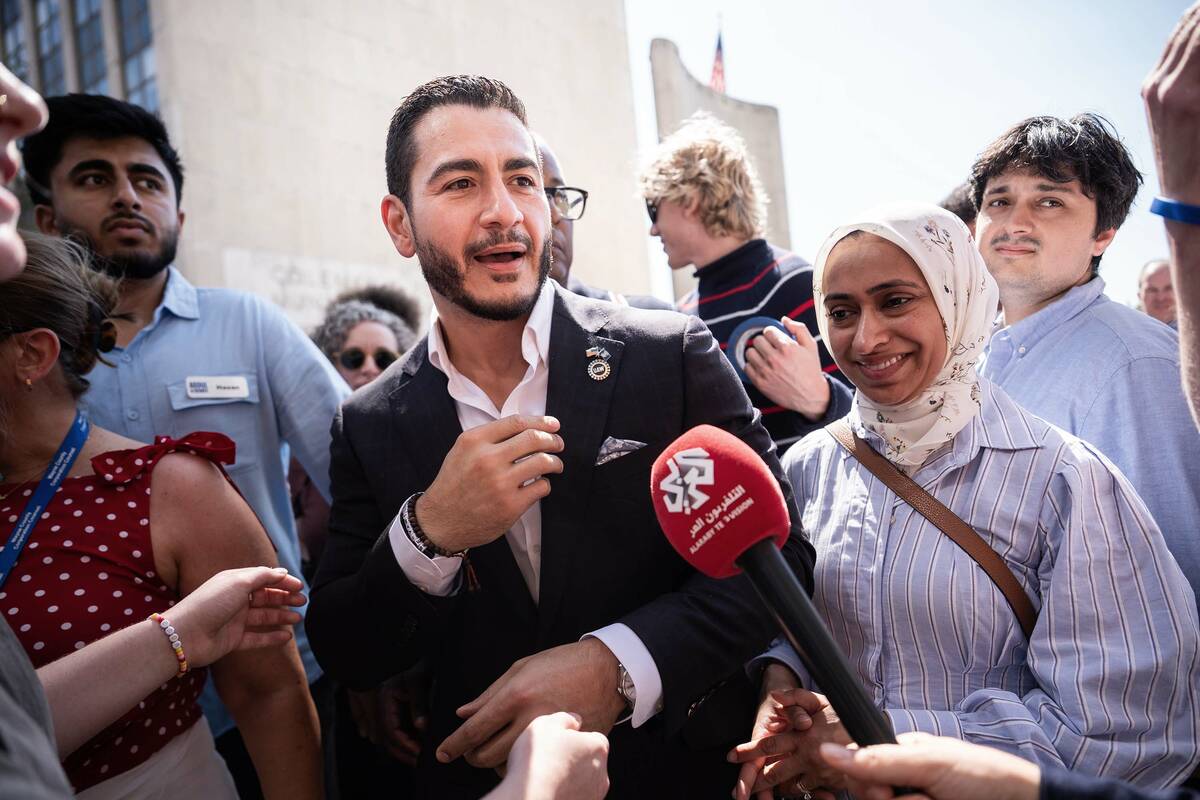
Enter Dr. Abdul El-Sayed, the former public health official running as a Democratic candidate for U.S. Senate in Michigan on a progressive, anti-establishment platform.
Virtually unknown outside Michigan, he sprang into the national spotlight by winning that state’s Democratic Senate primary in a narrow but significant victory, defeating a candidate widely considered to be the safe, “establishment” Democrat.
And, before the sun could rise again on the morning after El-Sayed’s primary victory, Trump and his fellow Republicans ramped up their condemnations, using some good old tried-and-true slurs.
Trump called him a “communist,” channeling his one-time mentor Roy Cohn, the infamous understudy of red-baiting Sen. Joseph McCarthy.
With that blast of over-the-top demonization, Trump probably did El-Sayed a big favor, as did other Republicans who called him rude and dangerous.
In polls and focus groups, by contrast, respondents praised El-Sayed as a straight-talker who would stick it to the party establishment they no longer trusted anyway.
Still, polls before the primary suggested El-Sayed had a larger lead over his more moderate opponent, Haley Stevens, than was reflected in the final vote tally.
I don’t know how far El-Sayed will get. The more I hear of his real statements, not the ones wrongly attributed to him, the less frightening he sounds.
He has been called a Democratic Socialist by Trump and others. He is not.
El-Sayed, an epidemiologist by training who was born in the Detroit suburbs to Egyptian parents, has been called antisemitic because he criticizes the war in Gaza and has called for an arms boycott of Israel. You don’t have to be antisemitic to be pro-peace in Gaza.
Stevens, meanwhile, expressed support for Israel and took campaign contributions from the American Israel Public Affairs Committee, or AIPAC, a group that has become controversial among voters of both parties as Israel has continued its war in Gaza and neighboring Lebanon.
The issue of the U.S. alliance with Israel is likely to cause a lot of unpredictable fractiousness in both parties. But of course in El-Sayed’s case there is the added factor that he is Muslim. You don’t have to be a cynic to predict that the Republicans will dial up Islamophobic rhetoric in the run-up to November’s election.
As a rather sharp-tongued maverick, El-Sayed will have to work to bolster support among Democratic constituencies who favored his opponent in the primary. For example, his support among Black voters was disappointingly low. He can and should try to make up for that deficit. Now is the time for the politics of addition, not subtraction.
Like him or not, the Democrats, after numerous well-known setbacks, need to keep open minds about where their next leaders might come from.
So, for that matter, should Republicans, if they can ever pry Trump loose from his perch in the White House.
Contact Clarence Page at clarence47page@gmail.com.