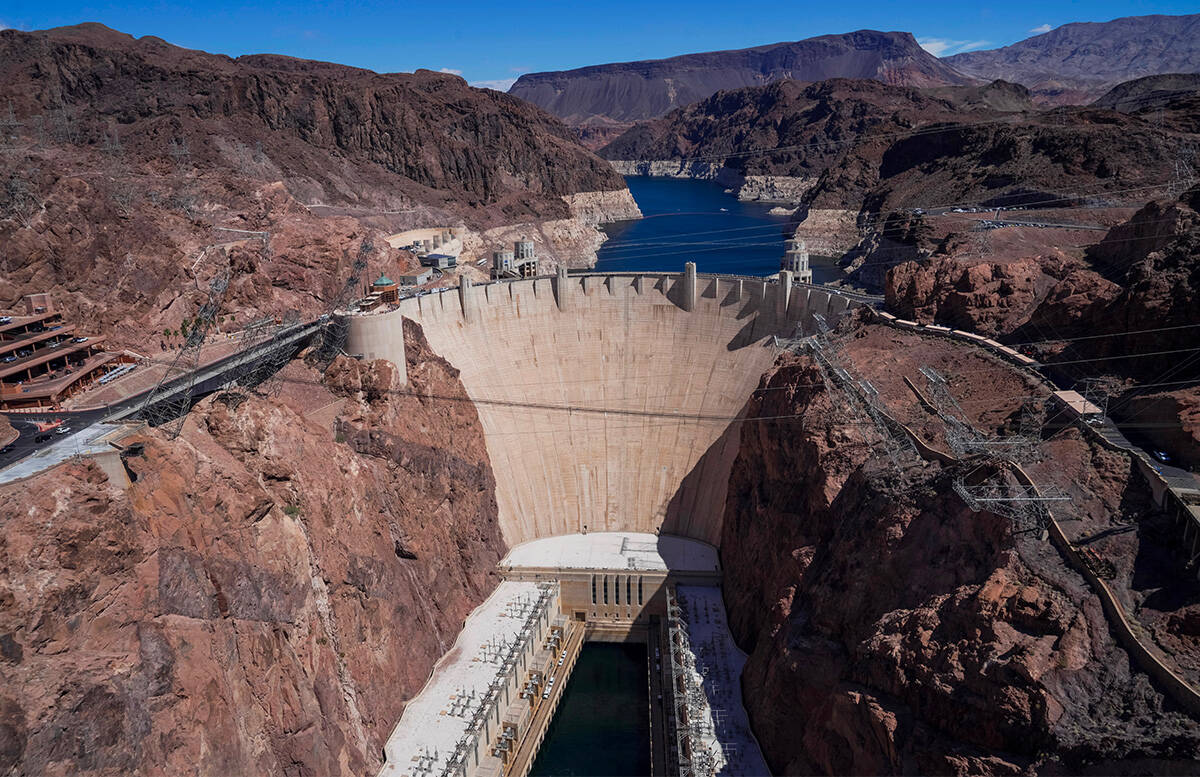
Arizona and Nevada will feel the brunt of the pain under a federal plan to reduce stress on the Colorado River. It’s an unjust solution, particularly for the Silver State.
Last week, the Interior Department released a 10-year blueprint to address water shortages on the Colorado. The river has been over-allocated for a century, and long-term drought has severely worsened the problem in recent decades. The seven basin states — Utah, Wyoming, Colorado and New Mexico in the upper basin and California, Arizona and Nevada in the lower basin — have been unable to reach a consensus, leading the feds to step in.
The government’s strategy imposes no mandatory water cuts on the Upper Basin states, while accepting a deal that the Lower Basin states previously made to reduce usage by 3.2 million acre-feet by 2028. But the plan calls for a reassessment of the situation every two years, leading to fears that Nevada, Arizona and California will face even steeper reductions by the end of the decade.
“We’re seeing the first iteration of a plan that contemplates all of the reductions on the Colorado River being taken by a minority of the states that share the river,” said John Entsminger, general manager of the Southern Nevada Water Authority. “That’s not going to work for us.”
He’s 100 percent correct. It’s absurd that the Upper Basin states get off untouched. What is their incentive now to be part of the solution? The federal plan essentially renders futile any further negotiations between the Upper and Lower Basin states.
As for the Lower Basin, the proposal leans heavily in favor of California. Under the deal, California will cut back by about 12 percent over the next two years, while Arizona will take a 31 percent hit and Nevada will lose 28 percent of its allocation. No doubt, the state’s political clout played a role in shielding California, as did its senior priority water rights. But any future reductions imposed should reflect the reality that California and its thirsty farmers are by far the biggest water users in the Lower Basin.
The deal also ignores the progress Nevada has made in stretching the meager 300,000 acre-feet it is allotted each year. The state currently uses just 65 percent of its share thanks to increased efficiencies and conservation efforts and actually uses less water today than it did two decades ago, despite rapid population growth. Other states have not been nearly as responsible or diligent. Nevada is not the problem.
If Nevada remains a scapegoat and is asked for more sacrifices, Mr. Entsminger and state water officials should consider turning to the courts. While it’s true, as one Utah official put it, that litigation won’t “get us more water,” it could potentially expose flaws in the federal plan and force a more equitable distribution of cuts down the road.