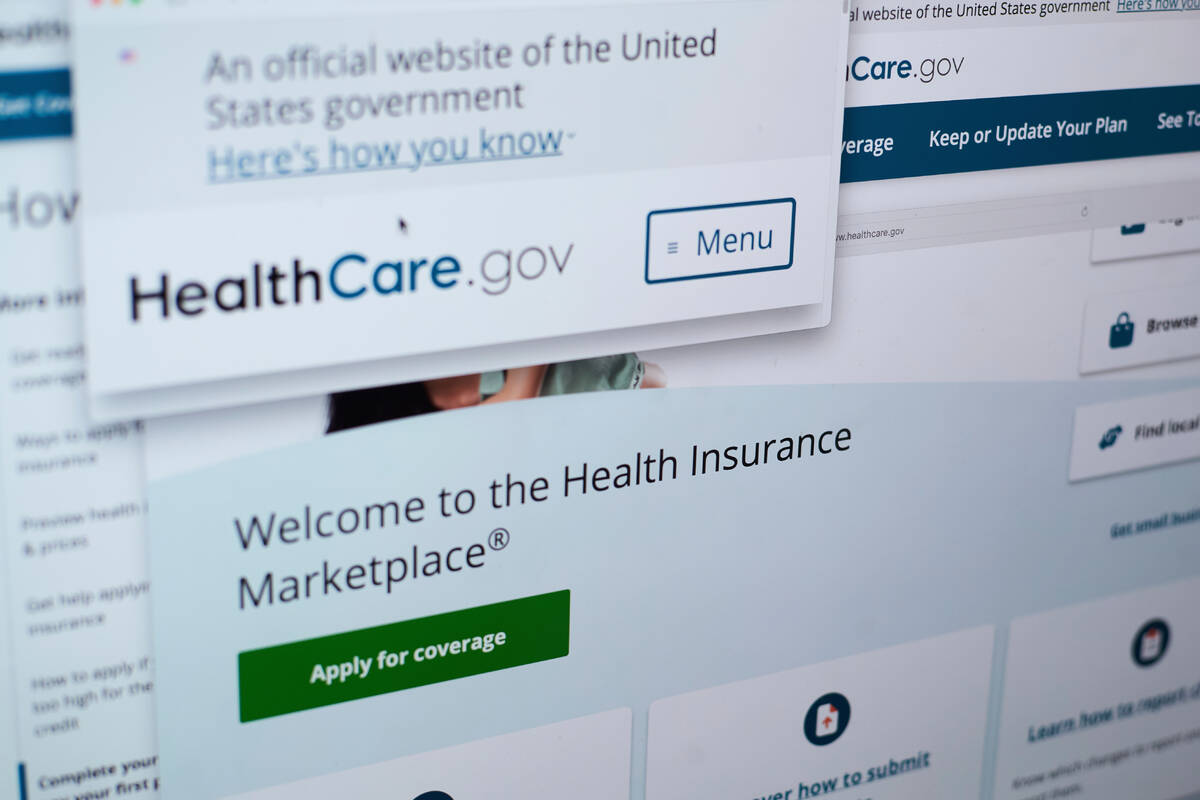
Those who believe government can provide health insurance better than the free market need to look at Vermont.
For years, Vermont has geared its health-care policy toward creating a single-payer system. Perhaps that’s not a surprise given that the state keeps re-electing Sen. Bernie Sanders, an ardent socialist. As it turns out, it’s easier to share someone else’s money. Just like it’s easier to campaign on single-payer health care than to make it a reality.
And Vermont has tried. In 2011, the state passed a single-payer health care bill. Then the estimated costs came in. Paying for it would have required an 11.5 percent payroll tax and an income tax hike. In 2014, then-Gov. Peter Shumlin decided that “free” government health care cost too much and abandoned the scheme.
But many of the legislative policies that were aimed at creating government-run health care remained in place. As a result, Vermont’s health care marketplace offers coverage from only two private health insurance companies. New Hampshire has four companies offering coverage. Massachusetts residents can choose from eight companies. Neighboring New York has a dozen, although it is a much larger state.
“Vermont has the highest average premiums in America — $1,299 a month for the benchmark silver plan,” Hayden Dublois, who once worked for Vermont Gov. Phil Scott, wrote recently in The Wall Street Journal. “That’s nearly 60 percent more than in neighboring New York, and three times as high as in New Hampshire. Even the cheapest tier in Vermont averages $824 a month, with a nearly $10,000 deductible.”
Gov. Scott, a Republican who voted for Kamala Harris in 2024, wants to try a different approach. Socialist fantasies can’t repeal the law of supply and demand. Vermont doesn’t allow insurance companies to offer young adults lower premiums that reflect the fact that their health care costs are lower. As a result, many young adults who aren’t insured through work choose not to have health care coverage. This means that those who do buy insurance skew older — and more expensive. This raises costs, which drives more young adults away from insurance.
Avoiding this doom loop is why Obamacare contained an individual mandate. A government-run health insurance program needs to force young adults to obtain insurance to spread the costs around.
In a recent executive order, Gov. Scott directed state officials to craft rules allowing insurance companies to “vary premium rates based on age,” although any rating variation can’t “deviate more than 20 percent above or below the community rate.” That’s a move toward the market, although it’s far from creating a free market system.
The reform is instructive. As Democrats clamor for “Medicare for All” and “free” health care, Vermont’s experience highlights how allowing the market to operate, not more government regulations, remains the key to lowering health insurance costs.