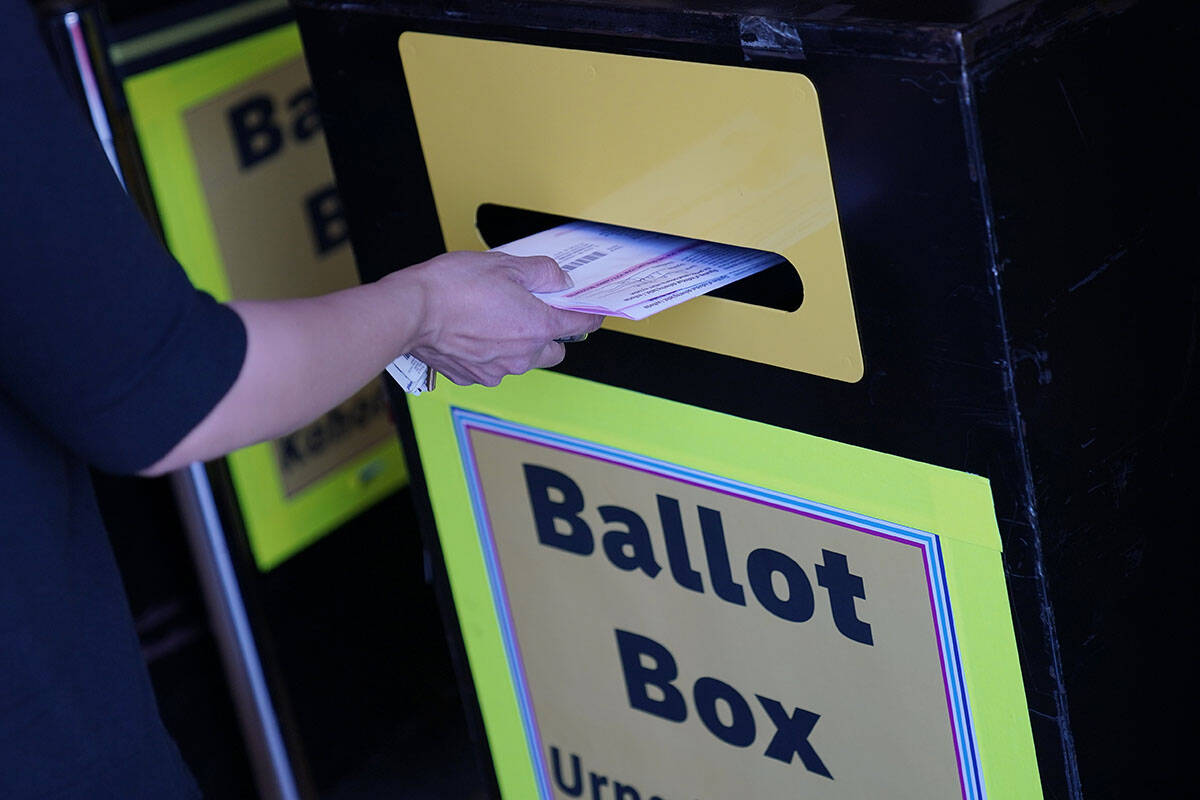
National Democrats spurned Nevada last week when they selected South Carolina to hold the party’s first presidential primary in 2028. The decision appears to be a rebuke of the party’s emergent socialist wing.
The vote came Friday during a meeting of the Democratic National Committee’s Rules and Bylaws Committee. The Palmetto State outpolled Nevada 26-19, with four voters preferring New Hampshire.
As the adage goes, though, close counts only in horseshoes, dancing and hand grenades. Nevada Democrats had worked tirelessly to get to the top of the calendar, which would have brought increased money and attention to the state and given them outsized influence over the selection of the nominee.
Nevertheless, Nevada will still be second. Assuming the full DNC rubber-stamps the committee’s decision at its meeting next month in Texas, South Carolina will lead the way with a Jan. 22, 2028, primary. Nevada would follow on Feb. 1.
Nevada Democrats had argued that the Silver State featured a more diverse voter base. Opponents, the Nevada Independent reported, “raised concerns about Nevada’s ability to name a winner on primary night.” (Irony alert!) But it’s difficult to believe that worries about the party’s brand didn’t play a role in South Carolina’s victory.
Sensible Democrats fear that the radical socialists who have wrapped themselves in the donkey logo to win recent elections threaten the party’s chances in 2026 and beyond with independent and non-coastal voters. History tells us that a hard-left progressive presidential candidate who sympathizes with the Democratic Socialists of America would be more likely to prevail in Nevada than in South Carolina. DSA proponents even briefly took over the leadership of the Nevada Democratic Party in 2021.
In contrast, a win in South Carolina pulled Joe Biden out of the wilderness in 2020 after the former vice president had struggled in early Democratic primaries against self-proclaimed socialist Bernie Sanders. Sen. Sanders easily won the Nevada caucuses earlier that year. Establishment Democrats that year were terrified that Sen. Sanders might emerge as the party’s nominee and face almost certain defeat.
The concern that socialist rhetoric won’t play well with swing voters in the heartland remains acute. The selection of South Carolina “rewards candidates who can connect with a large and influential Black electorate that tends to prioritize electability and practical results over pure ideology,” political scientist Craig Agranoff of Florida Atlantic University told Newsweek. “That dynamic has historically been tough terrain for the most progressive voices in the party.”
Which is why traditional Democrats have increasingly distanced themselves from the daft socialist activists who have made inroads with the party’s younger voters.