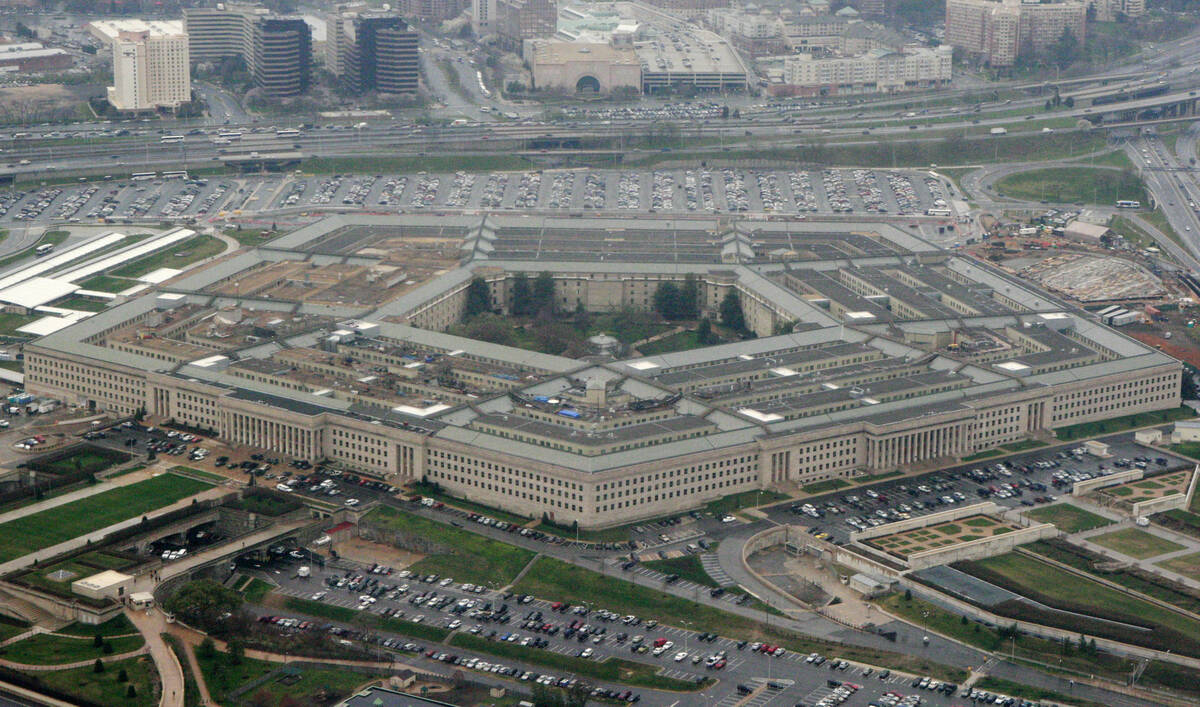
The Pentagon has a well-deserved reputation for erring on the side of secrecy when classifying documents. Now it wants even more power to hide information from the American taxpayer.
CBS News reports that Defense Department officials are asking Congress to “create a new section of federal law allowing the defense secretary to exempt certain ‘controlled unclassified information’ … from disclosure under the Freedom of Information Act.”
The category of “controlled unclassified information” was created by a Barack Obama executive order to standardize the handling of sensitive but unclassified documents, CBS reported. But the designation itself does not allow officials to shield information. Instead, the Pentagon must still cite a statutory exemption in the Freedom of Information Act to legally justify a decision to prevent disclosure.
Under the proposed legislation, however, stamping a document as “controlled unclassified information” would be all defense officials needed to do to keep the contents from the public. This is a bad idea.
“The last thing the government needs is a new power to withhold information under the FOIA,” Brett Max Kaufman, senior counsel with the American Civil Liberties Union’s Center for Democracy, told CBS News in an email. He added that for years there has been “a massive overclassification problem throughout the executive branch.”
Indeed, what is the point of this proposal, other than to keep the public further in the dark about how one of the nation’s largest and most important agencies — its budget for fiscal 2026 sits at nearly $1 trillion — conducts its business? Existing law already offers myriad avenues for defense officials to classify information that is truly sensitive or could compromise national security. Indeed, the Pentagon makes liberal use of such allowances.
“Ask yourself, you know, if you’re going to mark something as ‘controlled unclassified information’ for national security concerns, why wouldn’t you classify it?” Greg Williams, director of the Center for Defense Information at the Project on Government Oversight, told CBS.
Rather than rush for the shadows, defense officials should more aggressively work to comply with their backlog of pending FOIA requests. At the end of fiscal 2025, the Pentagon reported there were nearly 35,000 cases awaiting resolution, up 42 percent from the previous year.
The government classifies 50 million documents a year, according to Oona A. Hathaway, a former special counsel to the Pentagon who wrote on the subject for Foreign Affairs. She argues that just a small percentage of the information warrants the classification. “This overemphasis on secrecy at the expense of privacy isn’t just inefficient,” she wrote. “It undermines American democracy.”
The Pentagon proposal is unnecessary and an affront to transparency. Congress should pay it no heed.