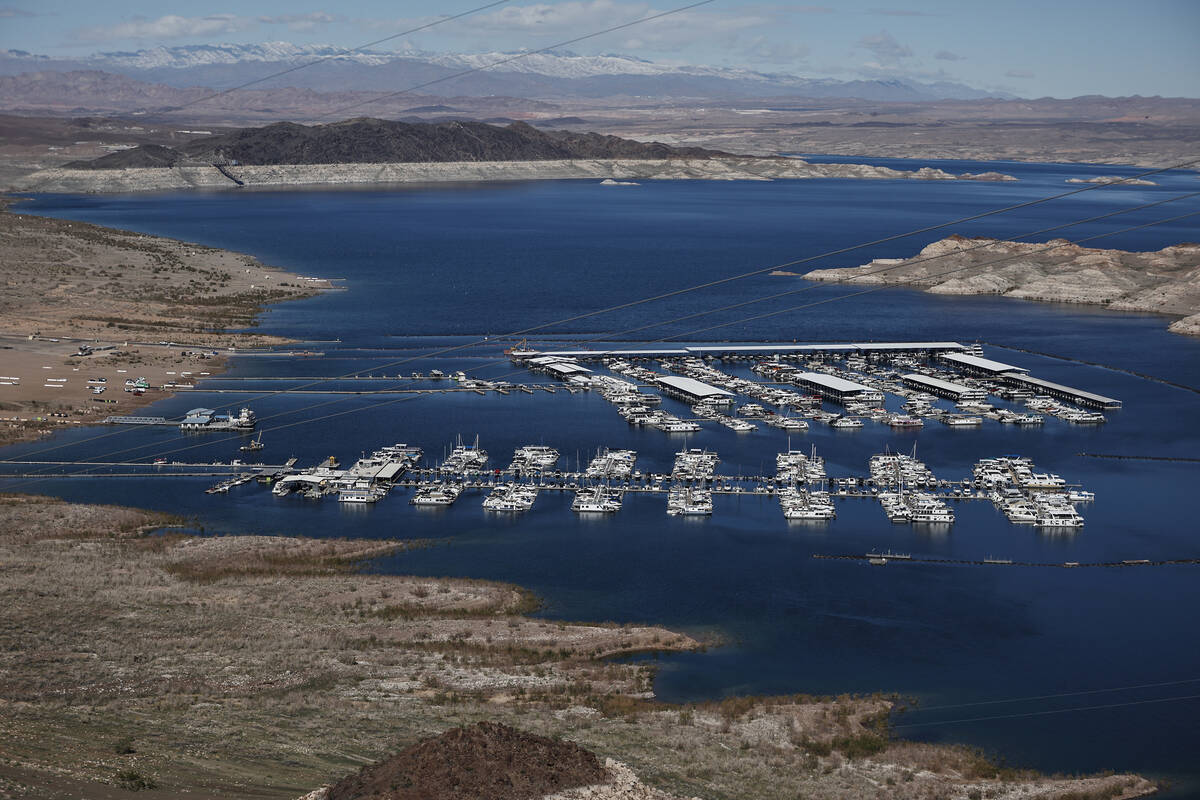
The reservoir that serves as Southern Nevada’s main water supply is headed for an even more painful decline than thought due to historic drought and recent water management decisions, according to federal forecasters.
Lake Mead could plummet to 1,015.77 feet above sea level in July 2027, far below any level seen since the reservoir was filled in the late 1930s. After that, though projections are less reliable the further into the future they go, water managers expect only a small uptick until another record low is set at 1,011.74 feet in May 2028.
That low level is nearly 29 feet below the reservoir’s all-time low set in 2022. On Monday, the reservoir was almost 29 percent full at about 1,047 feet above sea level.
Monday’s study is a noticeable departure from what scientists had predicted. Last month’s two-year study from the U.S. Bureau of Reclamation had the most probable lowest level at 1020.76 feet for July 2027.
The news comes months after the Bureau of Reclamation’s emergency decision to prop up Lake Powell by both moving water in from an upstream reservoir and reducing flows into Lake Mead.
Below 1,035 feet in elevation at Lake Mead, hydropower generation at Hoover Dam is significantly reduced. A recently freed-up batch of $52 million in federal funds is going toward new wide-head turbines that can function at lower levels, however.
This is a developing story. Check back for updates.
Contact Alan Halaly at ahalaly@reviewjournal.com. Follow @AlanHalaly on X.