Nevada’s public employees could be taking home bigger paychecks if it weren’t for one factor.
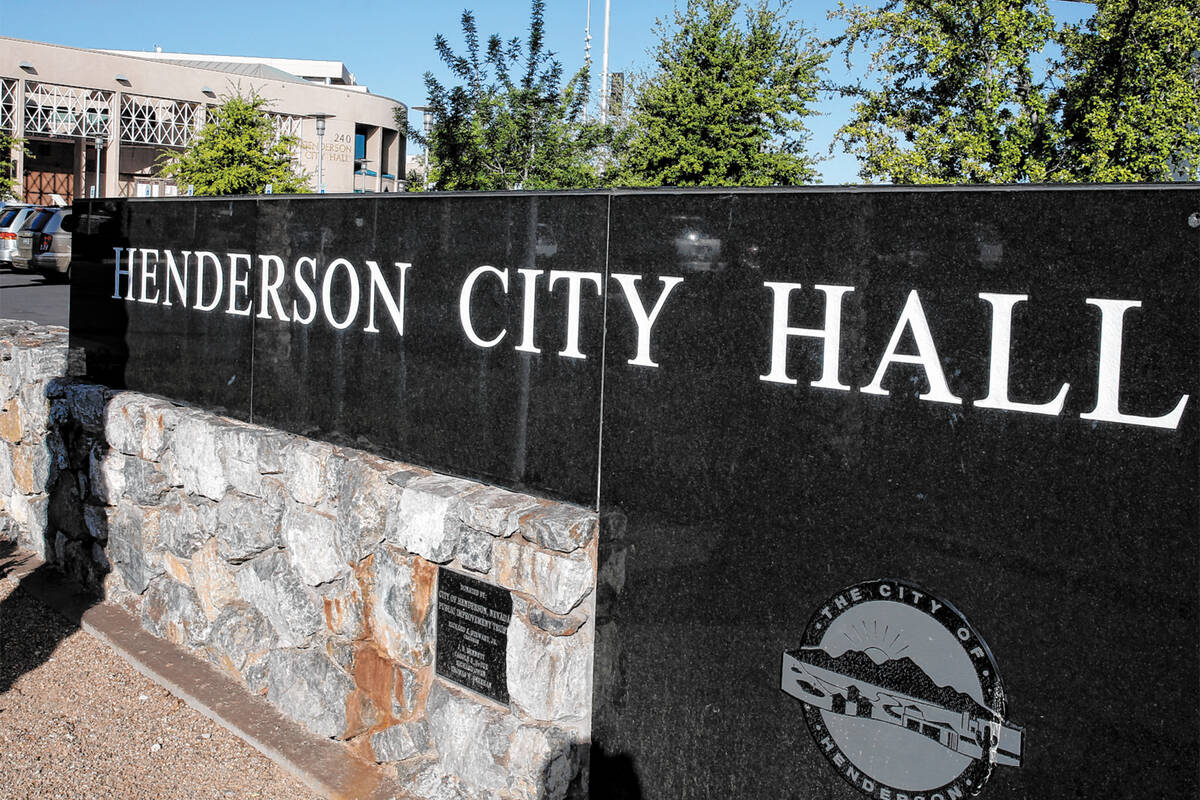
The Henderson City Council recently approved its budget for next fiscal year. Total city expenditures are projected to top $1 billion. Of that amount, general fund spending is $422.5 million.
Anyone who pays attention to local governments won’t be surprised to learn that personnel costs make up the vast majority of that spending. The city needs firefighters and employees for other departments such as public works and parks and recreation. The city expects to hire 14 new patrol officers soon. Those aren’t volunteer positions.
But the breakdown of those compensation dollars is revealing. The city budgeted just under $240 million for salaries and wages. For benefits, it budgeted nearly $155 million. That means the city will spend nearly 40 percent of its compensation dollars on employee benefits. Put another way, for every $3 in salary the average employee receives, the city will pay almost $2 in benefits.
While benefits are important, that ratio is out of step with the private sector. It’s likely most city employees would prefer more of their compensation in cash, too.
A major reason for this disconnect is the Public Employees’ Retirement System of Nevada. It provides guaranteed income for retirees. In theory, initial contributions combined with healthy stock market gains are supposed to fully fund these payouts, which can top $300,000 annually. But what sounds good in theory hasn’t worked in practice. Because initial contributions were too low, current contributions must make up the shortfall — and decades of lost investment opportunities. Compound interest is a powerful foe.
As a result, PERS’ required contribution rates keep increasing. In 1996, the total contribution rate for police and fire employees was 27 percent. In 2022, it was 44 percent. Today, it’s 58.75 percent. That’s more than double what it was 30 years ago.
Contribution rates for other employees have gone up, too. In 1996, the contribution rate for ordinary employees was 18.75 percent. In 2022, it was 29.75 percent. Today, it’s 36.75 percent.
Consider that, in the past four years, Henderson has had to increase police and fire pension contributions by more than 14 percentage points. But that significant expense didn’t increase take-home pay by a single dollar. Those PERS contribution rate increases are a belated attempt to pay off debts PERS incurred long ago. Other local governments are affected by this too, but they can’t change anything directly. PERS is governed by state politicians.
It’s time for state lawmakers to stop ignoring this budget buster and work collaboratively on solutions. Transitioning new hires to a defined contribution pension plan, rather than a defined benefit plan, would be a good place to start.