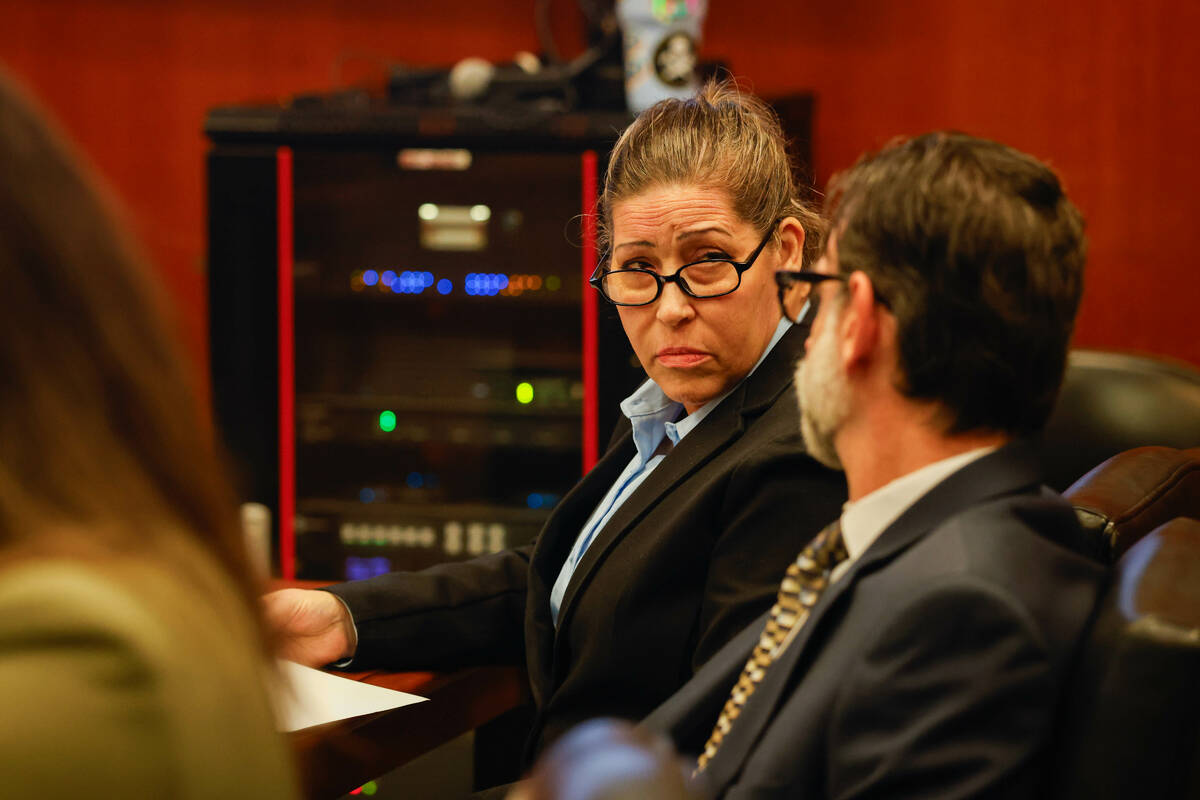
SAN JOSE, Calif. — Shannon O’Connor, the former Los Gatos woman who gained local infamy as the mastermind of notorious pandemic-era teen parties that pushed binge drinking and intoxicated sex on her teen son’s friends, was sentenced Thursday to 35 years and 10 months in prison for crimes related to a disturbing social obsession that left more than a dozen physically and psychologically damaged children in its wake.
On the final day of her sentencing hearing that began Tuesday, O’Connor for the first time voiced unqualified remorse for the more than four-dozen crimes for which she was convicted.
“For the past five years I have had the chance and the time to reflect on this case and what went wrong,” O’Connor said before the sentence was handed down. “I am not here to make excuses for my actions. I am fully aware of how you all feel about me. I know that you all entrusted me and I let you all down.”
O’Connor spoke for 20 minutes, meandering between contrition and turning attention to the effect on her and her family, and restating her denial of having any sexual fascination with the children. Her remarks were met with groans, loud exhaling and other audible exasperation from a court gallery filled with victims and their families. O’Connor’s family did not attend the hearing.
She added: “My actions are the cause for your pain and I am ashamed and I face every day knowing I was the cause of so many people’s anguish. I want you all to know that I live every day wishing I could take everything back and go back in time and change it all.
“I am responsible for the harmful situations that I put your daughters and sons through. There really are no words for me to say to express how very sorry I am.”
The statement was met with a forceful rebuttal from Deputy District Attorney Joanna Lee, the lead prosecutor in the case.
“It’s deeply offensive that her remarks show zero accountability for what she did,” Lee told Santa Clara County Superior Court Judge Elizabeth Peterson. “This isn’t like the Academy Awards … this is a sentencing.”
She added, “We cannot believe anything she says because every statement is self-serving and full of lies.”
In handing down the term, Peterson said: “This sentence is intended to reflect the profound depravity of Ms. O’Connor’s conduct and the lasting harm she has perpetrated on the families.”
O’Connor will receive credit for the approximately four and a half years she has spent in custody since her arrest.
The sentence from Peterson caps a nearly five-year judicial process. O’Connor was arrested in 2021 in Idaho — where she fled after Los Gatos families and authorities got wise to the true depravity of the teen gatherings. Her case saw numerous court delays and the defendant testing the waters of a plea early on before she was ultimately indicted in 2023.
O’Connor, 52, went to trial two years later; that proceeding ended in March with her conviction on 16 felonies covering child endangerment, sexual assault and witness dissuasion. That was joined by 31 misdemeanor convictions related to her efforts to keep her teen son and his friends and romantic interests readily supplied with alcohol at secret parties at her one-time Los Gatos house and at out-of-town locales like Lake Tahoe and Santa Cruz.
Peterson signed off on aggravating factors for 11 of the child endangerment counts and two proxy sexual penetration counts, allowing the maximum sentence of nearly 36 years.
In 2023, O’Connor polled the judge on how much prison time she would get if she pleaded to the original criminal complaint — which contained far fewer charges than the criminal indictment secured a few months later — and balked after learning it would be 17 years and four months.
Stephen Prekoski, O’Connor’s trial attorney, asked Peterson to consider a sentence of 20 years to stay in range of the original sentencing exposure. He argued Thursday that anything close to a maximum sentence, considering O’Connor’s age and women’s life expectancy in prison, would signal the court’s belief that “she should die in a cage without an opportunity to see her light of day or her children again.”
“We hope the court does not believe she is irredeemable,” Prekoski said.
The source of O’Connor’s notoriety went far beyond throwing parties that permitted underage drinking. Over the course of the investigation, the attending teens’ parents pierced the veil of secrecy that the defendant cultivated in what was described as a tightly controlled ploy to boost her elder son’s social and sex life.
Throughout the three-month trial, and in victim impact statements given over three days this week, O’Connor was characterized as a manipulating force who, dating back to her son’s preteen years, befriended his female friends and encouraged them to reveal their sexuality well before they were ready. She infiltrated their text messages, social media, and even communicated them through online games like Fortnite to develop bonds and pry into their nascent sexual lives.
Several women testified, and detailed in their victim statements, how O’Connor “normalized” sex to them early on so that by the time the parties between 2020 and 2021 were happening, their comfort with drinking and sex were established. They and their parents outlined in heartbreaking detail how the victims suffered lasting trauma from their experiences under O’Connor’s watch, including substance abuse, social withdrawal, and body dysmorphia.
At the parties, both boys and girls drank excessively, often leading them to vomiting. One girl nearly drowned in a hot tub; on multiple occasions, boys were intercepted by their shocked parents as they staggered their way home, sometimes shoeless and only partially clothed. In one instance, a drunk boy fell off O’Connor’s SUV — driven by another teen at the time — and suffered serious injury. O’Connor reportedly shooed away witnesses, posed as the boy’s mother to ward off a responding police officer, then dropped off the concussed boy at home and drove away.
But the most sinister claims against O’Connor involved her encouraging boys at the parties to engage in sex acts with clearly inebriated girls. Those allegations underpinned two sexual assault convictions — on the defense-disputed prosecution theory that O’Connor created the environment that left the victims unable to consent — that will require her to register as a sex offender with the state.
“This is not the work of a normal person … this is not the work of a normal criminal even. This is the work of a sexual predator,” Lee said in arguing for a lengthy sentence. “This is a one-of-a-kind case, and this is why it needs a one-of-a-kind sentence.”
While O’Connor did not testify in her defense, she called this news organization in December as her trial was underway to object to her public portrayal and attempt to reframe the crimes as being centered on the teens’ scheming, and that she failed to keep up with them. This was soundly rejected by the victims and their families, who noted that she was suspected of continuing throwing illicit parties for her teen son in her new home state of Idaho and brazenly drove around with a license plate reading “EXCAPEDCA.”
That last anecdote was offered by the mother of Jane Doe 8, a girl in Eagle, Idaho who dated O’Connor’s son at some point during the period of the parties and who along with her twin sister, Jane Doe 9, once visited their Los Gatos home.
The girls’ mother, who traveled to appear in court Thursday with Doe 8, called for a harsh punishment and described how O’Connor, once in Idaho, helped sneak out Doe 8 to see her son and at one point provided them a hotel room. The mother evoked the experience of an earlier victim of O’Connor’s crimes, in that her daughter was also subjected to O’Connor’s harassment and attempts to secretly keep communicating with the girl even after the mother expressly asked her to stop.
“I ask the court to recognize the full and lasting extent of the emotional, psychological, and social damage you have caused,” the mother said to O’Connor. “Shame on you.”