Many of the health industry’s most respected experts congregated last month in West Palm Beach, Florida, for the ninth annual District Fit Festival, a weekend full of fitness classes, restorative sound baths and engaging wellness panels.
We stopped by to talk with functional medicine doctors, personal trainers and other experts about the ever-crowded wellness space. There are more health startups, supplements and wellness clubs than ever, and trends spreading like wildfire on social media. How can the average person know whom to trust and which wellness trends are actually worth the time and money? (For example: Mouth taping? Hard pass. Japanese walking? Well worth trying.)
Longevity was a major theme throughout the fitness festival, including a panel discussion with four wellness experts: Dr. Caleb Moore, an internal medicine doctor and the medical director of Atria Health and Research Institute; Brandon Kaplan, CEO of Maxwell Club (a company focused on improving health span); Sean Hoess, CEO of Eudemonia Summit (a longevity company) and former CEO of Wanderlust; and Kenny Santucci, personal trainer and founder of Strong New York.
When asked about the most important habits for living longer, all four experts had the same answer, despite their different professional backgrounds. They shared the two habits that make the biggest impact on longevity, plus tips on which wellness trends are worth pursuing.
Strength and community
Certainly, the key to longevity doesn’t just come down to one habit. If it were that easy, we’d all be living into the triple digits. The cornerstones of healthy living, such as eating nutrient-rich foods, getting regular physical activity, consistently getting enough sleep and having healthy ways to manage stress all matter. But what’s most important?
According to all four experts, the two most crucial habits for longevity are strength training and community. “Everyone tries to figure out what’s going to be the next big thing. Strength and community are tried and true,” Santucci says.
Scientific research backs this up. According to a study of more than 115,000 people 65 and older, when twice-weekly strength training was integrated into a workout routine that already included 2½ hours of aerobic exercise a week, the risk of dying dropped by 30 percent. That’s major.
The experts explain that strength training is critical for healthy aging because it helps prevent muscle and bone loss. This helps with mobility and significantly lowers the risk of falling, which can lead to bone fractures. If you want to maintain your independence into old age, strength training is key.
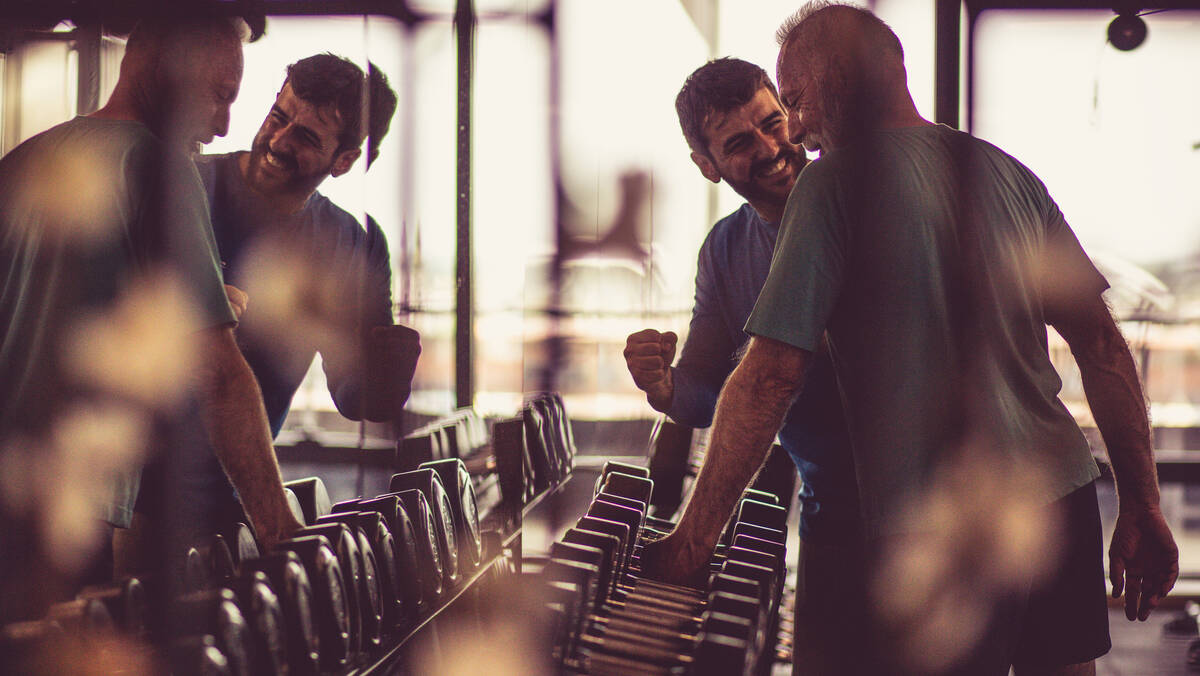
“We’ve overcomplicated a lot of stuff, but if I could give people one tip when it comes to health, it’s to get up and lift weights, and do it with as many people you love as you can,” Santucci says.
As Santucci shared, being part of a community is also important for longevity, which is also backed by science. According to one meta-analysis taking into account more than 148 scientific studies and more than 300,000 people, those with strong social relationships had a 50 percent increased likelihood of survival.
“Training your brain is as important as training your body,” he says, adding that this is done by maintaining social connections with others.
Hoess also spoke to the importance of maintaining social connections, saying that social wellness (hanging out with people and doing healthy activities together) is the top wellness habit worth your time and money. For example, he says, group saunas are becoming more popular in the U.S., a cultural habit that’s long been the norm in countries such as Finland, Russia, Turkey and Japan.
Additional longevity tips
While it can be easy to get swept up in buzzy wellness trends, Moore and Kaplan say a lot of what’s important to longevity is basic … yet important. For example, maintaining healthy blood pressure and cholesterol are key to longevity, both say. Trendy? Not really. Life-lengthening? Definitely.
When it comes to longevity, Kaplan says, a great first step is staying on top of your annual checkups with your doctor and up to date with relevant cancer screenings. If you have any health conditions that need managing (such as obesity, diabetes or high blood pressure), that’s step 2. Again, it may sound basic, but it can add years to your life.
Follow the science
As industry leaders, all four panelists have a front-row seat to the latest wellness companies and products hitting the market. Kaplan emphasizes the importance of not falling for “well-washing,” which is when a wellness company or habit isn’t backed by science.
Whenever you are considering whether a health trend or habit is worth pursuing, Moore says, just look at the data. What do scientific studies have to say about it? Especially if you plan on pursuing a habit long term, it’s worth spending some time researching it before you go all-in.
At the same time, it’s important to remain receptive to new ideas. “Before something becomes science, it has to be a theory. It’s important to look at the science and data, but keep an open mind,” Moore recommends.
Just because a workout, diet or wellness habit is trendy doesn’t mean it’s worth doing — but it doesn’t necessarily mean you should automatically skip it, either. After all, the more information we have, the more we can use the latest scientific intel to live well.
But it’s also a safe bet that the foundations of health won’t change. With that in mind, go lift something heavy and spend time with someone you love.