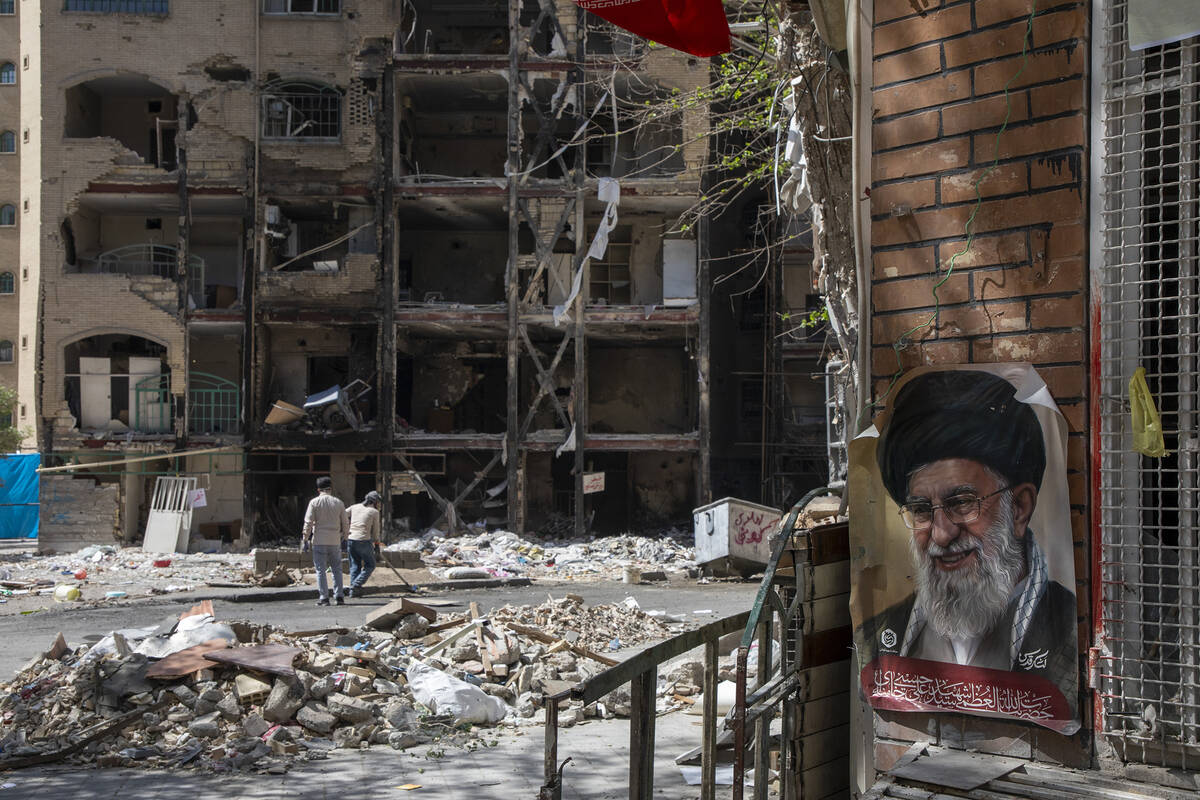
The war in Iran isn’t over, but America’s dominant position should be obvious.
Two months ago, President Donald Trump attacked Iran. Working with Israel, the United States killed many of the country’s top officials, including Supreme Leader Ali Khamenei. It appears leaders of the Islamic Revolutionary Guard Corps are effectively running the country.
Iran’s air force and conventional navy are in shambles. Its air defenses are kaput. Iran is recruiting 12-year-olds to bolster its beleaguered military, according to news reports.
Although each death is a tragedy, U.S. losses have been minimal. Thirteen service members have died, and 400 have been wounded. The U.S. military even rescued a pilot whose plane was shot down over Iran.
But, critics might argue, U.S. military dominance was inevitable. Trump hasn’t obtained Iran’s nuclear material or toppled its regime. Gas prices have gone up.
“Trump is digging himself deeper and deeper into this hole,” Senate Minority Leader Chuck Schumer said Wednesday. He said not ending the war as soon as possible is a “mistake.”
Quitting now would be like a football team forfeiting a game it led 77-3 because it didn’t want to hang around for the fourth quarter.
Iran’s evil regime has long relied on two things to protect itself. First, it funded terrorist groups throughout the region, including Hamas and Hezbollah. If Iran were threatened, it could unleash its terror proxies to rain down rockets on Israel or other countries. Second, it could close the Strait of Hormuz and cause economic trouble throughout the world. Before the war, 20 percent of the world’s oil flowed through the strait.
Iran hoped these two threats would keep the world at bay while it rushed to build a nuclear weapon.
Since October 2023, Israel has significantly reduced the first threat. After the October 7 massacre, it killed thousands of Hamas members. In September 2024, Operation Grim Beeper took out many of Hezbollah’s fighters.
That left Iran with the option of closing the Strait of Hormuz. It’s now shooting at ships attempting to make it through that narrow passageway. Brent oil is back above $100 a barrel.
But then Trump blockaded Iran’s blockade. It was a brilliant maneuver because Iran needs to ship its oil through the strait, too.
Iran’s blockade raised American gas prices. America’s blockade is drying up the money Iran needs to pay its troops. Further, Iran is reportedly weeks away from running out of room to store its oil. That’s a problem, because shutting down oil fields can cause long-term damage to them. Many countries are now coming to the United States to buy oil. Other Middle East countries are working on ways to bypass the Strait of Hormuz going forward.
Further, on Thursday, Trump ordered the Navy to “shoot and kill any boat” that puts mines in the Strait of Hormuz. Look at what the United States has done to drug boats in the Caribbean Sea. That isn’t an idle threat.
Because of Trump’s moves, the dance of the dueling blockades is hurting Iran far more than America.
Victory may not come as soon as anyone would like. But it’s within sight if Trump holds firm.
Victor Joecks’ column appears in the Opinion section each Sunday, Wednesday and Friday. Contact him at vjoecks@reviewjournal.com or 702-383-4698. Follow
@victorjoecks on X.