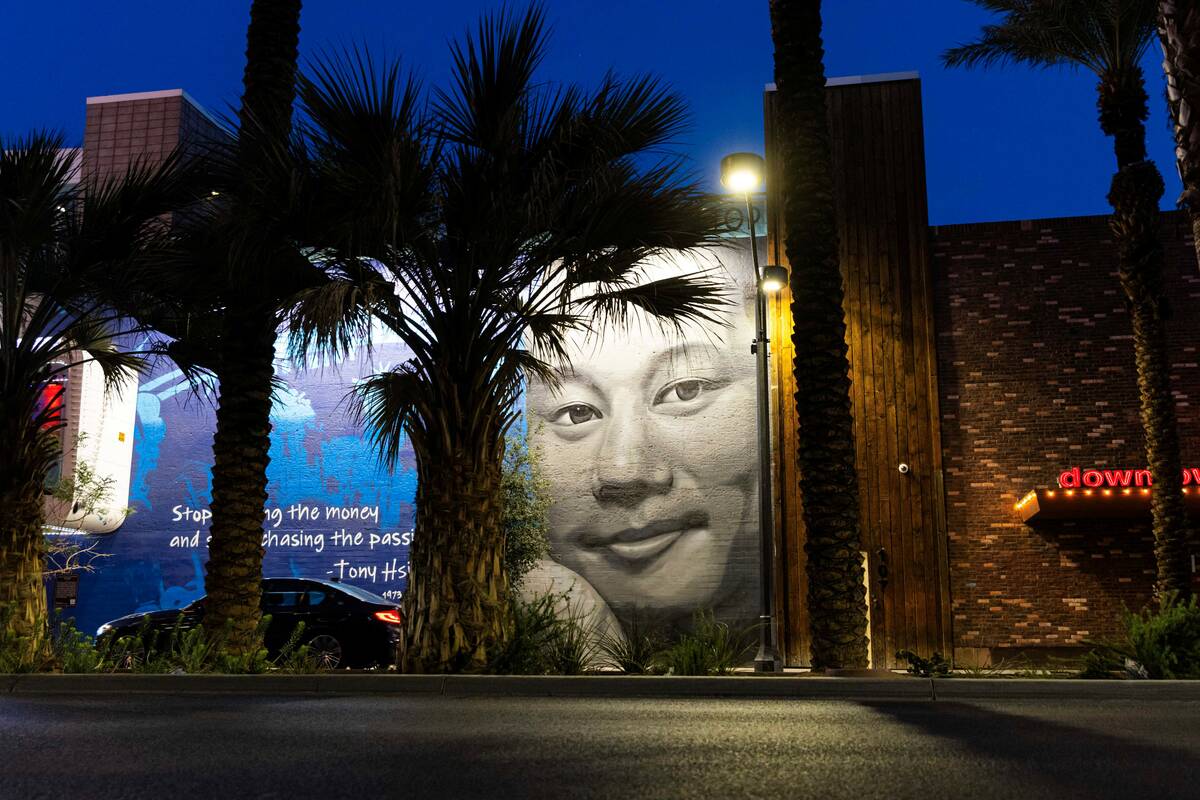
After a wide-ranging investigation of Tony Hsieh’s purported will, lawyers for his estate now want to broaden it even more — with CSI-style testing.
Attorneys for the late Las Vegas mogul’s father filed court papers on Friday seeking approval to conduct forensic tests of the document. This would include “semi-destructive” testing that would not actually destroy the document, they noted, as it involves taking pinhole-sized samples of ink and paper.
With this testing, the lawyers said, examiners can figure out who made the ink, when the ink was manufactured, and how long it has been on the document. This will help determine if the will was signed around the time of the date listed on the document, or if it was signed later, the legal team said.
Hsieh’s father has already alleged the will is a forgery. And according to last week’s filing in Clark County District Court by his attorneys Dara Goldsmith and Vivian Thoreen, the physical and material characteristics of the document “are critical to confirming its invalidity.”
Samples would be collected at the courthouse, and documents experts would conduct the testing and analysis in their labs, the filing noted.
According to the legal team, the extractions would not change the document’s legibility, affect any evidentiary value it may have, or prevent anyone else from having their own experts test the document.
Investigating the will
Hsieh, the former CEO of online shoe seller Zappos and face of downtown Las Vegas’ economic revival, died on Nov. 27, 2020, at age 46 from injuries suffered in a Connecticut house fire.
He was unmarried and died with a massive fortune — he was one of downtown’s biggest property owners — and his dad’s legal team stated multiple times in court filings that the younger Hsieh died without a will. His father has been managing the estate through a probate case.
However, two law firms teamed up to file court papers last April with a copy of Hsieh’s seven-page last will and testament, dated March 13, 2015, and a letter describing how it was found.
The surprising turn of events only became more bizarre. The will surfaced under still-unclear circumstances more than four years after Hsieh’s death; its language and provisions left multiple probate lawyers scratching their heads; and key people tied to the document remain a mystery.
As part of their investigation of the will, lawyers for Hsieh’s father, Richard Hsieh, served subpoenas to landlords who owned Las Vegas apartment complexes where witnesses who signed the document apparently lived.
The legal team also secured an order to obtain courthouse records and surveillance footage on how the will was filed; they analyzed client files, internal documents and communications, depositions, and calendars; and they hired outside experts to analyze how the will was written.
‘Scams come in all shapes and sizes’
In December, attorneys for Hsieh’s father claimed in court papers that the will is fake.
“Scams come in all shapes and sizes,” they wrote, adding that like other scams, “the more one digs, the more flaws appear in the story.”
They alleged that Tony Hsieh’s signature in the will was forged; that none of his family, friends or colleagues had ever heard of key names in the document; and that the witnesses who signed it “likely do not exist.”
The lawyers did not accuse anyone by name of orchestrating the alleged forgery. But they said that whoever was “behind this scam went to extraordinary lengths to cover their tracks by creating a false trail.”
Hsieh’s will is “curious,” but it meets the legal threshold, according to a court filing in January by legal counsel for Nevada lawyers Robert Armstrong and Mark Ferrario, who now have a role in the estate.
Plus, they asked, if the will is indeed a forgery, who would want to orchestrate the scheme? And why wait so long after the former Zappos chief’s death?
Armstrong and Ferrario were named executors in the will but never worked on Hsieh’s estate planning or even met him, court records show.
Contact Eli Segall at esegall@reviewjournal.com or 702-383-0342.