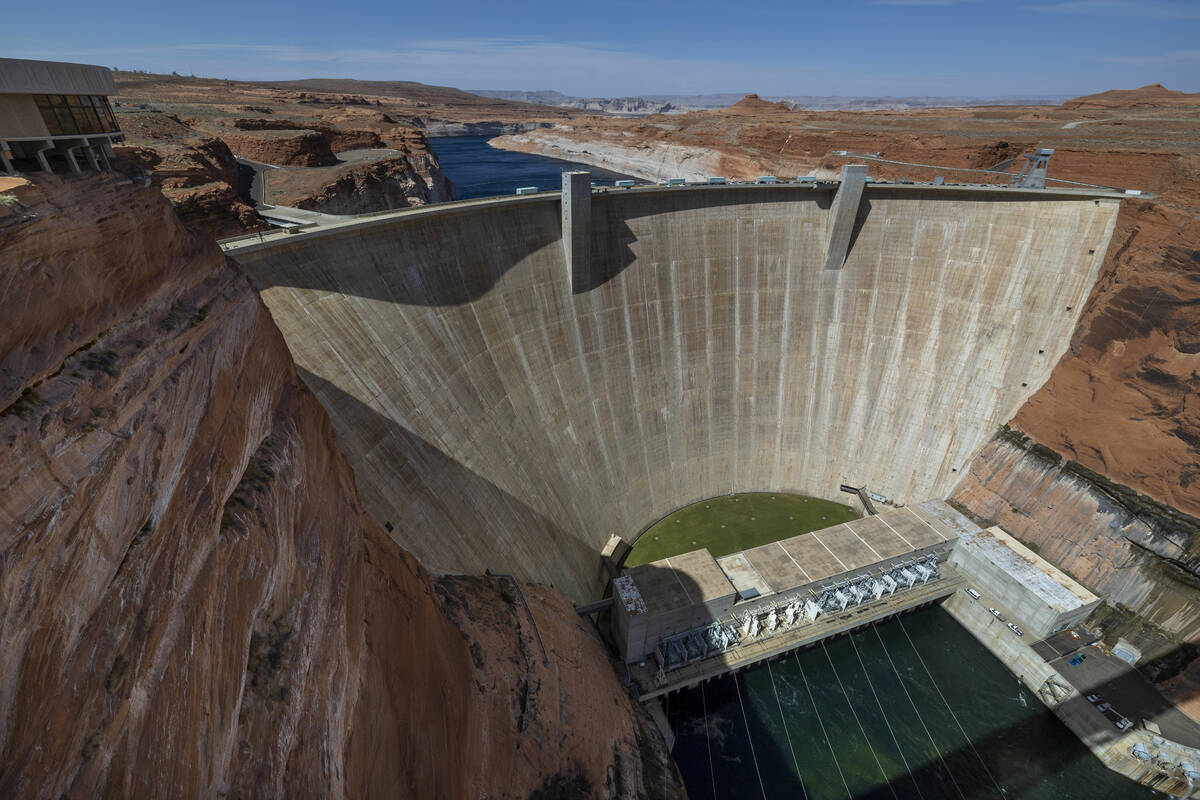
In the ongoing saga of the Colorado River water shortage, your March 1 article, “Dam’s failure foreseen,” left out important history.
In the early 1960s, according to a Sierra Club book, ““The Place No One Knew: Glen Canyon on the Colorado,” the environmental group took out advertisements in newspapers across the country warning of the consequences of adding another dam — the Glen Canyon Dam — to an already over-dammed river. But in those days, the U.S. Army Corps of Engineers wielded enormous political influence and seemed able to build dams wherever it chose.
The Corps even had plans for a dam at the bottom of the Grand Canyon. On a rafting trip down the Grand Canyon, I could still see marking for its construction. And those plans are still on the shelf. Also, the Sierra Club pointed out that another dam above Lake Powell would have such a large surface area, that evaporation would consume enough water that there would be no further downriver flow into Hoover Dam. Politics finally stopped those two dams. But the damage was done. Glen Canyon dam would be built.
As a powerhouse operator for another utility, I toured Glen Canyon Dam in 1983. As your article noted, 4-by-8 sheets of plywood had been added to the spillways to raise the lake level by four feet because the spillways could not accommodate high flows. During my visit, engineers on the elevator acknowledged that yet another generator had failed, meaning even more water would have to bypass power production and spill over the dam. Repairs were expected to take two years, and two other units were already down with similar failures.
What I observed pointed to mismanagement. I recognized the smell of a stator ground — an electrical insulation failure — and later learned the equipment had been pushed beyond design limits. In earlier decades, generators were often overbuilt and could tolerate temporary overloads. Modern units are engineered to precise tolerances, sustained operation beyond rated capacity leads to failure.
There were also design problems in the spillway tunnels. Severe cavitation eroded one tunnel to the point that darkened discharge water signaled structural damage inside the conduit. Continued operation risked catastrophic failure of the tunnel — and potentially the canyon wall itself — forcing shutdown and extensive steel lining repairs.
Today, the Sierra Club and others continue to argue that the ultimate solution may be the complete removal of Glen Canyon Dam.