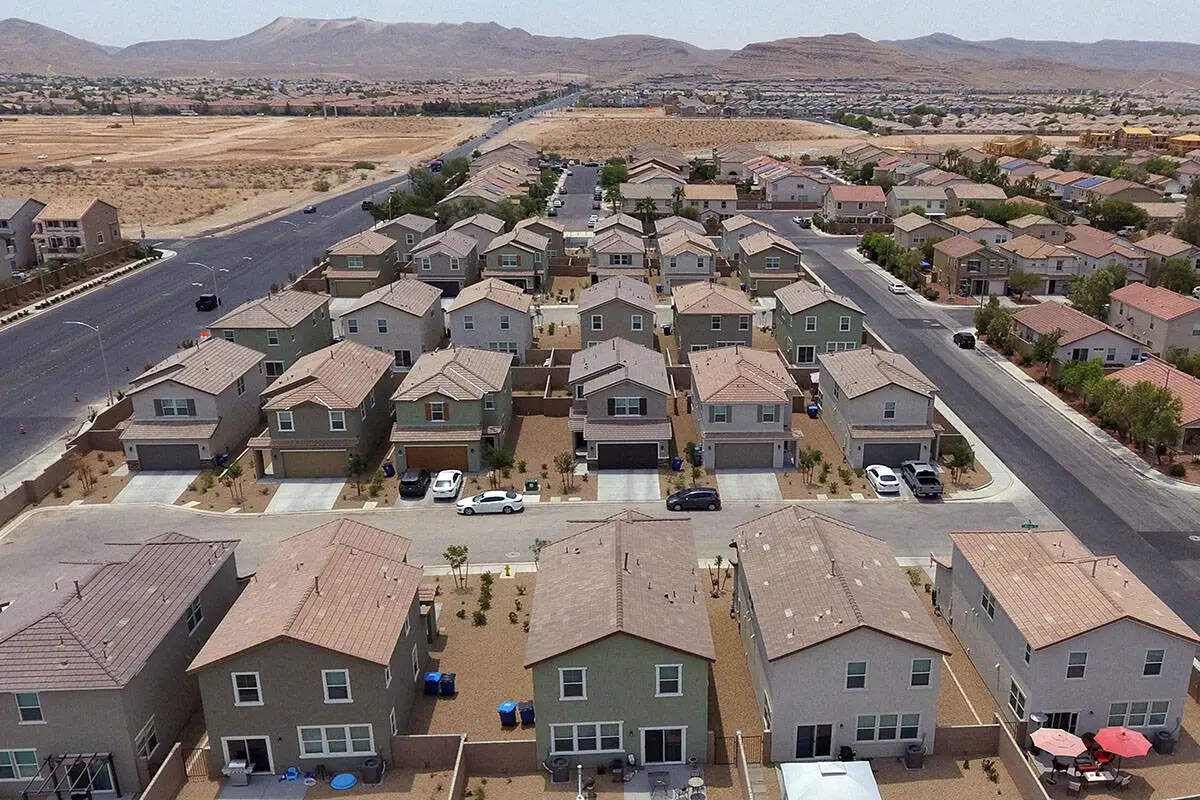
Mortgage rates hit 7 percent in the U.S. on Thursday, raising a number of questions for the Las Vegas Valley real estate market.
The weekly average rate on a 30-year fixed-rate home loan rose to 7.03 percent from 6.95 percent last week, mortgage buyer Freddie Mac said Thursday. One year ago, the average rate was 6.30 percent.
The average rate is now the highest it’s been since Jan. 16, 2025, when it was at 7.04 percent.
Crossing this 7 percent threshold once again could put a damper on the seasonal housing market, said Zillow Senior Economist Kara Ng.
“This fall, Las Vegas homebuyers may find more room to negotiate as inventory climbs and prices soften from their spring peak, but this week’s bond market turbulence threatens to eat into those seasonal gains,” she said. “The 10-year Treasury yield posted its largest single-day spike since April 2025, reaching 5.1 percent, and that kind of move introduces real upside risk to mortgage rates.”
Ng said Zillow forecasts are calling for mortgage rates to ease to around 6.7 percent by year’s end, but as this week demonstrated, the path down is not guaranteed to be smooth.
Higher mortgage rates can add hundreds of dollars a month to borrowers’ costs, limiting homebuyers’ purchasing power. As rates rise, that can also lead prospective home shoppers to delay buying.
Mortgage rates are influenced by inflation, Federal Reserve policy and bond-market investors’ expectations for the economy, among other factors. They generally follow the trajectory of the 10-year Treasury yield, which lenders use as a guide to pricing home loans.
Hector Amendola, president of Las Vegas-based Panorama Mortgage Group, said the country has passed a significant number once again.
“Reaching 7 percent is obviously a psychological number for buyers, and seeing rates back at that level is going to create some hesitation,” he said. “But here in Las Vegas, I think you have to look at the entire market and not just the rate.”
Both Redfin and Zillow have the valley squarely in a “buyer’s market” right now, according to their metrics, as sellers vastly outnumber buyers both locally and across most metro regions in the country. However, home prices in Las Vegas remain near record highs even though sales have dropped off substantially since pandemic highs.
Amendola said the market has clearly entered a new phase after a roller-coaster ride for rates, sales and prices during the pandemic.
“We’ve learned over the last couple of years that trying to time mortgage rates is incredibly difficult,” he said.
The housing markets in Las Vegas and most places across the country have been mired in a “locking effect” in which sellers are unwilling to drop prices and buyers remain on the sidelines due to high mortgage rates. The standoff has essentially stalled the residential real estate game across the country — outside of the luxury market where mortgages are a lot less common — for the past three years.
Mortgage rates above 7 percent have put affordability back at the center of the housing conversation, said local mortgage advisor Matt Hennessy. The recent rise is being driven less by the Federal Reserve’s quarter-point rate hike itself and more by a bond-market selloff, he said, with the 10-year Treasury yield reaching its highest level since 2007 as investors price in persistent inflation and higher energy costs.
“Fixed mortgage rates are priced in the long-term bond and mortgage-backed-securities markets, so that rise in yields quickly filters into homebuyer payments,” he said. “The most practical response in the Las Vegas market is not always a price reduction. Sellers can use concessions to help buyers buy down the interest rate, either temporarily or permanently.”
Las Vegas has one of the highest rates of home seller concessions in the country, according to a recent report from Redfin, ranking fourth in the nation when it comes to sellers offering perks to potential buyers to get them to sign on the dotted line. This trend cuts across most Sun Belt cities along with Las Vegas, including Houston, Miami, Denver, Phoenix and Austin.
Contact Patrick Blennerhassett at pblennerhassett@reviewjournal.com. The Associated Press contributed to this article.