When advocates pushed for the legalization of marijuana in Nevada, one of their arguments in favor of the policy was anticipated elimination of the drug’s black market.
Those expectations have not materialized, according to a review of police and court records and interviews with experts.
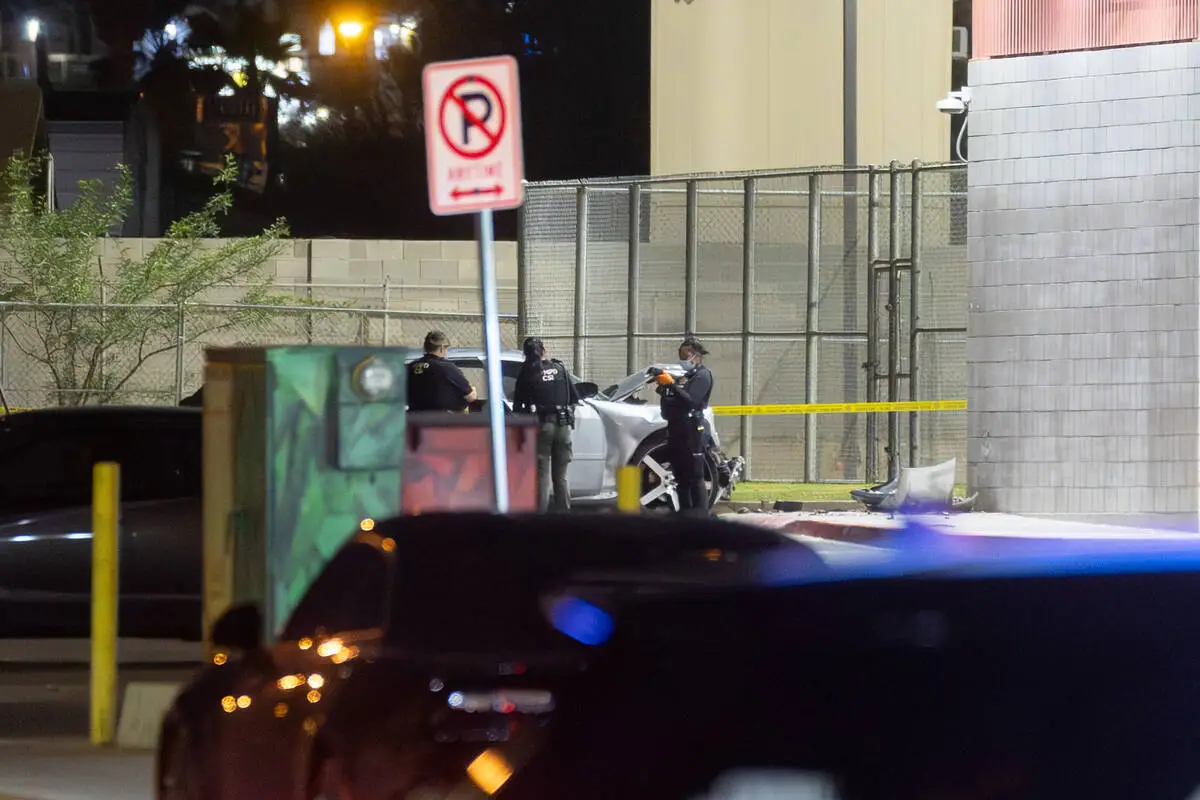
In fact, robberies and killings linked to black market marijuana transactions have persisted in Southern Nevada over the decade since Nevada voters approved legalizing the recreational use, possession and sale of cannabis. In a four-month span this year, there were three killings in Las Vegas with links to cannabis, two of them involving robberies, according to Metropolitan Police Department records.
“Legalization is a regulatory and civil-liberties reform,” said Alex del Carmen, a criminologist and dean of Westfield State University College of Professional Studies. “It was oversold as a crime-control measure, and it has not delivered as one.”
Robberies, killings
This year’s killings in Las Vegas with links to cannabis include:
■ On March 30, the Metropolitan Police Department said Deven Mays, 30, was fatally shot during an illicit marijuana deal gone bad in an apartment complex near West Ann Road and Interstate 11. Miles Spivey, 18, Kyree Brown, 20, and DaeQuan McGee, 18, have been charged with robbery, murder, and multiple other felonies in the case.
■ In April, Victor Powe, 59, was slain in what police portray in arrest reports as a marijuana-related robbery in the 5700 block of Missouri Avenue near Boulder Highway. Khalil Ratcliff, 20, Elijah Harris, 20, and Quin’marion Washington, 18, have been charged with conspiracy to commit robbery and murder.
■ In June, Brandon Gipson was fatally shot at an apartment complex in the 5300 block of East Craig Road. Arrest reports in the case indicate Gipson and another man were there as part of a marijuana transaction prior to him being shot. April Fontenot, 44, and Jeremiah Fontenot, 19, have been charged in the case.
Public records also show at least six other killings in the Las Vegas Valley with links to illicit cannabis since 2023. They include the robbery and killing of a 19-year-old at a Henderson apartment complex in 2025 and the robbery and killing of a 19-year-old at an apartment complex near Stewart Avenue and Nellis Boulevard in December 2024.
Attempts to obtain comment from the Metropolitan Police Department for this story were unsuccessful. In 2024, Clark County Sheriff Kevin McMahill said in an interview that the black market for cannabis did not go away after legalization.
“Low-level drug deals out on the street absolutely lead to violence,” McMahill said. “I’ve been to a hundred bar fights over alcohol and never one bar fight over marijuana. But I’ve been to a lot of homicide scenes over the low-level sales of marijuana.”
Not just a Nevada problem
Research on marijuana legalization and impacts on violent crime is mixed, del Carmen said. Studies have not established consistent patterns across crime types. Analyses of Colorado and Washington, he said, found no significant long-term changes in violent crime relative to states that had not legalized. At least one study of Oregon found increases in both violent and property crime after legalization.
“What legalization did accomplish, and this is the most robust finding in the literature, is a reduction in arrests,” del Carmen said in an email. “It substantially reduced the number of people drawn into the criminal justice system on non-violent possession charges.
“There is also some evidence that clearance rates for violent crime improved after legalization, though that effect appears to shrink over time,” he said. “The one place a violence reduction shows up with any consistency is the Southwest border, where research found that decriminalizing production and distribution reduced violence in markets traditionally controlled by Mexican trafficking organizations. That is a specific finding about a specific geography, not a national result.”
Keith Humphreys is a professor of psychiatry at Stanford University and has been an addiction researcher for more than 35 years. He served on the White House Commission on Drug-Free Communities during the George W. Bush administration and as a senior policy adviser in the White House Office of National Drug Control Policy under President Barack Obama.
He said the black market for marijuana exploded in California after legalization.
“One of the basic arguments made by legalization activists wasn’t true, which is if you legalize, the black market would shrink,” Humphreys said. “In California it has grown many times over. Most people think probably at least a half-dozen times as large as it used to be. You are creating a lot of demand, people get addicted, drugs are stronger than ever, so that means the supply is still going to be able to find business including outside the legal market.”
He said the black market is growing because there is little consequence to operating in the black market post-legalization.
“For legalization of anything to work, you need enforcement against the things that are illegal,” he said.
The legal market
Riana Durrett is the director of the UNLV Cannabis Policy Institute. The institute is a hub for information on cannabis policy, education and research.
In Nevada, money from cannabis sales goes to fund kindergarten through 12th-grade education. Marijuana sales have brought in hundreds of millions of dollars for education, but the amount has been declining yearly since the COVID-19 pandemic.
“A lot of the optimism around it hasn’t panned out,” Durrett said regarding the strength of the overall legal market.
The Cannabis Compliance Board estimates that of the overall cannabis market, roughly 20 to 30 percent consists of black market transactions, Durrett said.
As the market has condensed and consolidated, she said, sales have declined, noting that many operators in the legal market are “very much struggling.” Dispensary and manufacturing operations face high regulatory costs and taxes on the local and state level.
On the federal front, they face a tax penalty because they can’t take standard business deductions.
“There are some that have gone out of business,” she said. “There have been many sales of licenses because of mergers and acquisitions but also because some of the businesses couldn’t afford to stay in business.”
She said the belief that legalization would greatly reduce the black market for the drug hasn’t been realized.
“I don’t think anybody questioned it,” she said. “Why would you buy illegally if you have the option to buy legally? It turns out there are multiple reasons.”
She said that, in her opinion, some of the black market transactions involve people who aren’t comfortable going into state-licensed stores. She said black market operators often purposely mimic legitimate sellers and end up confusing customers who don’t know they are purchasing from an unlicensed operation. She also believes that black market sales commonly target minors. To legally purchase marijuana from a dispensary, customers must be at least 21 years old.
Contact Glenn Puit at gpuit@reviewjournal.com.