More than a dozen Las Vegas city parks are getting makeovers, changes that officials say will save 82 million gallons of water per year but have some residents incensed about the potential consequences.
At Thursday’s Southern Nevada Water Authority board meeting, elected officials approved a $4 million rebate for the city for removing grass through a cash-for-grass incentive program that water managers have offered since 2001. It is one of the many tools the agency uses to protect the Colorado River Basin’s water supply, which is on life support.
However, residents brought a list of objections during public comment, taking issue with minimal artificial turf installation and the effect of grass removal on valley temperatures and quality of life.
Las Vegas City Councilwoman Olivia Diaz, the city’s representative on the board, told the crowd that officials must equally weigh protecting the Colorado River and preserving grass that is most useful to the community.
“I understand the delicate balance,” Diaz said. “We have to not take away the little grass that may exist in so many areas across the city, but also if it’s not functional and it’s only there for aesthetics, I think that we could do a better job.”
Artificial turf remains controversial
The 17 projects benefiting from the rebate will affect 15 city parks. According to city spokesman Jace Radke, only two parks on the list will have artificial turf.
One is Cragin Park, among the parks already transformed, and the other is Bettye Wilson Soccer Complex, where the city will also build an additional artificial turf field on a plot that does not currently have grass.
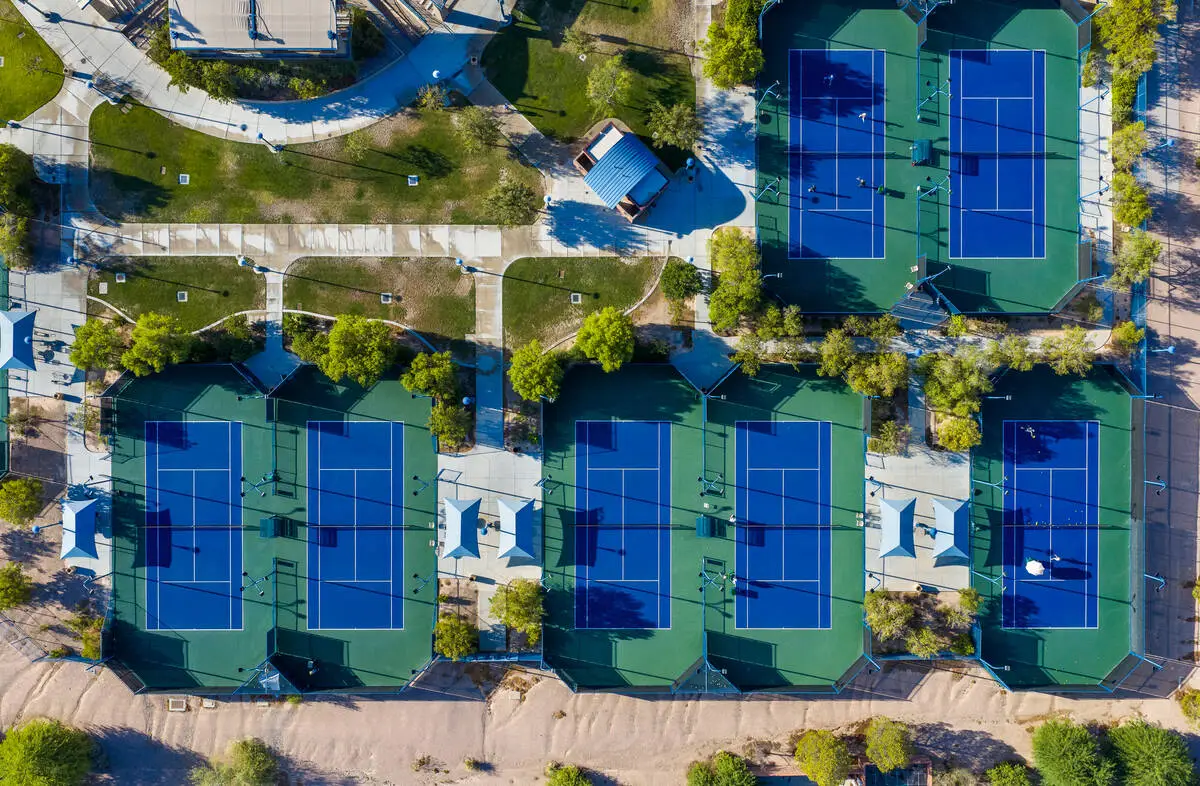
Radke said examples of grass removal for recreational improvements include new pickleball courts at Lorenzi Park and a new outdoor pool at the Veterans Memorial Community Center.
“The city has not removed grass that is appropriate and used by the community,” Radke said in a statement. “Grass that is not used can be replaced with water-smart landscaping without an impact on residents and recreational opportunities.”
While grass often is cool to the touch, one UNLV study in 2008 found the surface of artificial turf can reach up to 169 degrees, 46 degrees higher than what was considered safe for use at the time. Some student-athletes have reported burns as a result of contact with artificial turf.
A growing body of research shows some artificial turf contains forever chemicals, or perfluoroalkyl and polyfluoroalkyl substances that have been linked to cancer, as well.
Laura McSwain, who founded a neighborhood group called the Water Fairness Coalition, said during public comment that the removal of grass, especially in parks, is short-sighted. She said water savings should not be touted as a valid reason to continue ripping up grass in parks.
“Conservation cannot be evaluated in a vacuum,” McSwain said. “At some point, temperature, public health, environmental consequences and the livability of this community have to become part of the calculation.”
‘Not a mandate’
During the meeting, water authority deputy general manager Colby Pellegrino said the city’s turf removal projects are voluntary and not sparked by the controversial 2021 law that bans the use of Colorado River water to irrigate decorative grass, which takes effect in January.
“This is an incentive program that’s existed since 2001 and operated continuously,” Pellegrino said. “It is not a mandate. It’s a tool that’s out there to make our parks have greater recreational value for the community while also using less water.”
In a statement, water authority spokesman Bronson Mack said the conversions are “a great example of how conservation and community enhancement can go hand in hand.”
Still, Amelia Wignall and other residents are unhappy with the changes they have seen throughout the years.
Wignall said her fond memories of going to Rainbow Family Park to cool off on hot days have been replaced with an unpleasant odor of burning rubber where grass used to be.
“The idea of replacing more grass with amenities like pickleball courts just adds to our heat island and makes it feel more and more like a dystopian landscape,” Wignall said. “This is no longer a retreat to nature. Enough damage has already occurred. I’m asking you to please stop making it worse. Leave the remaining grass in sports fields.”
Contact Alan Halaly at ahalaly@reviewjournal.com. Follow @AlanHalaly on X.