The Mortgage Reports : Today's Mortgage Rates & Strategy Sponsored Content

Key Takeaways
- A home equity loan and a HELOC are different products: one is a fixed lump sum, the other a revolving line you draw from as needed.
- For a one-time project with a known cost like a bathroom remodel, a fixed-rate home equity loan often lines up better.
- Predictable, fixed monthly payments are frequently the deciding factor for a single, fixed-scope job.
You have a bathroom remodel in mind and enough equity to pay for it. Then you hit the fork: a home equity loan or a HELOC.
Many people assume these are two names for the same thing, and that’s what makes the choice feel harder than it is. They’re different products, and for a single job with a known cost, one usually lines up more cleanly than the other.
Check your home equity loan options. Start here
In this article (Skip to…)
Home Equity Loan vs. HELOC: They’re Not the Same Thing
Both let you borrow against your home equity (your home’s value minus what you still owe), and if you already have a mortgage, both count as second mortgages repaid on top of your first, according to the Consumer Financial Protection Bureau. But how you get the money, how the rate behaves, and how you pay it back differ.
Explore your HELOC options. Start here
A home equity loan is a set amount you receive as a lump sum, according to the CFPB. You take the full amount once, at closing, and repay it on a schedule.
A HELOC, a home equity line of credit, works more like a credit card secured by your home. The CFPB describes it as an “open-end” line you can borrow against repeatedly: you draw as needed, up to a limit, and as you pay it back the available credit is replenished.
The distinction to remember: a home equity loan is a lump sum, a HELOC is a reusable line. Both are secured by your home, which raises the stakes. With either, falling behind on payments can put your home at risk, per the CFPB.
How Each One Works: Getting the Money and Paying It Back
Home equity loan. You receive the funds as a single lump sum, typically at a fixed rate, according to the CFPB. Because the rate is fixed, your payment stays the same, and you repay in equal monthly payments over a set term, the Federal Trade Commission explains. Interest applies to the full amount, since you received all of it up front.
HELOC. A HELOC generally has two phases. First is the draw period (the CFPB gives 10 years as an example), when you can borrow from the line as needed and may only have to pay interest on what you’ve borrowed, per the FTC. Then comes the repayment period, when you can no longer draw and repay the balance, often over 10 or 20 years. The CFPB notes payments are often significantly higher once repayment begins, and in some cases the full balance may come due at the start.
Interest also works differently: with a HELOC, “you make payments only on the amount you borrow, not the full amount available,” the FTC states.
What “variable rate” means for your payment. HELOCs usually carry a variable rate, so your payment may change month to month, according to the CFPB. Home equity loans usually carry a fixed rate that doesn’t. Some lenders let you convert part or all of a HELOC balance to a fixed rate, usually higher than the variable rate but more predictable, the CFPB notes. Terms vary by lender.
|
Home equity loan |
HELOC |
|
|---|---|---|
|
How you get the money |
Lump sum, once, at closing |
Draw as needed during the draw period |
|
Interest rate |
Typically fixed |
Usually variable (some lenders offer a fixed-rate option) |
|
Payments |
Equal monthly payments over a set term |
Often interest-only during the draw period, then higher payments in repayment |
|
Re-borrowing |
No; one-time disbursement |
Yes; reusable up to your limit during the draw period |
|
Interest applies to |
The full amount borrowed |
Only the amount you actually draw |
|
Best-fit project type |
One-time, fixed-cost projects |
Uncertain, phased, or ongoing costs |
Structures vary by lender; the table describes common, not universal, terms.
Why a One-Time, Fixed-Scope Project Changes the Math
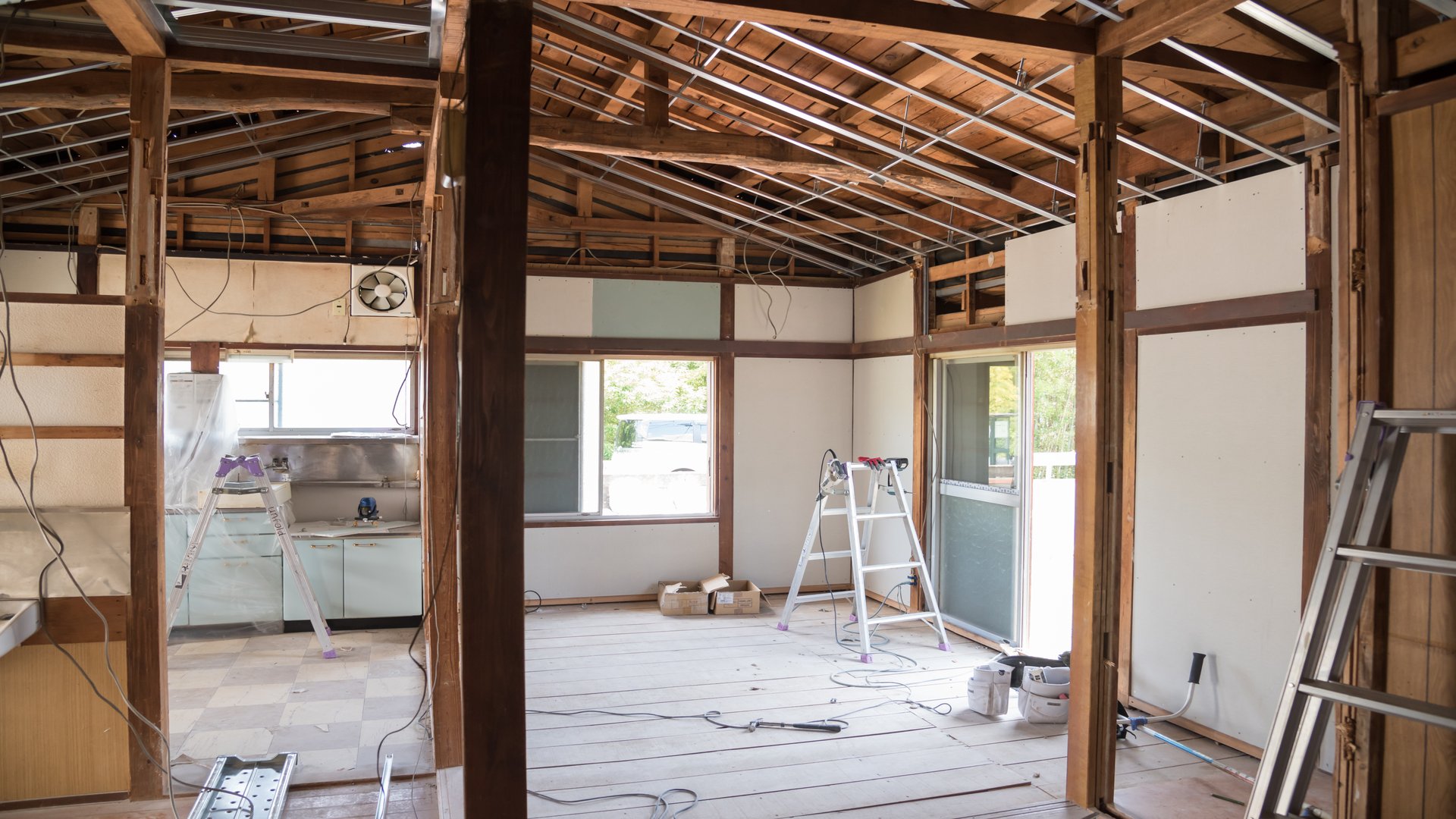
A bathroom remodel is a defined project. You get quotes, settle on a scope, and land on a number. When the cost is largely known and you only need to borrow once, that maps naturally to a lump sum: you take exactly what you need, one time, and start paying it back.
Compare home equity lenders now
A HELOC’s main advantage is drawing money as you go, which is genuinely useful when there’s something to draw for. For a single job you’ve already priced out, there often isn’t. You’d be opening a reusable line for a one-time need.
A HELOC’s flexibility still earns its keep in some situations:
One caveat: even a well-defined remodel can run over once demolition starts and something behind the wall needs attention. With a HELOC, you can draw more (up to your limit) without applying again. With a home equity loan, you’ve already taken a set amount, so a large overrun could mean going back for additional financing. If the risk of a mid-project surprise is high for your job, that’s a point in the HELOC’s favor.
One more piece of the math: a home equity loan accrues interest on the full amount, since you received it all at once, while a HELOC charges interest only on what you draw, per the FTC. If you’d take a lump sum and let part sit unused, that difference is worth factoring in.
Predictable Payments: Why This Often Decides It
For many homeowners, the deciding factor isn’t the lowest starting rate. It’s knowing exactly what the payment will be every month.
A fixed-rate home equity loan gives you that. The rate doesn’t change, so the monthly payment stays the same for the life of the loan, according to the CFPB. You can build it into a budget and leave it there.
A variable-rate HELOC works differently. Because the rate can move, the payment may change month to month, per the CFPB. There’s also the shift when the draw period ends: moving from interest-only payments into repayment, when you start paying down principal too, can push the payment up noticeably. The CFPB notes payments are often significantly higher once repayment begins, and some borrowers are caught off guard by the jump.
Weighing predictability against flexibility comes down to your budget. Ask how much payment movement you could absorb if the rate rose. If the answer is “not much,” a fixed payment carries more weight than a lower variable rate that might climb later.
If you want some flexibility and some rate stability, some lenders let you lock part of a HELOC balance at a fixed rate, per the CFPB. It’s usually higher than the variable rate but steadier. This varies by lender, so ask before you assume it’s an option.
How to Choose: A Simple Framework for Your Situation
Time to make a move? Let us find the right mortgage for you
Consider a home equity loan if:
Consider a HELOC if:
A few questions to answer first:
Whichever way you lean, compare offers and terms from more than one lender before you commit, and get the details in writing. Rates, fees, the length of any draw and repayment periods, and whether a fixed-rate option is available all vary by lender. The next step is gathering your numbers (your project quote and available equity) and talking to a lender about how each product would work for you. This is educational information, not personalized financial advice, so lean on a qualified professional for a recommendation tailored to you.
FAQ
Is a HELOC or a home equity loan better for a one-time bathroom remodel?
For a single project with a known cost, a lump-sum home equity loan is often the more natural fit: you borrow exactly what you need, once, and repay on a set schedule. A HELOC may make more sense if your costs are uncertain or the work is phased, since you can draw funds as you go. Neither is universally “better”; it depends on how defined your costs are and how much payment predictability matters to you.
Can I get a fixed interest rate with a HELOC?
Sometimes. HELOCs usually carry a variable rate, but some lenders let you convert some or all of your balance from a variable rate to a fixed rate, according to the CFPB. The fixed rate is typically higher than the variable rate but more predictable. Availability and terms vary by lender, so ask before you assume it’s offered.
Do I pay interest on the whole amount with a home equity loan?
Generally, yes. A home equity loan disburses the full amount at once, so interest applies to the entire balance. A HELOC works differently: you make payments only on the amount you actually borrow, not the full amount available, according to the FTC. Exact terms vary by lender.
Which option has more predictable monthly payments?
A fixed-rate home equity loan is generally the more predictable of the two. The rate doesn’t change, so the payment stays the same over the life of the loan, per the CFPB. A HELOC usually has a variable rate, so the payment may change from month to month, and it can rise when the draw period ends and repayment begins.
What happens to my HELOC payment when the draw period ends?
When the draw period ends, you can no longer borrow and you enter the repayment period, when you repay the balance, often over 10 or 20 years, according to the CFPB. If you were making interest-only payments while drawing, the shift to paying down principal too means monthly payments are often significantly higher. In some cases the full balance may be due at the start of the repayment period, so confirm your terms with your lender ahead of time.
The information contained on The Mortgage Reports website is for informational purposes only and is not an advertisement for products offered by Full Beaker. The views and opinions expressed herein are those of the author and do not reflect the policy or position of Full Beaker, its officers, parent, or affiliates.
By refinancing an existing loan, the total finance charges incurred may be higher over the life of the loan.