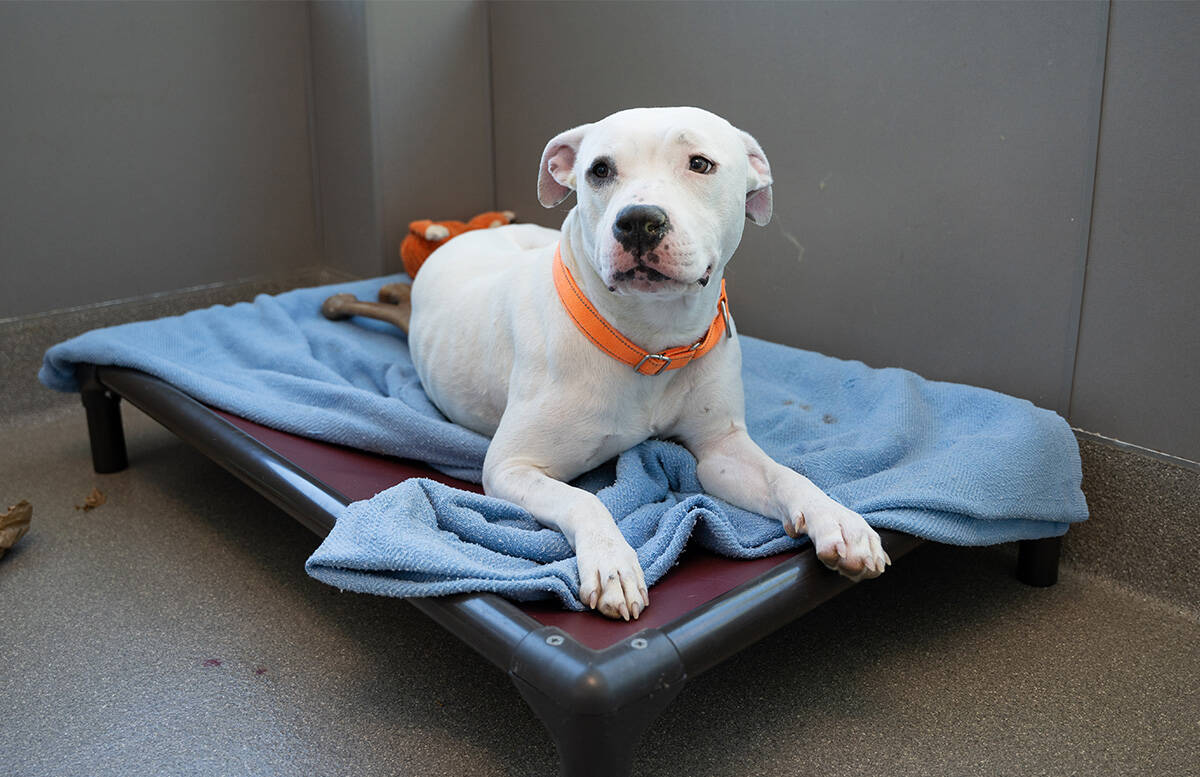
Clark County’s plans are moving “full speed ahead” to build a $39 million animal shelter to supplement services from the nonprofit-operated facility that serves three Southern Nevada municipalities, Commission Chair Michael Naft said Tuesday.
“I think the need for that is crystal clear,” he said during a board meeting.
Commissioners approved its funding in February, and the project will soon go through a land-use entitlement process, Naft said.
Meanwhile, the board voted to renew its yearly contract with The Animal Foundation to the tune of $5.3 million.
The county and the cities of Las Vegas and North Las Vegas partially fund the nonprofit’s overall budget to cover law-mandated holds for animals found or taken from owners. In 2025, the municipalities approved a four-year extension worth up to $27.7 million if the jurisdictions affirm the contract on a year-to-year basis.
The Animal Foundation did not respond to a message seeking comment on the vote.
The county’s 45,000-square-foot shelter, slated to open in 2028, is planned on about 26 acres near Tropicana Avenue and the 215 Beltway. It would have room for up to 650 animals.
In recent years, animal advocates have accused The Animal Foundation of mismanagement, inhumane treatment of animals and not working with local groups to ease the overpopulation issues. The nonprofit’s leadership has said that some of the issues aren’t unique to the valley and are a reflection of the pandemic’s economic downturn across the U.S.
The contract extension followed audits and multiple public discussions. The governments have moved to pass ordinances centered around microchipping requirements and cracking down on illicit breeding while restricting legal animal sales.
Animal Control Supervisor Victor Zavala told commissioners that new regulations are helping ease the valley’s animal overpopulation problems.
Decreases to mandatory holding times at The Animal Foundation have allowed animals to move out of the shelter more quickly, he said.
Owners of animals that aren’t microchipped or spayed or neutered are given “fix-it” tickets with a grace period, and instructions where they can get it done for a low cost, Zavala said.
Clark County also instituted a program that subsidizes medical care for animals so they’re not taken away from owners who can’t afford care, he said. Another program offers $5 microchipping.
Furthermore, the county is going to install 15 microchip scanning stations around the county so that good Samaritans who find lost animals can help return them to their owners.
Clark County created an animal welfare fund that pays for the programs through fees and fines.
Since February 2025, for example, the county collected $153,000 in fines from illegal breeders, Zavala said.
Contact Ricardo Torres-Cortez at rtorres@reviewjournal.com.