A government program to reduce water stress on Nevada’s most over-pumped regions just got its first batch of funding.
Last year, Gov. Joe Lombardo signed a pair of bills that created a statewide voluntary groundwater rights retirement program in which Nevada officials would pay water users to relinquish their water rights back to regulators.
In theory, it’s an effort that could help undo the staggering fact that more than half of the state’s 256 hydrographic basins are over-appropriated, meaning the amount of water in the ground each year is less than the total volume of water that people have the legal right to pump.
There was just one problem. Officials did not take responsibility for putting money behind the program, with a governor’s spokesman at the time suggesting that future grants or private investment could be the solution.
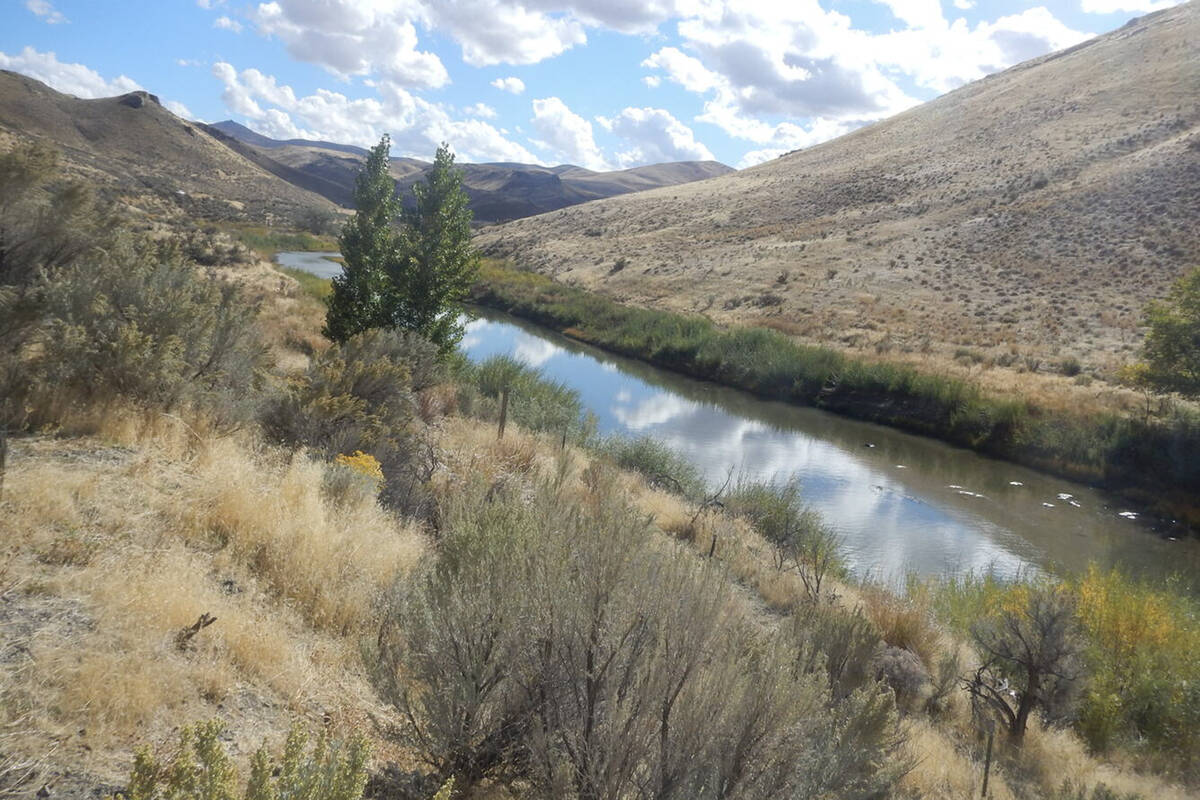
Lombardo’s office made good on that promise this month, with a $1.8 million grant from Conserve Nevada awarded to the Humboldt River Basin Water Authority, the agency with responsibility for the Northern Nevada river that spans Humboldt, Lander, Eureka, Elko and Pershing counties.
The Humboldt River is in the same basin that former State Engineer Adam Sullivan suggested could need the state help, through curtailment or the rolling back of water rights that are considered less senior. Sullivan was fired in December.
Jeff Fontaine, executive director of the water authority, said water users at the end of the Humboldt River system are often cut first due to declining water availability and the over-pumping of groundwater. The so-called Humboldt River Decree divvied up water rights in the basin in the 1930s.
In certain areas, groundwater pumping is affecting surface water flows in the river, he said.
“Holders of decreed surface water rights don’t get their full allotment in many years, and in some years they have received no water,” Fontaine said in an interview.
Advancing the pilot program
Fontaine helped organize the state’s pilot program to test out groundwater buybacks in 2023.
It helped Diamond Valley, a small ranching community in Eureka County that was the state engineer’s only critical management area. So many water rights were retired that water managers estimated that pumping could have been slashed by a third of the perennial yield of the basin, or the yearly amount of water that is usable.
In a statement, Lombardo’s office wrote that the program is a good example of a practical, locally driven solution to the state’s water challenges. The effort’s bipartisan praise in the Legislature helped support that.
“The Authority has demonstrated that locally led groundwater retirement programs can reduce conflicts among water users while helping address declining groundwater levels and promoting the long-term sustainability of Nevada’s water resources,” the statement said.
The voluntary nature of the program is preferable to forced curtailment, Fontaine said. This round of targeted water rights buybacks is another chance to prove the concept, he said.
“If there is ever is a curtailment order in the Humboldt Basin, then there may not be this opportunity,” Fontaine said.
Previously, Fontaine said the price for the rights to one acre-foot of water came out to $850; an acre-foot, or 325,851 gallons, is enough water to cover an acre of land that is one foot deep, about the size of a standard football field.
The timeline to use the new grant — longer than that of the COVID-19 relief funds — will allow Fontaine and his staff to be more precise and measured, he said.
Fontaine said funding remains a challenge, and water managers are searching for ways to sustain a permanent pool of money to prop up the effort.
“Water rights retirement is competing against improvements for public water systems,” he said. “We’re hoping to either figure out a way to make that amount of money bigger or find other sources of revenue so we can sustain the program.”
Contact Alan Halaly at ahalaly@reviewjournal.com. Follow @AlanHalaly on X.