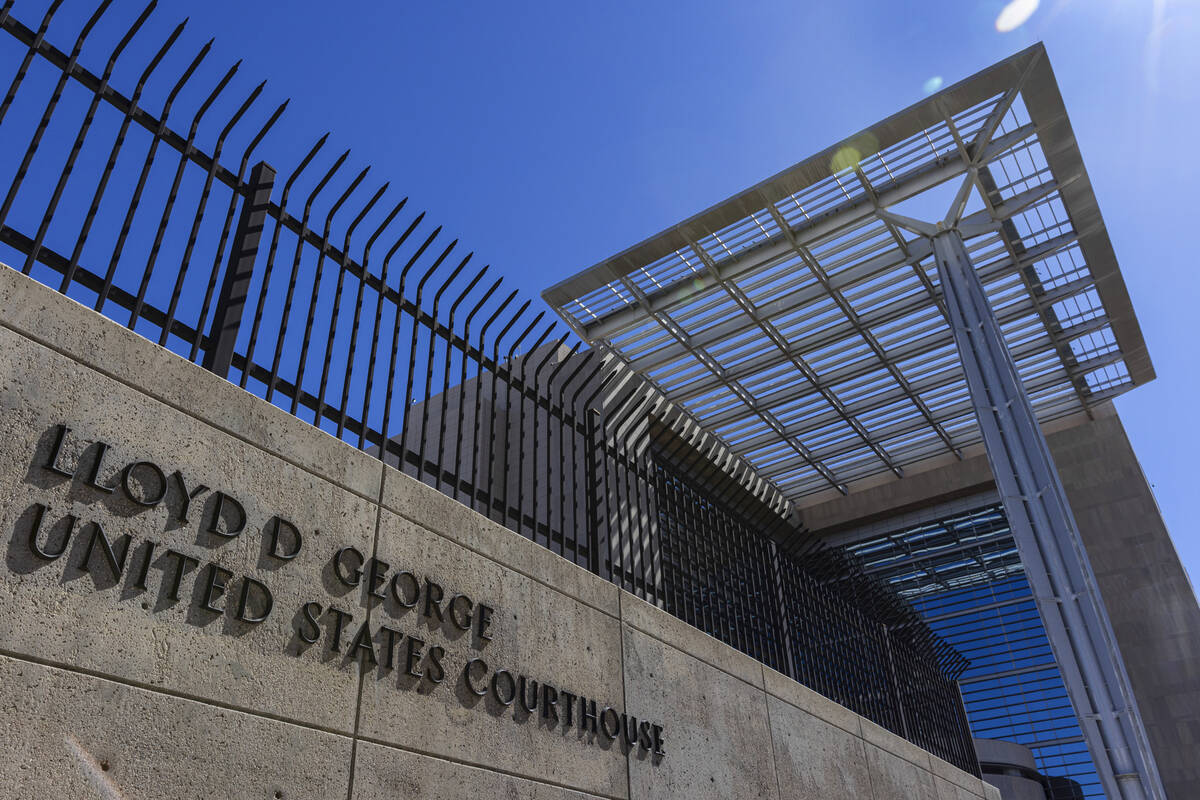
A Swiss man who played a role in a scam that cheated victims out of about $6 million, according to prosecutors, was sentenced to time served Wednesday.
Martin Schlaepfer, 68, pleaded guilty in March to a count of securities fraud.
“I balance your suffering against the suffering of those who were injured by your fraud and the question in the end is what would be appropriate considering that and the fact that you’re now many years older and this is many years behind you,” said Senior U.S. District Judge Kent Dawson.
The judge ordered Schlaepfer to pay about $6.5 million in restitution in addition to a $5.6 million forfeiture judgment and said he would be subject to supervised release for three years. Co-defendants share responsibility for paying the restitution.
“He’s going to be hounded financially for the rest of his life,” Dawson said.
Schlaepfer’s criminal case dates back to 2013. He has suffered from medical problems and, Dawson said, underwent gastric bypass surgery in 2023. He has had difficulty maintaining a proper diet while being detained.
Between his U.S. case and a separate case in Switzerland, Dawson said Schlaepfer had served 70 months.
Other defendants in the case — which involved co-conspirators in Las Vegas and Switzerland — were sentenced to prison previously and one, Hans-Jurg Lips, remained at large outside the U.S. as of March, according to prosecutors.
Authorities said that investors were enticed by promises of astronomical returns to contribute money to a Swiss company called the Malom Group. Schlaepfer was the company’s chief executive.
‘Make A Lot Of Money’
Conspirators gave the victims fake bank documents showing that Malom had hundreds of millions of dollars in bank accounts.
Schlaepfer and others told the victims that, in exchange for an upfront payment, they could get access to lucrative investments and loans, according to prosecutors.
Although the company’s name stood for “Make A Lot Of Money,” that’s not what happened to the group’s investors.
Instead, prosecutors said, Schlaepfer and the other defendants used the funds to benefit themselves.
According to court records, he was accused of telling a Swiss investor: “(I)f Americans are dumb enough to sign my investment agreement, I will take their money.”
The scheme dated back to at least 2009, according to court papers. Schlaepfer was arrested in Italy in 2024 and extradited to the United States in 2025.
He served as “an organizer or leader” and played an essential role, said Dawson.
Federal prosecutor Paul Hayden recommended that Schlaepfer be sentenced to the time he had already served.
In a sentencing memorandum, prosecutors wrote that the amount of time Schlaepfer had already spent in custody separated him from the other defendants.
“As such, the government submits that its request for a sentence of time served would not result in any unwarranted sentencing disparities,” they said.
Defense attorney William Brown wrote in his own sentencing memorandum that while Schlaepfer “committed serious securities fraud more than fifteen years ago,” he lived 10 years as a law-abiding citizen after serving a sentence in Switzerland until he was arrested in Italy.
“I don’t think he poses any risk whatsoever of recidivism,” Brown said in court.
Schlaepfer said he felt sorry for the victims.
“There was one mistake in my life which cost me everything that I have,” he told the judge.
Judge: Schlaepfer must surrender to ICE
Brown said Schlaepfer’s family had a ticket for him to return to Switzerland Wednesday evening, but it was unclear at the time of the sentencing hearing whether he would be detained by immigration authorities.
Dawson said he must surrender to U.S. Immigration and Customs Enforcement and follow their requirements until being deported.
Brown said Schlaepfer did not enter the country voluntarily and expressed concern that his client could be stuck in an immigration detention facility.
After court, Brown said the sentence was fair considering the age of the case and Schlaepfer’s age.
“It was an isolated incident,” he said.
Prosecutors disagreed.
“As outlined in his plea agreement, Mr. Schlaepfer actively engaged in fraudulent activities that included promoting investment opportunities that he knew to be fictitious; circulating forged bank documents; preying upon victims by convincing them to send money that he understood would never be refunded; and employing abusive tactics in lulling hopeful victims,” they said in a filing. “Further, Mr. Schlaepfer’s criminal activity in this case was not an isolated incident; on the contrary, it extended over the course of years with him taking knowing and deliberate action.”
Contact Noble Brigham at nbrigham@reviewjournal.com.