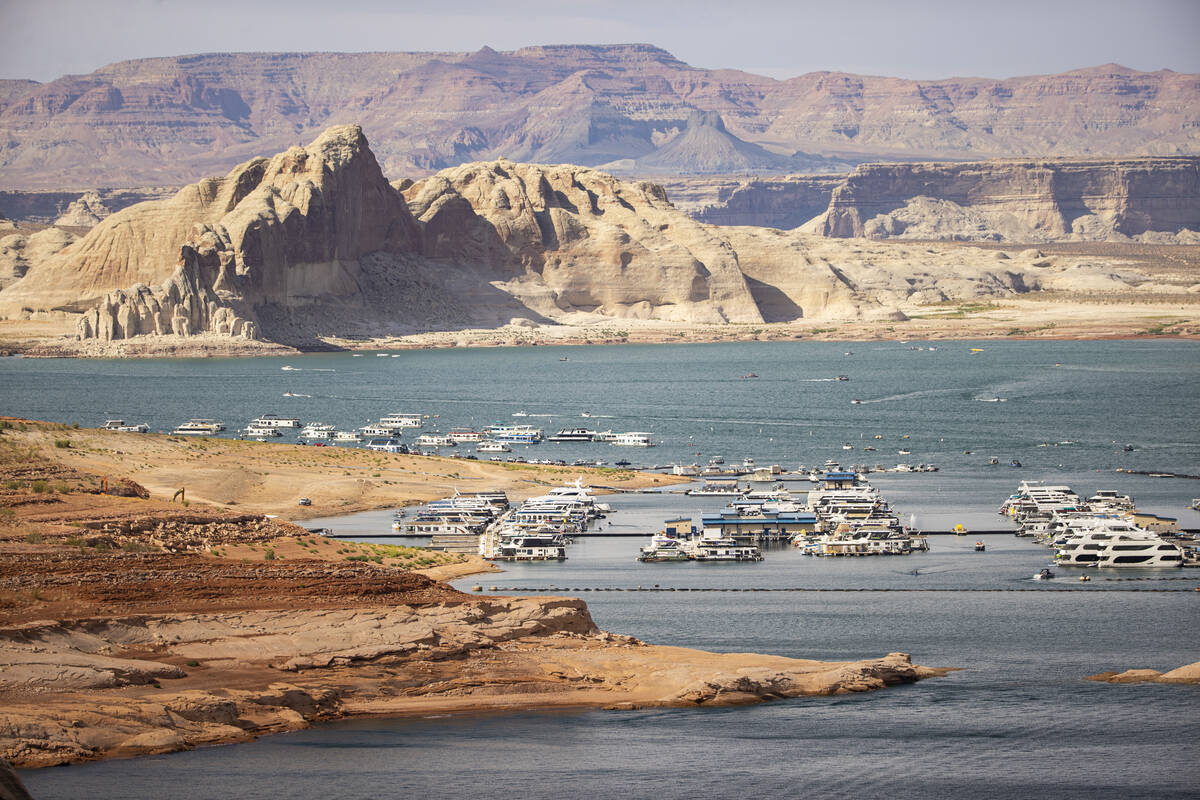
The Colorado River system’s immediate outlook got even worse this week when federal forecasters downgraded the expected inflows into Lake Powell to just 27 percent of average.
At the beginning of the month, that number was 36 percent of average. This year has brought the third lowest mid-March projection on record, with only 1.75 million acre-feet expected to flow into the Lake Powell between April and July, said Cody Moser, a hydrologist with the Colorado Basin River Forecast Center in Salt Lake City.
Previously, forecasters predicted that number would be closer to 2.3 million acre-feet. Below-average precipitation paired with an unusual heat wave caused the shift in the numbers, Moser said.
“In what we call a normal year, it’s valid to target April-through-July volume for your forecast,” Moser said. “But in a year like this, when we’ve been extremely warm and dry and we’ve got this heat wave coming, it’s just shifting everything earlier.”
Warnings mount as progress stalls
The news comes days after the Bureau of Reclamation, the federal agency that manages water and dams in the American West, released a bleak warning for levels at Lake Mead — Southern Nevada’s main water source — and Lake Powell.
In 2027, Lake Powell and Glen Canyon Dam will not be able to generate power without supplementing the water supply with that of another reservoir upstream. And Lake Mead, whose levels are tied to releases from Lake Powell, is set to reach its lowest level since the reservoir was filled in the 1930s.
Meanwhile, officials from the seven states in the Colorado River Basin have blown past two separate deadlines to update river operation guidelines that will expire this year. The Bureau of Reclamation and its parent Interior Department have said they will decide for the states in the absence of an agreement.
Nevada officials most recently pitched an emergency stopgap plan for the river that could level out the situation in the interim, citing a frustrating negotiation process that must come to an end.
In a statement Wednesday, the Bureau of Reclamation said its staff is keeping a close eye on the forecast.
“Reclamation continues to monitor hydrologic conditions and apply the best available information to guide operational decisions that support the long-term stability of the Colorado River system,” agency spokeswoman Mary Carlson said.
In a Tuesday post on X, U.S. Rep. Dina Titus, D-Nev., called for negotiations to come to a state-led end rather than be elevated to the U.S. Supreme Court — something that could delay any meaningful progress by about eight years, according to experts.
“This is a blaring alarm for state negotiators on the future of the Colorado River,” Titus said of the most recent projections. “Our natural resources do not wait for prolonged deliberations or litigation.”
Contact Alan Halaly at ahalaly@reviewjournal.com. Follow @AlanHalaly on X.